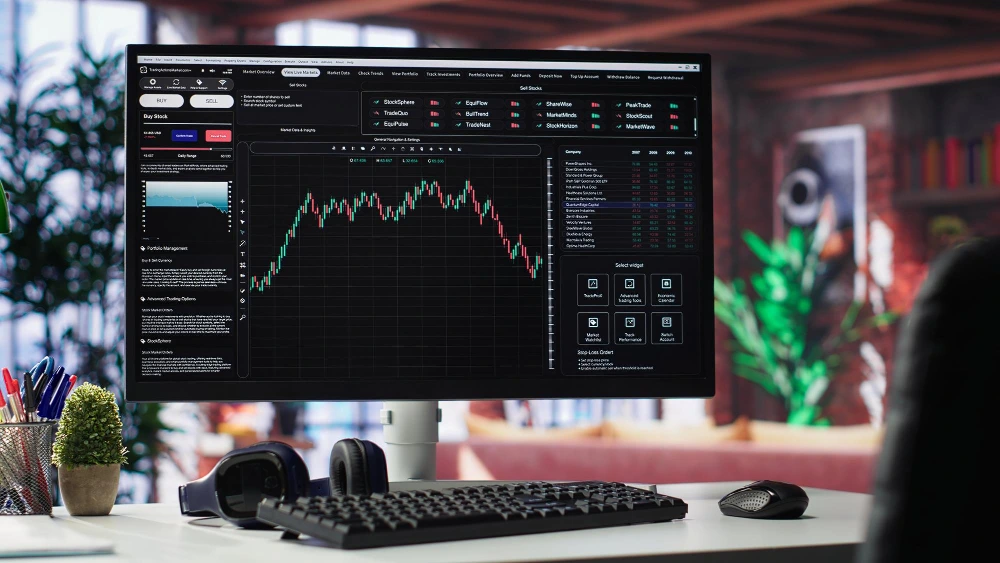
Markets do not move in straight lines. Prices often spend time moving sideways before making a strong move in one direction. When price breaks out of that range, traders take notice. This behavior is the basis of breakout trading.
Breakout trading focuses on entering trades when price moves beyond a key level, signaling a potential shift in supply and demand. While it can capture strong moves, it also carries specific risks that traders must understand.
This guide explains breakout trading, how breakout trading strategies work, and the key risks involved.
What Is Breakout Trading?
Breakout trading is a strategy that involves entering a trade when price moves above resistance or below support.
In simple terms, it means trading the moment price escapes a range.
Breakout trading assumes that once price clears a key level, momentum and participation may increase, leading to continued movement in the breakout direction.
How Does Breakout Trading Work?
Breakout strategies follow a structured process to identify and trade key levels.
1. Identify consolidation or range
Traders look for periods where price moves sideways, forming clear support and resistance levels.
2. Define the breakout level
The breakout level is usually the top of resistance for bullish breakouts or the bottom of support for bearish breakouts.
3. Enter when price breaks the level
Trades are entered when price moves decisively beyond the defined level, often with confirmation such as increased volume.
4. Manage risk immediately
Because breakouts can fail, traders use stop loss orders to limit losses if price reverses.
Breakout Trading Example
Imagine a stock that has been trading between 90 and 100 dollars for several weeks.
-
100 dollars acts as resistance
-
90 dollars acts as support
If the stock breaks above 100 with strong volume, a breakout trader may enter a long position, expecting continued upward movement.
If the stock quickly falls back below 100, the breakout has failed, and risk management becomes critical.
Why Traders Use Breakout Trading Strategies
It captures early trend moves
Breakouts can mark the beginning of strong trends, allowing traders to enter early.
It offers clear entry levels
Breakout levels are usually well defined, reducing ambiguity around entries.
It works across timeframes
Breakout trading can be applied to intraday, swing, or longer term charts.
It aligns with momentum
Breakouts often coincide with rising volume and momentum.
Risks of Breakout Trading
Breakout trading has distinct risks that traders must manage.
False breakouts
Price may briefly move beyond a level and then reverse, trapping traders.
Increased volatility
Breakouts often occur during volatile conditions, which can widen spreads and increase slippage.
Poor risk reward
Chasing breakouts without a plan can lead to unfavorable risk reward setups.
Emotional execution
Fear of missing out can cause traders to enter late or oversize positions.
How Traders Manage Breakout Risk
Effective breakout trading requires discipline.
Use confirmation
Volume, market context, and broader trend direction can help filter weaker breakouts.
Define stop loss levels
Stops are often placed just inside the range to limit losses if the breakout fails.
Avoid chasing extended moves
Entering after price has already moved far from the breakout level increases risk.
Accept failed trades
Failed breakouts are part of the strategy. Managing losses matters more than avoiding them.
Breakout Trading vs Range Trading
Breakout trading and range trading are opposite approaches.
-
Breakout trading expects price to leave a range
-
Range trading expects price to stay within a range
Both strategies can work in different market conditions. The key is matching the strategy to the environment.
Conclusion
Breakout trading focuses on capturing price moves as markets transition out of consolidation. When executed with discipline, it can offer strong opportunities, but it also comes with clear risks.
Understanding false breakouts, volatility, and risk management is essential for anyone using breakout trading strategies.
If you want to observe breakout behavior in real markets, you can explore US stocks through the Gotrade app. Fractional shares make it easier to practice execution and manage risk while learning.
FAQ
What is breakout trading in simple terms?
Breakout trading involves entering trades when price moves beyond a key support or resistance level.
Are breakout trading strategies suitable for beginners?
They can be, but beginners should start small and focus on risk management due to false breakouts.
Do breakouts always lead to trends?
No. Some breakouts fail quickly, which is why stops and discipline are important.
Is volume important in breakout trading?
Yes. Rising volume often supports the strength of a breakout.
Reference:
-
Investopedia, Mastering Breakout Trading, 2026.
-
CFA Institute, Breakout in Tradings, 2026.
Disclaimer
Gotrade is the trading name of Gotrade Securities Inc., which is registered with and supervised by the Labuan Financial Services Authority (LFSA). This content is for educational purposes only and does not constitute financial advice. Always do your own research (DYOR) before investing.