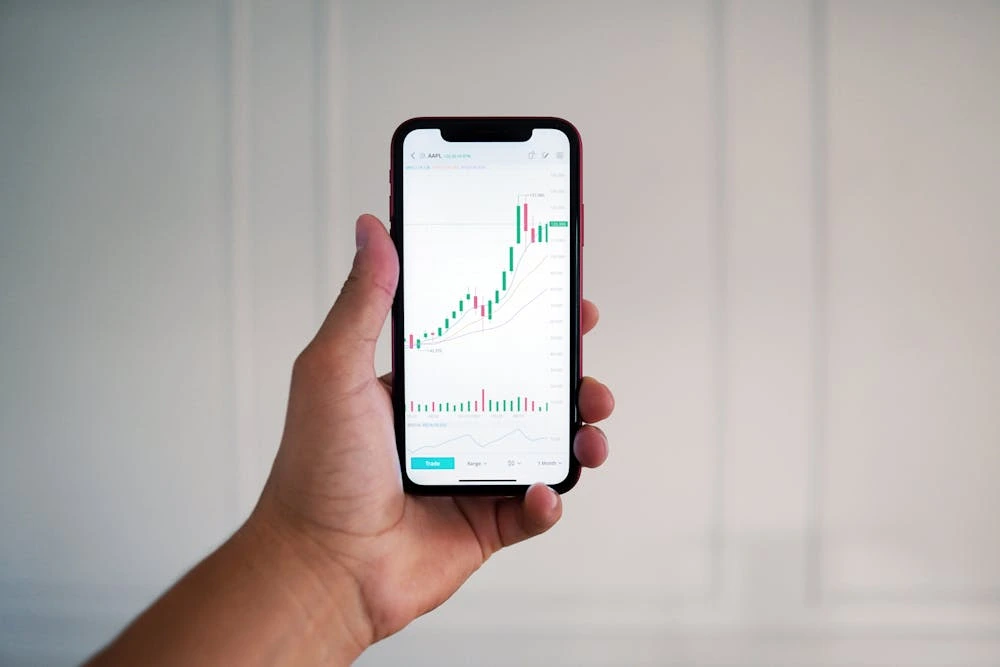
Few phrases in investing are as popular and as misunderstood as buy the dip. It sounds simple: prices fall, you buy, and profits follow when markets recover. In reality, the strategy is far more nuanced and far riskier than the phrase suggests.
Understanding the buy the dip strategy requires more than recognizing price declines. It requires understanding market context, trend structure, and risk asymmetry. Buying the dip can be effective in some environments and destructive in others.
What Does Buy the Dip Mean?
Buy the dip refers to the strategy of purchasing an asset after a price pullback, with the expectation that the broader trend will resume.
The idea is based on mean reversion within an uptrend. Temporary declines are viewed as opportunities to enter at more favorable prices rather than signals of trend failure.
Importantly, buy the dip does not mean buying every decline. It assumes that the dip is temporary, not the beginning of a larger breakdown.
Without that distinction, the strategy becomes reactive rather than intentional.
Why Investors Buy the Dip?
Investors buy the dip because it aligns with both psychological comfort and historical experience.
One reason is anchoring to past highs. When prices fall from recent peaks, they appear cheaper relative to what investors remember.
Another reason is long-term market bias. In equity markets especially, history has rewarded patience during pullbacks within secular uptrends.
Buy-the-dip behavior is also reinforced socially. When recoveries follow declines, the strategy gains narrative strength and confidence.
However, what worked in one regime may fail in another. Buy-the-dip success depends on market structure, not optimism.
If you want to see how real pullbacks behave across different assets, you can trade on Gotrade and observe whether dips attract buyers or continue breaking down in live market conditions.
When Buy the Dip Works
Buy the dip tends to work best in strong, established uptrends. In these environments, pullbacks are often driven by profit-taking rather than structural weakness. Demand remains intact, and buyers step in quickly. Dip buying also works better when:
-
Macro conditions are supportive
-
Volatility remains controlled
-
Pullbacks occur above long-term trend support
In range-bound or gently trending markets, dip buying can capture repeated mean-reversion opportunities with manageable risk. The key is that dips occur within strength, not after it disappears.
When Buy the Dip Fails
Buy the dip fails when investors mistake trend deterioration for opportunity.
Buying into downtrends
In declining markets, dips are often pauses, not opportunities. Each bounce becomes a lower high, trapping dip buyers repeatedly.
Ignoring distribution or exhaustion
Late-stage uptrends often transition through distribution and exhaustion. Buying dips during these phases exposes investors to asymmetric downside.
Structural regime shifts
Macro changes, tightening liquidity, or fundamental breaks can invalidate historical dip-buying behavior.
Emotional averaging down
When dip buying turns into repeated averaging without reassessment, losses compound quickly.
Buy-the-dip fails not because dips are bad, but because context is ignored.
Risk Management for Dip Buying
Risk management separates strategic dip buying from emotional guessing.
One principle is position sizing. Dip buying works best when exposure is scaled gradually rather than committed all at once.
Another principle is defined invalidation. Before entering, traders should know where the thesis fails.
Time also matters. Short-term dip buying differs significantly from long-term accumulation. Mixing timeframes increases confusion and risk.
Dip buying without risk management is not a strategy. It is hope disguised as discipline.
How Professionals Approach Buy the Dip
Professional traders treat buy-the-dip setups selectively.
They wait for confirmation that selling pressure is fading, not simply that price has fallen. They assess whether dips occur within accumulation, trend continuation, or distribution.
Professionals also accept that missing a dip is better than forcing one. This restraint prevents repeated losses during unfavorable regimes.
Conclusion
Buy the dip is not a universal rule. It is a conditional strategy that depends on trend strength, market phase, and risk control.
Understanding when buy the dip works and when it fails helps investors avoid turning a simple idea into a costly habit. Dips are opportunities only when structure supports them.
Successful dip buying prioritizes context over conviction.
If you want to practice applying buy-the-dip strategies with clearer market context, you can trade on Gotrade and observe how pullbacks behave across different assets and market cycles.
FAQ
What does buy the dip mean in investing?
It means buying an asset after a pullback, expecting the broader trend to continue.
Is buy the dip always profitable?
No. It depends on market structure and trend conditions.
When should investors avoid buying the dip?
During downtrends, distribution phases, or structural market shifts.
Is buy the dip suitable for beginners?
It can be risky without clear risk management and context.
References
-
Investopedia, What Buying the Dip Really Mean, 2026.
-
IG Group, What Does Buy The Dip Mean, 2026.