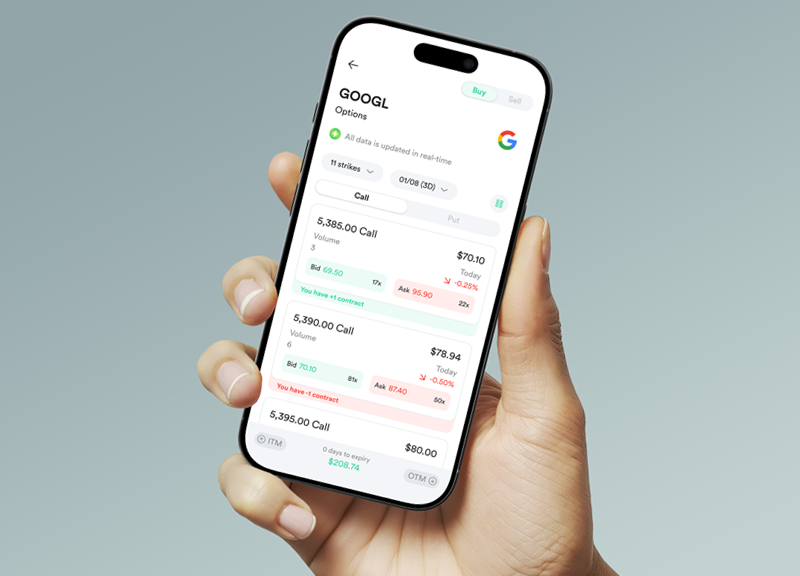
Options trading introduces flexibility in how traders express their market views. Two of the most fundamental instruments are call options and put options.
Understanding call vs put options is essential for anyone learning options trading basics. These two types of contracts allow traders to profit from both rising and falling markets, depending on how they are used.
Key Differences Between Calls and Puts
A call option gives the buyer the right, but not the obligation, to buy an underlying asset at a specific price (strike price) before a certain date.
A put option gives the buyer the right, but not the obligation, to sell an underlying asset at a specific price before expiration.
In simple terms:
- call option = bullish bias
- put option = bearish bias
Example:
- if you expect a stock to rise, you may buy a call
- if you expect a stock to fall, you may buy a put
Another key difference is how value changes:
- calls increase in value as price rises
- puts increase in value as price falls
Both instruments are influenced by factors such as time decay, volatility, and price movement.
Bullish vs Bearish Strategies
Call and put options are often used to express directional views.
Call options for bullish strategies
Traders buy calls when they expect price to move higher.
Common scenarios include:
- breakout above resistance
- strong earnings expectations
- upward trend continuation
Calls allow traders to benefit from upside movement with limited downside risk equal to the premium paid.
Put options for bearish strategies
Traders buy puts when they expect price to decline.
Common scenarios include:
- breakdown below support
- weak fundamentals or negative news
- downtrend continuation
Puts provide a way to profit from falling markets without short selling the underlying asset. In both cases, the maximum loss for option buyers is limited to the premium paid.
Risk and Reward Profile
Options have a unique risk and reward structure compared to stocks.
Call option risk and reward
- maximum loss: premium paid
- potential reward: theoretically unlimited if price rises significantly
For example:
- buy a call for $2
- if the stock rises strongly, the option value may increase significantly
Put option risk and reward
- maximum loss: premium paid
- potential reward: limited to how far price can fall (down to zero)
For example:
- buy a put for $2
- if the stock drops sharply, the option gains value
Although both options limit downside risk, they also require correct timing because of time decay, which reduces option value as expiration approaches.
When Traders Choose Each
The choice between calls and puts depends on market outlook and strategy.
Traders typically choose call options when:
- they expect upward price movement
- market sentiment is positive
- technical structure shows higher highs and higher lows
Traders typically choose put options when:
- they expect downward price movement
- market sentiment is negative
- technical structure shows lower highs and lower lows
Options can also be used for:
- hedging existing positions
- generating income through strategies like covered calls
- managing portfolio risk
The decision is not only about direction, but also about timing and volatility conditions.
Example Trade Scenarios
Example 1: Bullish call trade
- stock price: $100
- trader expects price to rise
- buys a call with strike price $105
If the stock rises to $120:
- the option gains value
- trader profits from upward movement
If the stock stays below $105:
- the option may expire worthless
- loss is limited to the premium paid
Example 2: Bearish put trade
- stock price: $100
- trader expects price to fall
- buys a put with strike price $95
If the stock drops to $80:
- the option increases in value
- trader profits from the decline
If the stock stays above $95:
- the option may expire worthless
- loss is limited to the premium
These examples highlight how calls and puts allow traders to express directional views with defined risk.
Key Considerations Before Trading Options
Before choosing between calls and puts, traders should consider:
- time to expiration
- implied volatility levels
- market conditions
- risk management strategy
Options are sensitive to multiple variables, not just price direction. Understanding these factors helps improve decision-making and reduce unexpected outcomes.
Conclusion
Call options and put options are fundamental tools in options trading. Calls are used for bullish strategies, while puts are used for bearish strategies. Both offer defined risk with different reward profiles.
By understanding the differences in call vs put options, traders can better align their strategies with market conditions and manage risk more effectively.
FAQ
What is the difference between a call and a put option?
A call option benefits from rising prices, while a put option benefits from falling prices.
Which is riskier, calls or puts?
Both have limited risk for buyers, but outcomes depend on timing and market conditions.
Can beginners trade options?
Yes, but it is important to understand pricing factors, risk, and strategy before trading.
References
- Investopedia, Call vs Put Options, 2026.
- CBOE, What Are Call Put Options, 2026.