Dollar General lifted its full-year 2026 profit guidance on June 3 after a Q1 that beat on the top and bottom line. The discount retailer raised its diluted EPS range to $7.20 to $7.45 from $7.10 to $7.35.
The raise lands at an interesting macro moment. Inflation is sticky, low-income wallets are stretched, and trade-down behavior is bending shopping habits toward dollar stores.
You will see what changed in the numbers and why the channel is structurally advantaged right now. You will also see how Dollar General stacks against rivals, plus the risks that could still cap the upside.
DG's New EPS Guidance Range and the Drivers Behind the Raise
Q1 2026 net sales rose 3.4% to $10.8 billion. Same-store sales grew 2.0%, and diluted EPS climbed 12.4% to $2.00.
According to Yahoo Finance: Dollar General lifted FY2026 EPS guidance to $7.20 to $7.45 from $7.10 to $7.35. The midpoint of $7.33 sits above the $7.25 analyst consensus. Net sales growth guidance was raised to 3.7% to 4.2%, and same-store sales guidance to 2.2% to 2.7%.
One detail matters for the quality of the raise. Guidance assumes no share repurchases this year, so the higher EPS comes from operating performance, not buyback math.
The board also approved a Q2 dividend of $0.59 per share. Cash return is steady, but the message is reinvest first, buy back later.
Why Sticky Inflation Is a Tailwind for the Low-Income Consumer Channel
Dollar General's core shopper skews lower-income and rural. When grocery and household-goods inflation stays elevated, that wallet feels it first.
The behavioral response is trade-down. Shoppers swap mid-tier grocery for value packs and dollar-store private label.
That dynamic shows up in DG's same-store sales reaccelerating to 2.0% in Q1. Consumables, the lowest-margin but highest-frequency category, did the heavy lifting.
The broader macro picture continues to favor value retail. As Fed credibility debates and political pressure keep rate-cut timing in flux, real wages for the bottom income quintile stay under stress.
The pressure is concrete. SNAP benefits stepped down from pandemic-era emergency levels in 2023, cutting the average monthly allotment by roughly $90 per person. Real hourly earnings for the lowest-paid US workers have grown under 1% year over year through early 2026. Those two forces push more grocery trips toward dollar-store private label and smaller pack sizes, which is exactly DG's lane.
Dollar General vs Dollar Tree vs Five Below: Quality and Growth Compared
The discount-retail bucket is not homogeneous. Each name plays a different angle on the trade-down theme.
Dollar Tree leans heavier on suburban and Family Dollar urban exposure. Family Dollar drag has historically masked the Dollar Tree banner's strength.
Five Below targets a higher-income tween and teen shopper with a treasure-hunt model. It is the growth story of the three, but it is more exposed to discretionary slowdowns.
DG is the rural and exurban density play. The thesis is store count and frequency, not basket size or treasure hunt.
The Motley Fool transcript confirms management sees the consumer environment as pressured but predictable. That predictability is what gave the leadership team confidence to raise guidance.
Store Density, Same-Store Sales, and the Long-Term Unit Economics
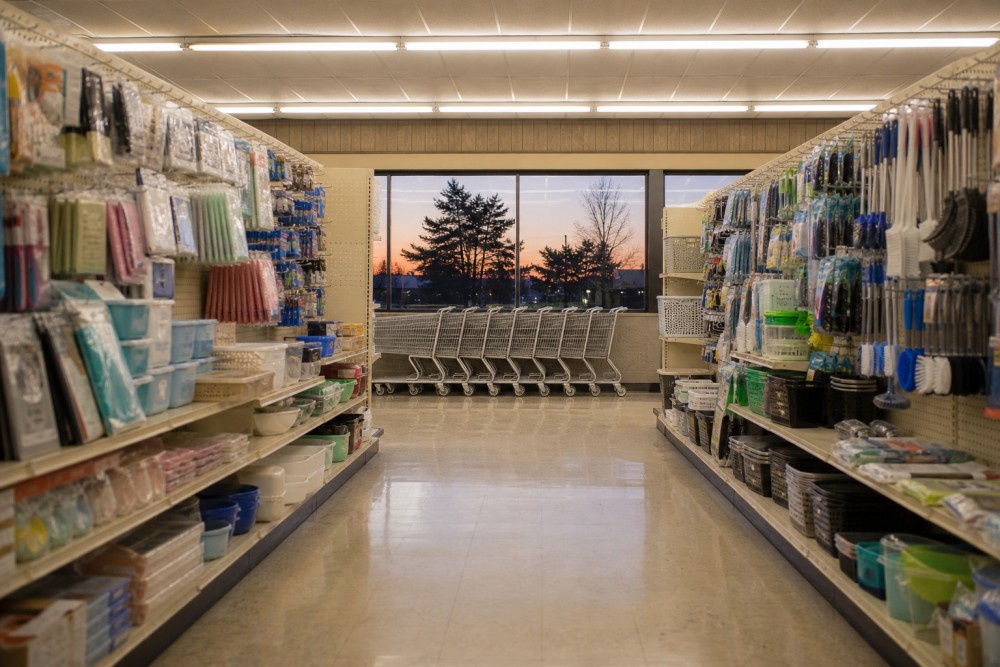
DG operates roughly 20,000 stores, mostly small-format and concentrated in towns under 20,000 people. Density is the moat.
In a market that small, one DG store often serves as the only nearby option for packaged groceries. That gives the format pricing power within its trade area.
Same-store sales of 2.0% may sound modest. For a base of $40 billion-plus in annual sales, two points of comp leverage drops meaningfully through to operating income.
The longer-term question is unit economics on new stores. New-store productivity has slipped versus a decade ago, but recent vintages are running healthier than the 2023-2024 trough.
Risks: Shrink, Wage Pressure, and the Walmart Encroachment Threat
Shrink, the polite term for theft and inventory loss, has been a persistent headwind across discount retail. DG has been investing in self-checkout reduction, store layout changes, and labor reallocation to manage it.
Wage cost pressure is the second risk. Minimum-wage hikes in several states and ongoing labor competition push hourly costs higher every year.
The structural threat is Walmart. Walmart's small-format and pickup expansion into towns historically served by DG narrows DG's local-monopoly moat.
The mitigation is execution. DG's pricing and labor-light model still beat Walmart's economics in the smallest markets. The gap is narrower than it was five years ago.
Conclusion
The FY2026 guidance raise tells you the trade-down trade is working again, and Dollar General is delivering on the operating leverage. The raise is clean because it does not lean on buybacks.
The investment case is steady comp growth, store density moat, and a tailwind from a stressed low-income consumer. The risks are shrink, wages, and Walmart encroachment, none of which are new but all of which matter.
Want to start investing in DG? Open a Gotrade account from $1 and build your position with fractional shares.
FAQ
What did Dollar General raise its FY2026 EPS guidance to?
DG lifted FY2026 diluted EPS guidance to $7.20 to $7.45, up from $7.10 to $7.35. The new midpoint sits above the $7.25 analyst consensus.
Does the new guidance include share repurchases?
No. Management said the guidance assumes no share buybacks this year, so the EPS lift comes from operating performance rather than reduced share count.
How does Dollar General compare to Dollar Tree and Five Below?
DG is the rural and exurban density play. DLTR leans suburban with Family Dollar exposure, while FIVE targets higher-income tween and teen shoppers with a treasure-hunt model.
What are the biggest risks to the DG profit trajectory?
Shrink from theft and inventory loss, wage cost pressure from minimum-wage hikes, and Walmart's small-format and pickup expansion into DG's historical rural markets.