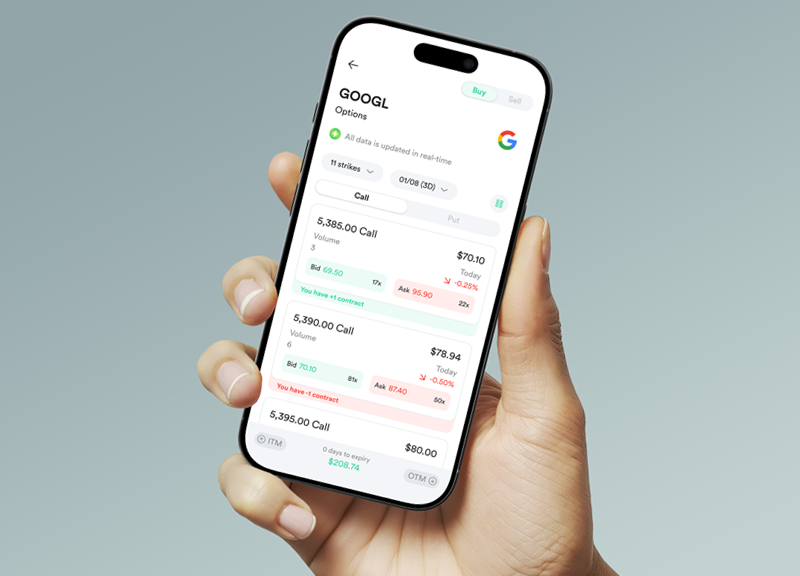
The expiration date is one of the most defining features of options trading. Every options contract comes with a fixed expiration date, and once that date passes, the contract no longer exists. This single characteristic is what separates options from stocks and explains much of the risk and complexity involved.
Understanding what an expiration date is helps investors grasp why timing matters so much in options trading. Even when the market moves in the expected direction, an option can still lose value or expire worthless if time runs out.
What the Expiration Date Actually Represents
In options trading, the expiration date is the last day an options contract is valid. After this date, the option either settles or expires worthless, depending on its value.
An expiration date defines the maximum lifespan of an option. Unlike stocks, which can be held indefinitely, options exist only within a fixed time window.
Once an option reaches expiration:
-
In-the-money options may be exercised or settled
-
Out-of-the-money options expire worthless
-
Time value drops to zero
This makes expiration date a structural limit on opportunity and risk.
If you want to understand why options prices change even when stock prices do not, watching how options behave as expiration approaches can reveal the impact of time.
How Expiration Date Affects Option Value
Expiration date plays a direct role in how options are priced and how they behave over time.
Options lose value as they get closer to expiration, a process known as time decay. This decay accelerates as expiration nears, especially in the final weeks or days.
Longer-dated options generally cost more because they give the market more time to move. Shorter-dated options are cheaper but require faster and more precise price movement.
The expiration date determines:
-
How much time the trade has to work
-
How sensitive the option is to time decay
-
How the option responds to volatility changes
Time is not neutral in options trading. It is an active force working for or against the position.
Types of Expiration Dates in Options
Options do not all expire in the same way. Understanding expiration structures helps investors choose contracts that match their strategy.
Standard monthly expirations
Many options expire on a standard monthly cycle, typically the third Friday of the month. These expirations are widely traded and often have the most liquidity.
Weekly expirations
Weekly options expire sooner and offer more flexibility for short-term strategies. However, they experience faster time decay and higher sensitivity to price movement.
Long-dated expirations
Some options expire months or even years in the future. These longer expirations reduce time pressure but cost more upfront.
Each expiration type creates a different balance between cost, risk, and timing flexibility.
Expiration Date and Strategy Selection
Expiration date is not just a contract detail. It shapes how an options strategy behaves.
Shorter expirations are often used for tactical trades or event-driven strategies. They require accurate timing and strong conviction.
Longer expirations are commonly used for directional views or hedging. They allow more time for the thesis to play out but reduce leverage efficiency.
Choosing an expiration date involves trade-offs:
-
Shorter time means lower cost but higher timing risk
-
Longer time means higher cost but more flexibility
There is no universally correct expiration date. The right choice depends on market conditions and strategy intent.
Understanding how expiration dates influence risk and flexibility can help you choose options that fit your time horizon rather than forcing trades into tight windows.
What Happens When an Option Reaches Expiration
As expiration approaches, options behave differently depending on their moneyness.
In-the-money options retain intrinsic value and may be exercised automatically depending on brokerage rules.
At-the-money options are sensitive to small price movements. A slight change near expiration can determine whether the option expires with value or worthless.
Out-of-the-money options lose value rapidly and usually expire worthless.
This final phase is where many option losses occur, not because the idea was wrong, but because time ran out.
Expiration Date vs Holding Period
Stocks do not expire. Investors can wait indefinitely for a thesis to play out.
Options require correct direction and correct timing. Even a good idea can fail if the expiration date is too close.
This difference explains why options trading demands more precision and discipline than stock investing.
Conclusion
The expiration date is the final moment an options contract remains valid. It defines the time limit for an option to gain value and is one of the most important drivers of option behavior.
Understanding what expiration date means in options trading helps investors manage time decay, choose appropriate strategies, and avoid unnecessary losses. Options reward not just being right, but being right on time.
FAQ
What is an expiration date in options trading?
It is the last day an option contract is valid before it expires.
Can options be exercised before expiration?
Yes, depending on the option type and brokerage rules.
Why do options lose value as expiration approaches?
Because time value decreases, a process known as time decay.
Is a longer expiration always safer?
Not necessarily. It costs more and changes the risk-reward profile.
References
- MarketWatch, Options Expiration, 2026.
- Investopedia, Options Expiration Date, 2026.