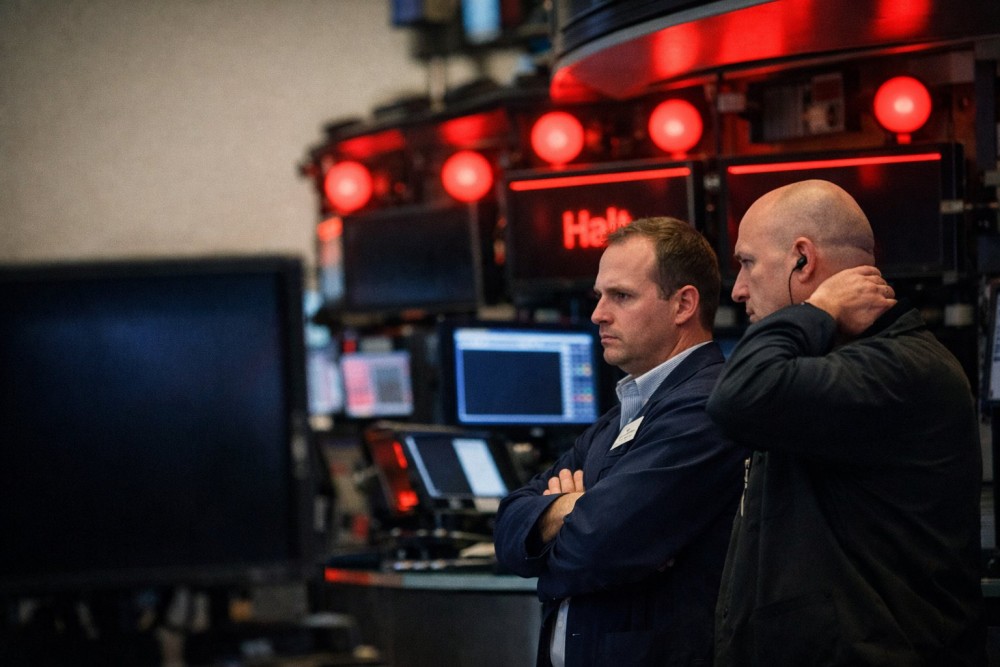
If you have ever watched a stock freeze on the screen during a wild move, you have met the limit up limit down rules. These US guardrails pause individual stocks when prices swing too fast, giving the order book time to reset.
The system runs on every NMS-listed name, mega-cap to small-cap. It does not pick winners. It just slows the panic.
Knowing how these halts trigger, how long they last, and how the reopening works can save you from costly entries on the wrong side of a fast move.
How The Price Bands Work By Tier And Time
The Limit Up Limit Down (LULD) plan sets a price band around a rolling reference price, the average trade price over the prior five minutes. If quotes try to print outside the band, trading enters a "Limit State." If the stock cannot return inside the band within 15 seconds, the exchange triggers a five-minute pause.
According to the SEC LULD plan, NMS stocks are sorted into two tiers, and band widths depend on price and time of day.
Tier 1 vs Tier 2 stocks
Tier 1 covers S&P 500 names, Russell 1000 names, and select ETFs. Think NVDA and TSLA. Tier 1 stocks priced above $3 use a 5% band during regular trading hours.
Tier 2 covers everything else NMS-listed. Tier 2 stocks above $3 use a 10% band. For lower-priced stocks the bands widen further, and anything under $0.75 can move up to 75% before halting.
Time-of-day band doubling
Bands double during the first 15 minutes after the open (9:30 to 9:45 ET) and the last 25 minutes before the close (3:35 to 4:00 ET). A 5% Tier 1 band becomes 10%. A 10% Tier 2 band becomes 20%.
Open and close auctions produce bigger price discovery moves, so the bands flex to avoid halting normal volatility.
Five-Minute Halts And The Reopening Auction
Once a halt fires, the security stops trading on every US venue at once. The exchange runs a reopening auction five minutes later. Orders queue on both sides, the auction matches at a single clearing price, and trading resumes.
Want to apply this to your portfolio? You can explore US stocks on Gotrade and see how volatility tools fit alongside your watchlist.
What happens to your open orders
Limit orders inside the auction range stay live and may fill at the reopening price. Market orders convert to limit orders at the band edges. Stop orders that triggered before the halt may have already executed.
If your stop is on the wrong side of a fast move, expect a fill far from your trigger price. The halt does not protect fills that already printed.
Repeat halts in one session
The same stock can halt multiple times in a session. There is no cap on LULD pauses, and each one resets the reference price.
Recent Halts: Meme Stocks, AI Microcaps, Earnings Pops
The clearest case study is still GameStop in 2021. GME tripped roughly 20 LULD halts in one session as retail flow overwhelmed the order book. AMC followed a similar pattern that summer.
AI microcap squeezes
Through 2024 and 2025, small-cap AI names have repeatedly triggered Tier 2 bands. Per Investor.gov, the LULD system is meant to dampen exactly this kind of volatility cluster, where a low-float stock catches a narrative and runs.
Microcap halts hurt retail traders the most. Spreads widen, market orders convert at band edges, and the reopening often gaps higher or lower than the last print.
Earnings reactions
Earnings beats or misses can also trigger LULD. When a stock pops 15% on the bell, you may see two or three quick halts before the reference price stabilizes.
Risk Lessons For Active Traders
Halts are designed to slow you down, not stop you out. The traders who struggle most with LULD use market orders into fast-moving names.
The fix is mechanical. Use limit orders. Size positions assuming the next fill could come at the band edge. Avoid stop-market orders on volatile small caps where the next print may be 10% away.
If you trade earnings or news catalysts, plan for the halt in advance. Decide where you would add, trim, or exit if the reopening prints against you.
Conclusion
The limit up limit down rules exist because US markets learned, the hard way, that fast moves without circuit breakers create flash crashes. The LULD plan replaces blunt market-wide halts with single-stock pauses that let the order book breathe.
The practical takeaway is simple. Use limit orders, expect halts on volatile names, and read the reopening as new information rather than noise.
To put these mechanics into practice, you can track SPY and other US tickers on Gotrade and build a watchlist that fits your risk tolerance.
FAQ
What does LULD stand for in stock trading?
LULD stands for Limit Up Limit Down, an SEC-approved system that halts individual stocks when prices move outside set percentage bands.
How long does a LULD halt last?
A LULD halt typically lasts five minutes, after which the primary exchange runs a reopening auction to restart continuous trading.
Can the same stock be halted multiple times in one day?
Yes, there is no cap on LULD halts per session, and volatile names like GME have triggered nearly 20 pauses in a single trading day.
Are LULD halts the same as market-wide circuit breakers?
No, LULD halts apply to individual stocks, while market-wide circuit breakers halt the whole market when the S&P 500 drops 7%, 13%, or 20%.
Do LULD halts protect my stop-loss order?
Not necessarily, because stops that triggered before the halt may have already filled, and stops outside the band convert to limit orders.