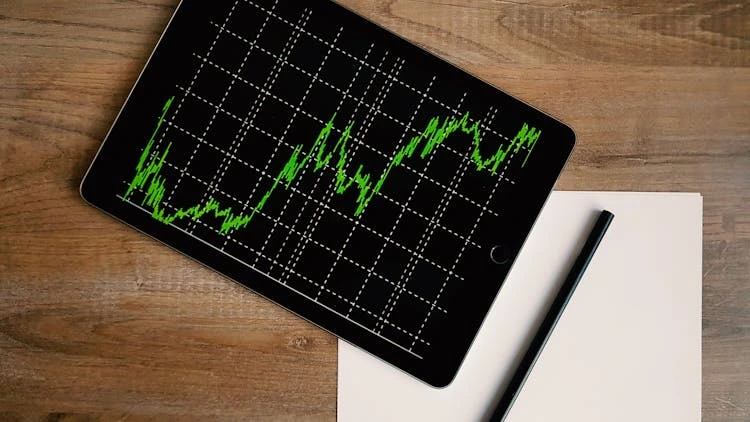
When traders talk about trends, they are often referring to market structure, even if they do not use the term directly. Market structure focuses on how price moves over time, not on indicators or formulas. It helps traders understand whether a market is trending up, trending down, or moving sideways.
By learning to read higher highs and lower lows, traders can identify trend direction using price alone. This makes market structure one of the most fundamental concepts in technical analysis.
This guide explains market structure, how higher highs and lower lows form, and how traders use them to read trends without indicators.
What Is Market Structure?
Market structure refers to the pattern of price movement formed by swings in the market.
In simple terms, it describes how price moves from one high to the next high and from one low to the next low.
Market structure helps answer a basic question: Is the market moving up, moving down, or moving sideways?
Rather than relying on indicators, market structure uses price behavior itself to define trend direction.
Higher Highs and Higher Lows
An uptrend is defined by a sequence of higher highs and higher lows.
-
A higher high means price reaches a new peak above the previous peak
-
A higher low means price pulls back but stays above the previous low
This pattern shows that buyers are willing to pay higher prices over time.
When higher highs and higher lows continue to form, the market structure remains bullish.
Lower Highs and Lower Lows
A downtrend is defined by a sequence of lower highs and lower lows.
-
A lower high means price fails to reach the previous high
-
A lower low means price drops below the previous low
This pattern shows that sellers are controlling price movement.
As long as lower highs and lower lows persist, the market structure remains bearish.
Sideways Market Structure
Not all markets trend.
In a sideways or range bound market:
-
Highs occur near the same level
-
Lows occur near the same level
There are no clear higher highs or lower lows. Price moves within a range, and trend based strategies often perform poorly.
How Traders Use Market Structure
To identify trend direction
Market structure provides a clear framework for defining trend without indicators.
To align with the trend
Many traders prefer to trade in the direction of the prevailing structure, buying in uptrends and selling in downtrends.
To time entries and exits
Higher lows in an uptrend or lower highs in a downtrend often act as key decision areas.
To manage risk
Structure levels help define invalidation points where the trend may be changing.
Market Structure Breaks
A break in market structure occurs when price violates the established pattern.
For example:
-
An uptrend breaks when price makes a lower low
-
A downtrend breaks when price makes a higher high
These breaks can signal trend weakening or potential reversal, but they require confirmation.
Market Structure vs Indicators
Indicators are derived from price. Market structure is price.
Market structure:
-
Reacts immediately to price movement
-
Does not lag
-
Works across all timeframes
Indicators can be useful, but market structure remains the foundation.
Common Mistakes When Reading Market Structure
Ignoring timeframe context
Higher highs on a small timeframe may occur within a larger downtrend.
Forcing structure
Not every price move forms a meaningful high or low.
Trading structure in choppy markets
Market structure works best in clear trends, not in noisy conditions.
Conclusion
Market structure reveals trend direction through patterns of higher highs and lower lows. It allows traders to read price behavior directly without relying on indicators.
By focusing on structure, traders gain a clearer view of market direction, risk, and potential trade opportunities.
If you want to practice reading market structure on real charts, you can explore US stocks through the Gotrade app. Fractional shares make it easier to study price behavior and build experience step by step.
FAQ
What is market structure in simple terms?
Market structure describes how price moves through highs and lows to form trends or ranges.
Do I need indicators to read market structure?
No. Market structure uses price action alone.
Can market structure change quickly?
Yes. Structure can shift when price breaks key highs or lows.
Is market structure useful for long term investors?
Yes. It helps identify broader trend direction and market phases.
Reference:
-
Investopedia, Market Structure, 2026.
-
Corporate Finance Institute, Market Structure, 2026.
Disclaimer
Gotrade is the trading name of Gotrade Securities Inc., which is registered with and supervised by the Labuan Financial Services Authority (LFSA). This content is for educational purposes only and does not constitute financial advice. Always do your own research (DYOR) before investing.