The Marvell (MRVL)stock story has shifted from a sleepy networking name into a core custom AI silicon supplier. Investors who only watch NVIDIA and Broadcom are missing a third leg of the AI infrastructure trade.
Marvell sits between merchant GPU vendors and pure ASIC houses. It designs custom chips for hyperscalers while owning the optical and switching layers around them.
This piece breaks down the three business pillars, the hyperscaler ASIC wins, and how MRVL's margin profile differs from AVGO. We close with a 2026 entry framework expressed as scenarios, not advice.
Marvell's Three Pillars: Networking, Custom ASIC, Storage
Marvell groups its revenue into data center, carrier, enterprise networking, consumer, and automotive. The data center segment now drives the AI thesis and the multiple.
Each pillar plays a distinct role in the AI build out. Networking and custom ASIC are the growth engines, while storage funds the transition.
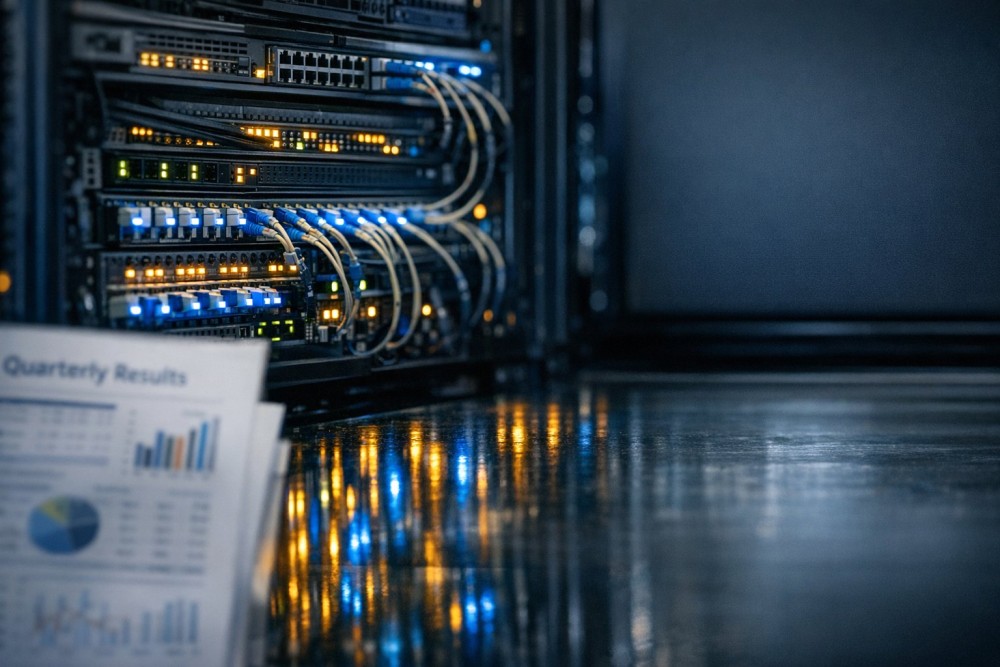
Networking and optical DSPs
Marvell is a leader in PAM4 and coherent DSPs that move data between AI servers. These chips sit inside optical modules from Coherent, Innolight, and Eoptolink.
Bandwidth demand inside AI clusters scales faster than compute itself. That tailwind keeps the optical DSP business compounding even before custom ASIC revenue lands.
Custom ASIC and storage anchor
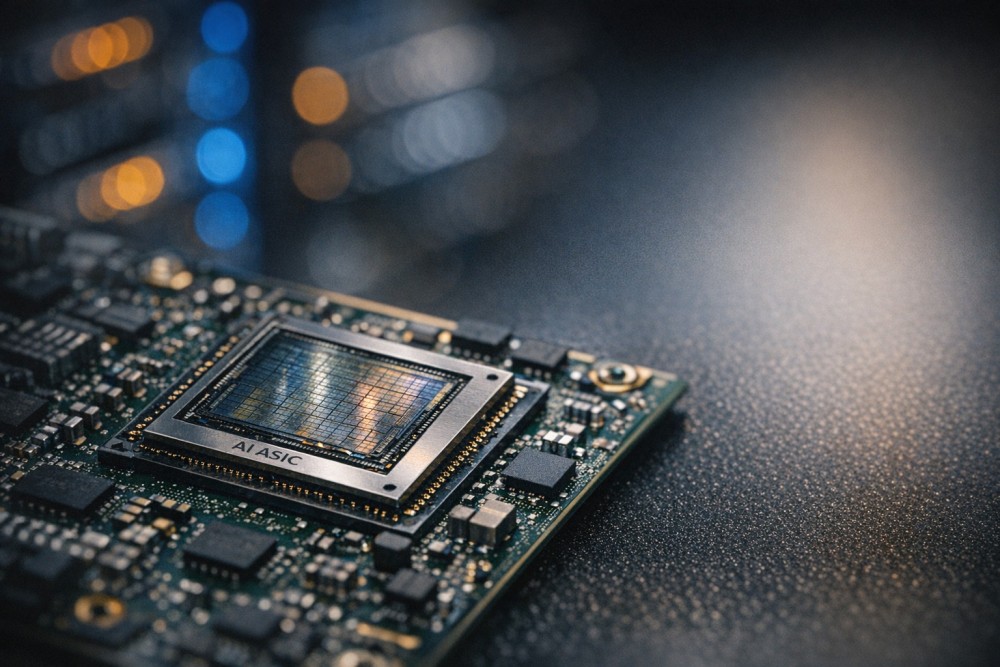
Custom ASIC is the headline pillar. Marvell co-designs accelerators with hyperscalers and owns the IP for SerDes, packaging, and chiplet integration.
According to Tom's Hardware, NVIDIA itself put $2 billion into Marvell and pulled its custom ASIC roadmap inside the NVLink Fusion ecosystem, an unusual signal of how strategic hyperscaler ASIC demand has become.
Storage controllers for HDD and enterprise SSD remain a cash cow. The segment funds R&D for the AI roadmap as its revenue share shrinks.
Hyperscaler ASIC Wins: Amazon Trainium, Microsoft Maia, Google Axion
The custom ASIC pillar rests on three named hyperscaler programs. Each one targets a different layer of the AI workload stack.
According to Reuters, Marvell guided fiscal 2026 AI revenue well above the original $2.5 billion target. Hyperscaler ASIC ramps are the main driver.
Amazon Trainium and Inferentia ramp
Marvell co-designs Trainium chips for AWS. Trainium2 is now in volume production for internal AWS workloads and Anthropic training clusters.
This program is the largest single ASIC contributor to Marvell's data center revenue. Visibility extends through Trainium3 in 2026 and beyond.
Microsoft Maia and Google Axion
Marvell also supplies silicon IP and back-end design services for Microsoft Maia accelerators. Maia targets internal Azure AI and OpenAI inference.
Google's Axion CPU and adjacent custom programs add a third anchor customer. Three hyperscalers reduce the single-customer risk that hurt earlier ASIC stories.
Why MRVL's Margin Profile Differs from AVGO's
Investors often compare MRVL directly to Broadcom. The businesses overlap, but the margin structure is meaningfully different.
Broadcom runs at roughly 60% non-GAAP operating margin including VMware. Marvell sits in the high 20s to low 30s today, with room to expand as AI mix grows.
Mix and scale gap
Broadcom's margin reflects software, mature networking franchises, and decades of cost discipline. Marvell is earlier in the AI ramp and still absorbs heavy R&D for new ASIC tape-outs.
As custom ASIC volume scales, fixed engineering costs spread across more revenue. Operating leverage is the core bull case for MRVL holders.
The re-rating optionality
If Marvell hits its medium-term operating margin target near 38%, the gap to AVGO narrows. A narrower gap historically pulls the multiple higher.
That re-rating is not guaranteed. It depends on ASIC mix, gross margin discipline, and the pace of legacy carrier and consumer declines.
Investment Thesis and Entry Setup for 2026
The bull thesis is simple. Marvell becomes the second large merchant ASIC partner for hyperscalers, behind Broadcom and ahead of pure-play challengers.
The bear thesis is also simple. Hyperscalers in-source more design, ASIC pricing compresses, and optical DSP share erodes to competitors.
Scenario one: AI mix accelerates
In a base case, AI revenue compounds above 40% annually through fiscal 2027. Operating margin expands toward the high 30s and free cash flow inflects.
In this scenario, MRVL trades closer to NVDA and AVGO multiples on forward earnings.
Scenario two: ASIC visibility slips
In a downside case, a hyperscaler delays a program or shifts share to a competitor. Estimates reset and the multiple compresses toward legacy semis levels.
The risk is catching a falling knife if the ASIC narrative breaks more broadly across the group.
Conclusion
Marvell is no longer a pure networking name. It is a hyperscaler-aligned custom AI silicon supplier with a credible path to higher margins and a richer multiple.
The setup into 2026 hinges on ASIC ramp execution and margin discipline. Both bull and bear scenarios deserve a defined plan before any position is sized.
If you already hold US stocks on Gotrade, you can express this thesis with fractional shares from US$1. Build your AI infrastructure basket on Gotrade alongside your existing portfolio.
FAQ
Is MRVL a direct competitor to NVIDIA?
No, MRVL designs custom ASICs and networking silicon, while NVIDIA sells merchant GPUs at the cluster level.
How does Marvell make money from Amazon Trainium?
Marvell earns design services and per-chip revenue as Trainium ships in volume to internal AWS workloads.
Why is MRVL's margin lower than Broadcom's?
Marvell carries heavier R&D intensity and lacks Broadcom's high-margin software mix from VMware.
What is the biggest risk to the MRVL thesis?
Hyperscalers in-sourcing more design work or shifting ASIC share to rival vendors would reset estimates quickly.