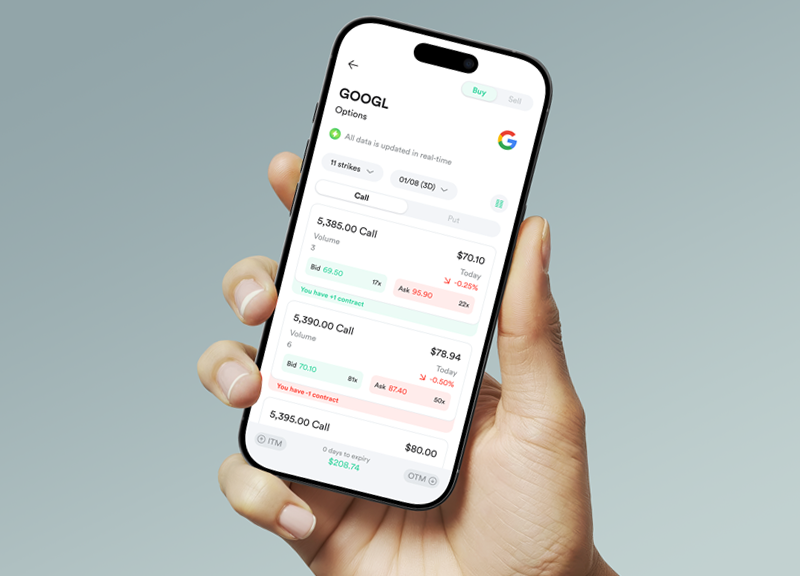
A market gap occurs when price opens significantly higher or lower than the previous close. This usually happens due to overnight news, earnings releases, or macro events.
While gaps create opportunity, they also introduce uncertainty. Price can move aggressively in either direction, and early decisions are often driven by emotion rather than structure.
If you are navigating gap up gap down trading, the key is not to react instantly. A structured gap trading strategy focuses on understanding the cause, waiting for confirmation, and managing volatility risk.
What to Do When Market Opens With a Gap
1. Identify the reason for the gap
Not all gaps are equal. The first step is understanding what caused the move.
Common reasons include:
- earnings results or guidance changes
- major news such as mergers, regulations, or macro data
- sector-wide or market-wide sentiment shifts
This matters because the cause influences behavior.
For example:
- earnings-driven gaps may trend strongly
- macro-driven gaps may reverse quickly
- low-volume gaps may lack follow-through
Knowing the reason helps you decide whether to expect continuation or instability.
2. Avoid immediate entry at the open
The first few minutes after market open are often the most volatile.
Price can:
- spike sharply in one direction
- reverse quickly
- trigger both buyers and sellers
Entering immediately often means trading noise rather than structure.
Many traders get trapped because they react too quickly to the initial move. Waiting allows the market to reveal its true direction.
3. Watch the first 15–30 minutes
The opening phase provides valuable information. During the first 15 to 30 minutes, observe:
- whether price holds above or below the gap level
- whether momentum continues or fades
- how volume behaves
This period often sets the tone for the session.
For example:
- strong continuation suggests trend alignment
- early rejection suggests possible reversal
Patience during this window improves decision quality.
4. Look for gap fill or continuation setup
After the initial volatility, price typically follows one of two paths.
Gap fill scenario:
- price moves back toward the previous close
- indicates lack of conviction in the gap direction
Continuation scenario:
- price holds the gap and moves further in the same direction
- indicates strong momentum and participation
Instead of guessing, wait for confirmation. Typical setups include:
- pullback holding above gap support (continuation)
- rejection near open price (potential gap fill)
Your strategy should adapt based on which scenario develops.
5. Manage volatility risk carefully
Gaps increase volatility, which increases risk. Price ranges expand, and moves become less predictable.
To manage this:
- reduce position size
- avoid tight stops that can be triggered by noise
- define risk clearly before entering
Without proper risk control, gap trading can lead to rapid losses. Volatility is not the enemy, but it requires adjustment.
6. Pay attention to key levels
Gaps create new reference points on the chart.
Important levels to watch include:
- previous day close
- opening price
- high and low of the first 15–30 minutes
- pre-market highs and lows
These levels often act as:
- support and resistance
- decision zones for buyers and sellers
Trading around these levels provides better structure compared to random entries.
7. Avoid emotional reactions to fast moves
Gaps often trigger strong emotional responses.
Traders may feel:
- fear of missing out when price moves quickly
- panic when price reverses sharply
This leads to:
- chasing extended moves
- exiting too early
- entering without confirmation
Staying calm is critical. Fast movement does not always mean high-quality opportunity.
8. Align with broader market context
A gap should not be analyzed in isolation.
Consider:
- overall market trend
- sector performance
- macro conditions
For example:
- a gap up in a strong bull market may have higher continuation probability
- a gap up in a weak market may be more prone to reversal
Context helps filter trades and improve decision-making.
Understanding Gap Behavior
Gaps reflect imbalance between buyers and sellers. They occur when new information changes perceived value quickly. However, not all gaps lead to trends. Some are:
- filled quickly
- partially retraced
- followed by consolidation
Recognizing this helps avoid assumptions and encourages structured analysis.
Conclusion
When the market opens with a gap, the priority is not speed, but clarity. By identifying the cause, waiting for early price action, focusing on key levels, and managing risk, traders can approach gaps more effectively.
A disciplined gap trading strategy is built on patience and structure. Instead of reacting to the initial move, the goal is to trade what happens next.
FAQ
What is a market gap?
A market gap occurs when price opens significantly higher or lower than the previous closing price.
Should I trade immediately after a gap?
Generally no. Waiting for the first 15–30 minutes helps reduce noise and improve decision-making.
Do all gaps get filled?
No. Some gaps fill, while others continue in the direction of the gap depending on market conditions.
References
- Investopedia, Gap Trading Strategies, 2026
- CFA Institute, Market Microstructure and Price Behavior, 2026.