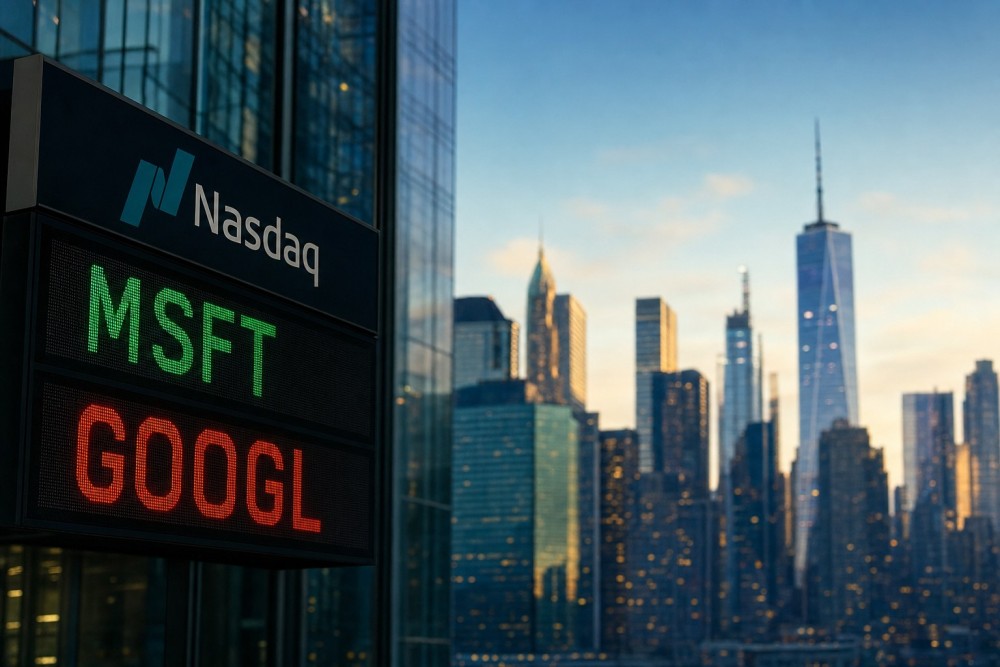
MSFT or GOOGL is the decision sitting in most US-stock portfolios right now. Both names anchor the mega-cap AI trade. Q1 2026 earnings just gave us a fresh scoreboard to work with.
The print was clear. Alphabet (GOOGL) showed cleaner capex-to-demand conversion. Microsoft (MSFT) showed strong demand but a tighter supply story.
Your job is not to pick a winner blindly. It is to size exposure with a clear framework. This guide walks through what changed, what to add, and when to wait.
The stakes are real. AI capex is now the single biggest driver of mega-cap earnings dispersion. Getting your split right matters more than picking the next theme.
Q1 Scoreboard: Capex vs Demand
Both companies beat. But the quality of the beat differed in important ways.
Microsoft: Azure supply crunch
Microsoft reported Azure growth of 40% year over year for fiscal Q3. Cloud revenue rose 30% to $34.7 billion. The headline number was solid.
The nuance sat in capex. Total CY2026 capex was guided near $190 billion. CEO Satya Nadella flagged that $25 billion of that reflects higher component pricing, not new capacity.
Q4 capex (the June quarter) is expected to top $40 billion. As reported by Fortune, Microsoft is paying more for the same chips.
Azure demand still exceeds supply. That tension caps near-term revenue growth even when customers want to spend more. The bottleneck is physical, not commercial.
Alphabet: cloud backlog and search resilience
Alphabet posted Google Cloud revenue of $20 billion, up 63% year over year. That growth rate more than doubled the prior quarter's pace.
Cloud backlog hit $462 billion, nearly doubling quarter over quarter. FY2026 capex guidance was raised to $180 to $190 billion. The 2027 capex guide pointed to a significant increase.
According to CNBC, Alphabet's spending is already converting to booked revenue. The capex critique softened on this print.
Search also held up better than feared. AI Overviews did not visibly cannibalize ad revenue this quarter. That is a quiet but important data point for the bull case.
Which Stock Wins If Ads Slow?
A US ad slowdown is the obvious downside risk into 2026. The two companies absorb that shock differently.
Microsoft has effectively no ad exposure. Productivity, cloud, and gaming carry the revenue mix. An ad slowdown barely touches the top line.
Alphabet is more exposed. Search advertising still drives the bulk of profit. A weaker ad market would compress earnings near term.
But Alphabet is not a one-trick stock anymore. YouTube subscriptions, Cloud, and Waymo provide ballast. The $462 billion cloud backlog is contractual, not cyclical ad spend.
If ads slow sharply, MSFT holds up better on the income statement. If ads merely soften, GOOGL's cloud growth likely offsets the drag.
The base case sits in the middle. A mild ad slowdown with continued cloud strength favors a blended position, not a single-name bet.
Sizing Mega-Cap AI Exposure
A split position usually beats picking one name. The two profiles complement each other inside a single AI sleeve.
Tilt MSFT for stability
Lean Microsoft-heavy if your portfolio prioritizes drawdown control. The earnings stream is more diversified across enterprise contracts.
A 60% MSFT and 40% GOOGL split fits a conservative investor. Dollar-cost average over four to six weeks. Avoid lump-sum entries near all-time highs.
Tilt GOOGL for re-rating optionality
Lean Alphabet-heavy if you want exposure to multiple expansion. The cloud backlog could drive a valuation re-rate over 12 to 18 months.
A 60% GOOGL and 40% MSFT split fits an investor with longer duration. You can also add Amazon (AMZN) as a third cloud leg if you want broader diversification.
When to Add vs When to Wait
Action triggers matter more than price predictions. Build a checklist tied to known dates.
The next major catalyst is the June FOMC meeting on the 16th to 17th. The Fed Funds rate sits at 3.50 to 3.75%. A dovish surprise would lift duration-sensitive mega-caps.
The second trigger is the next earnings cycle in late July. Watch for Azure supply easing at Microsoft. Watch for Cloud backlog growth at Alphabet.
Add on weakness if either stock pulls back 8 to 10% without a fundamental break. Wait if capex revisions move sharply lower without a matching demand signal.
Avoid chasing green-day rallies after earnings. The better entries usually appear two to three weeks post-print.
Keep position sizing disciplined. No single mega-cap name should exceed 10% of a diversified portfolio. Concentration risk is real even in the safest names.
Conclusion
The Q1 2026 prints did not crown a single winner. They gave investors a clearer way to think about risk and reward across the two names.
Microsoft is the steadier compounder with supply still chasing demand. Alphabet is the re-rating candidate with capex now visibly converting to bookings. A blended allocation, sized for your risk tolerance, captures both.
Open the Gotrade Global app, check your MSFT and GOOGL allocation, and reposition based on the framework above. Trade US stocks from $1 with fractional shares so you can size each position precisely.
FAQ
Is MSFT or GOOGL the better AI stock for 2026?
Both are core holdings. MSFT offers more stability, GOOGL offers more upside if cloud backlog converts.
How should a retail investor split between MSFT and GOOGL?
A 50/50 base, then tilt 60/40 toward MSFT for stability or toward GOOGL for re-rating optionality.
What is the biggest risk to GOOGL right now?
A sharper than expected US ad slowdown, partially offset by YouTube subscriptions and the $462B cloud backlog.
When is the next catalyst for both stocks?
The June 16 to 17 FOMC meeting and the late July earnings prints will set the next directional move.