Rocket Lab stock has gone vertical. RKLB trades near $125 in mid-May 2026, up from a 52-week low of $23.92.
That move has put RKLB second in the WallStreetBets 2026 retail poll. The pitch: the only pure-play public SpaceX alternative.
The reality is more nuanced. Here is the analyst breakdown.
Business Segments: Electron, Neutron, and Space Systems
Rocket Lab runs two segments. Launch Services covers Electron and the HASTE suborbital variant. Space Systems builds satellites, components, and spacecraft platforms.
In Q1 2026, Space Systems generated $136.7 million versus $63.7 million for Launch Services. The mix is roughly two-thirds satellites, one-third rockets.
Electron is the cash engine today
Electron has flown 84 missions since 2017, with a 100% success rate across 21 launches in 2025. The company signed 31 new Electron and HASTE contracts in Q1 2026 alone, more bookings than full-year 2025.
Neutron is the upside option
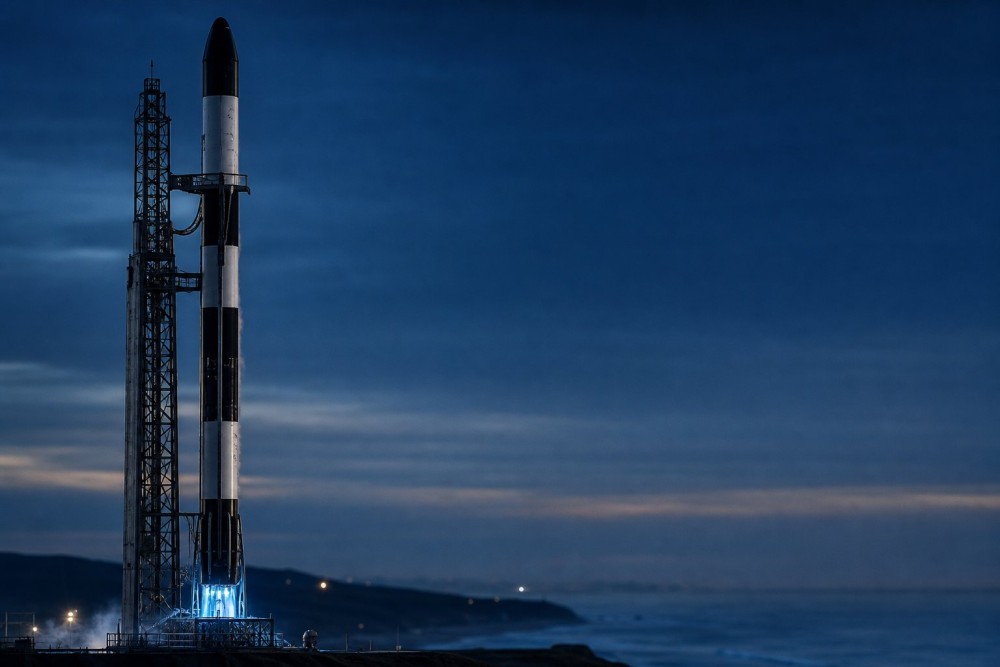
Neutron is a medium-lift reusable rocket targeting Falcon 9's market. Per SpaceNews, the debut has slipped to Q4 2026.
Neutron is priced at $50 million per flight versus Falcon 9 at $70 million. It can lift 13,000 kg to LEO while landing the booster.
Why Retail Investors Are Piling Into RKLB on Reddit
RKLB ranked second in the WallStreetBets 2026 stock poll, behind only the largest mega-cap retail favorites. Reddit sentiment scores hit 88 (Very Bullish) in early May.
The narrative has three legs. First, SpaceX is private and reportedly targeting a $1.75 trillion IPO in June 2026. Retail wants a public proxy.
Second, the Q1 2026 print beat hard. Revenue of $200.3 million was up 63.5% year-over-year, and Q2 guidance topped estimates.
Third, defense spending. National security launches are a structural tailwind for any US-based launch provider with a working rocket.
Trade RKLB and other space stocks on Gotrade with fractional shares from $1, 24/5 US market access, and no monthly fees.
Revenue Mix Shift and the Path to Profitability
Two years ago, Rocket Lab was a launch company that also built some satellite parts. Today it is a satellite company that also launches rockets.
Space Systems grew 57.2% year-over-year in Q1 2026. Backlog hit $2.2 billion, a 20% sequential jump, with five Neutron slots booked.
Gross margins are inflecting
GAAP gross margin reached 38.2% in Q1 2026, with non-GAAP at 43%. Both numbers beat company guidance.
That is the highest gross margin Rocket Lab has ever posted. Satellite work carries better unit economics, so the mix shift is structurally accretive.
EBITDA is closing the gap
Adjusted EBITDA loss narrowed to $11.8 million, better than the $21 to $27 million guide. GAAP net loss was $45 million.
Rocket Lab ended Q1 with $1.48 billion in cash and over $2 billion in total liquidity. The runway is real.
Risks: Cash Burn, Competition, and Launch Failures
The stock is priced for perfection. At $72 billion market cap on $200 million quarterly revenue, RKLB trades at roughly 90 times annualized sales.
That multiple only works if Neutron lands, scales, and steals share from Falcon 9. Any slip in that thesis is downside risk.
Neutron schedule slip is the obvious risk
Neutron has already slipped from 2024 to 2025 to 2026. A propellant tank failure during testing pushed the debut to Q4 2026 at the earliest.
Per Space.com, the FAA launch permit window runs through December 31, 2026. Another slip into 2027 would force a stock re-rate.
SpaceX is the structural ceiling
SpaceX flies Falcon 9 over 100 times a year. Starship, if operational, drops launch costs to a level no competitor can match.
Falcon 9 lifts 22,800 kg to LEO versus Neutron's 13,000 kg. SpaceX can ignore the medium-lift market or crush it at will.
Launch failures are existential
Electron has had four failures across 84 missions. One bad Neutron debut could erase tens of billions of market cap.
This is not Boeing (BA) or Lockheed Martin (LMT), where a program failure is absorbed by a diversified backlog.
Position Sizing for a High-Beta Speculative Position
The framing in the topic title is now stale. RKLB is no longer a small-cap stock at $72 billion market cap, but the volatility profile still trades like one.
Beta sits well above 2 versus the S&P 500. A 10% market drawdown can translate to a 25 to 40% RKLB drawdown on any Neutron headline.
Treat RKLB as a satellite, not a core
Standard speculative position sizing applies. A 1 to 3% allocation captures the upside without making a single Neutron headline portfolio-defining.
Investors wanting space exposure without single-name risk can pair RKLB with diversified defense primes like NOC or RTX to dampen volatility.
Catalyst calendar matters
The Neutron debut is the biggest catalyst of 2026. A clean flight likely re-rates the stock higher.
A slip, a tank failure, or a launch loss could cut the stock in half. Size accordingly.
Conclusion
Rocket Lab has the fundamentals to justify some of the rally. Record Q1 revenue, expanding gross margins, and a $2.2 billion backlog are not nothing.
But the stock prices in a Neutron success that has not yet happened. The SpaceX-proxy narrative is real, and so is the binary catalyst risk.
Investors who want space exposure without waiting for the SpaceX IPO can trade RKLB on Gotrade with fractional shares from $1.
FAQ
Is Rocket Lab still a small-cap stock?
No, RKLB trades at roughly $72 billion market cap in May 2026, putting it well into large-cap territory despite the lingering small-cap narrative.
When will Neutron launch for the first time?
Rocket Lab is targeting Q4 2026 for the Neutron debut, with the FAA launch permit window open through December 31, 2026.
Is RKLB profitable?
No, Rocket Lab posted a $45 million GAAP net loss in Q1 2026, though Adjusted EBITDA loss narrowed sharply to $11.8 million.
How does Neutron compare to SpaceX Falcon 9?
Neutron is priced at $50 million per launch versus Falcon 9 at around $70 million, but carries roughly half the payload capacity at 13,000 kg to low earth orbit.
What is the biggest risk to the RKLB thesis?
A Neutron debut failure or another schedule slip into 2027 is the primary risk, since the current valuation prices in Neutron success.