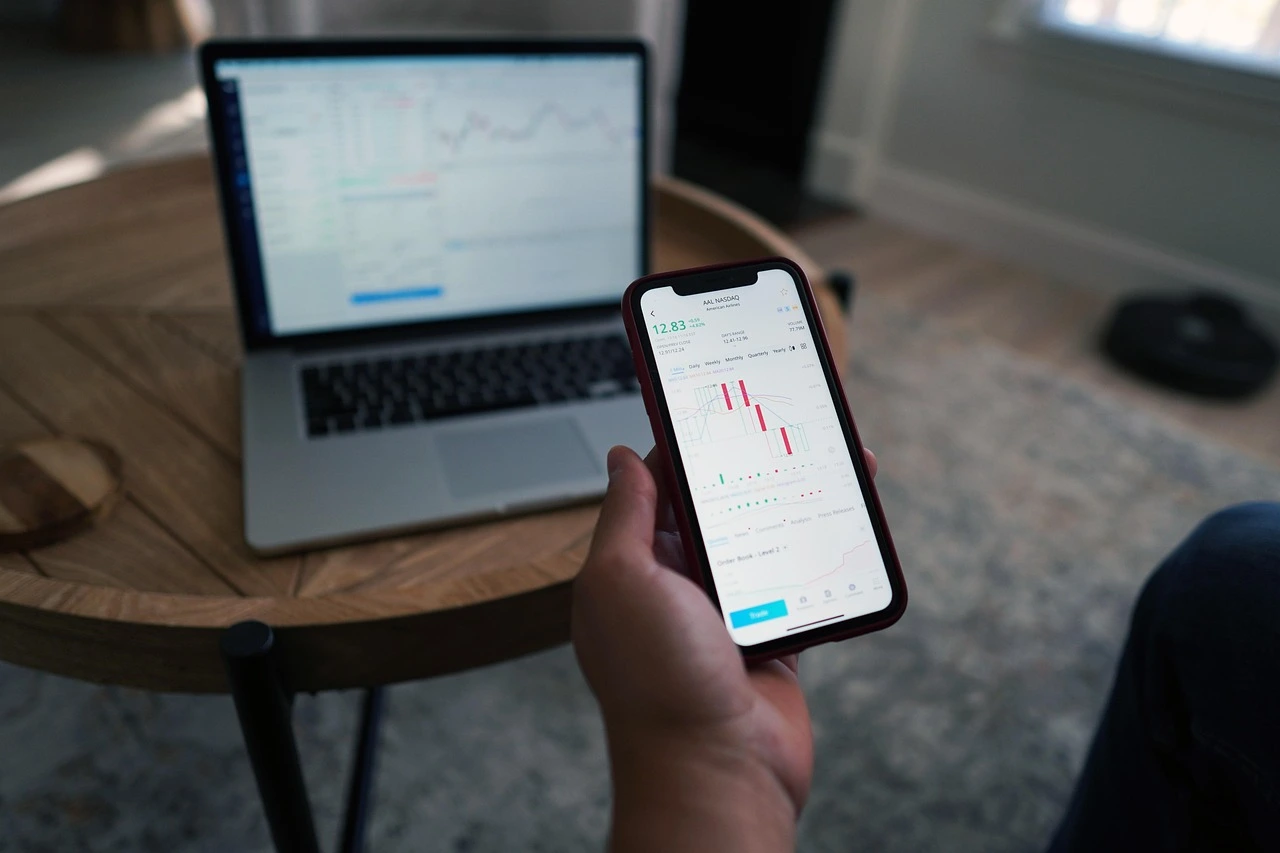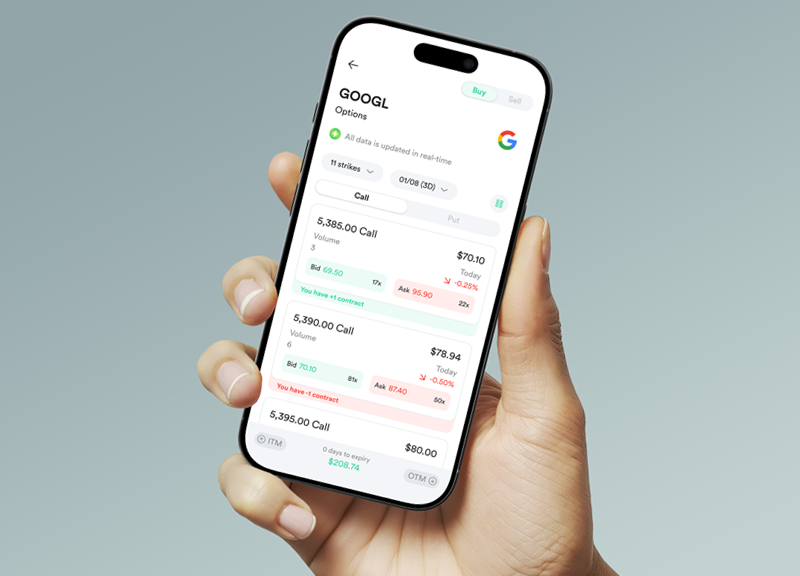
When entering financial markets, one of the first decisions traders face is choosing the right instrument. Two of the most common choices are stocks and options.
Understanding stocks vs options trading is essential because each instrument has different risk profiles, complexity levels, and profit potential. This trading instruments comparison helps you decide which approach fits your goals and experience level.
Key Differences Between Stocks and Options
Stocks represent ownership in a company. When you buy a stock:
- you own a portion of the business
- you can benefit from price appreciation
- you may receive dividends
Options, on the other hand, are contracts that give you the right, but not the obligation, to buy or sell an asset at a specific price before a certain date.
Key differences:
- stocks = ownership
- options = derivatives based on underlying assets
Additionally:
- stocks do not expire
- options have expiration dates
This makes options more time-sensitive compared to stocks.
Risk and Leverage Comparison
One of the biggest differences lies in risk and leverage.
Stocks
- risk is generally limited to the amount invested
- price movements are typically more gradual
- no built-in leverage unless using margin
For example:
- buying $1,000 worth of stock means your maximum loss is $1,000
Options
- provide built-in leverage
- small price movements can lead to larger percentage gains or losses
- option buyers have limited loss (premium paid), but sellers can face higher risk
For example:
- buying a call option for $100 can control shares worth much more
- a small move in the stock can significantly impact the option’s value
While leverage increases profit potential, it also increases risk.
Profit Potential and Complexity
Stocks
- profit comes from price appreciation and dividends
- easier to understand and analyze
- suitable for long-term investing
Stocks are generally more straightforward, making them ideal for beginners.
Options
- profit can come from price movement, volatility, or time decay
- more complex due to multiple variables such as delta, theta, and implied volatility
- allow for advanced strategies like spreads, hedging, and income generation
Options offer more flexibility but require deeper understanding.
In short:
- stocks = simpler, linear returns
- options = complex, multi-dimensional returns
When Traders Use Each Instrument
The choice between stocks and options depends on objectives.
When traders use stocks
- long-term investing
- building a portfolio
- seeking steady growth
Stocks are commonly used for:
- buy-and-hold strategies
- dividend income
- capital appreciation
When traders use options
- short-term trading opportunities
- hedging existing positions
- leveraging capital efficiently
Options are often used for:
- trading volatility
- generating income (e.g. covered calls)
- protecting downside risk
Some traders combine both instruments for a more flexible strategy.
Beginner Mistakes to Avoid
Choosing the wrong instrument without understanding the risks can lead to losses.
Common mistakes in stock trading
- buying based on hype without analysis
- ignoring valuation
- lacking a long-term plan
Common mistakes in options trading
- underestimating time decay
- using excessive leverage
- trading complex strategies without understanding them
One of the biggest mistakes is jumping into options without mastering the basics.
Beginners should focus on:
- understanding how options pricing works
- starting with simple strategies
- managing risk carefully
Which One Is Better for You?
There is no universal answer. Stocks may be better if you:
- prefer simplicity
- have a long-term investment horizon
- want lower complexity
Options may be better if you:
- understand risk management
- want flexibility in strategies
- are comfortable with short-term trading
The best approach depends on your experience, goals, and risk tolerance.
Conclusion
Stocks and options are both powerful trading instruments, but they serve different purposes. Stocks provide simplicity and long-term growth potential, while options offer flexibility and leverage with higher complexity.
By understanding the differences in stocks vs options trading, you can choose the instrument that aligns with your strategy and risk profile.
FAQ
What is the main difference between stocks and options?
Stocks represent ownership, while options are contracts based on underlying assets.
Are options riskier than stocks?
Yes. Options involve leverage and time decay, which can increase risk.
Should beginners trade options?
Beginners can trade options, but it is recommended to start with simple strategies and strong risk management.
References
- NerdWallet, Stocks vs Options, 2026.
- CBOE, Options vs. stocks, 2026.