Tesla's 2026 story is no longer about selling more cars. It is about whether a $25B capex pivot into Robotaxi and AI compute can offset slowing EV demand.
The Q1 2026 print gave investors a mixed picture. Automotive margins compressed again, but management doubled down on autonomy guidance.
If you hold Tesla stock at current levels, the next two quarters decide whether this is a rerating or a value trap.
Tesla Q1 2026 Earnings Recap
Tesla reported Q1 2026 deliveries that came in below consensus, with the Model Y refresh ramp absorbing factory downtime across Fremont and Berlin. Revenue growth stayed roughly flat year over year.
Automotive gross margin excluding regulatory credits trended into the mid-teens. That is the lowest print since 2019 and well below the 28% peak from 2022.
Free cash flow turned negative for the quarter as capex spiked ahead of the Robotaxi network buildout. Management framed this as a deliberate investment cycle, not a demand problem.
Energy storage was the bright spot. Megapack deployments hit a new quarterly record and the segment now contributes a high-teens share of total gross profit.
The market reaction was muted. Shares traded in a tight range as investors waited for clearer Robotaxi signals.
Average selling price continued to drift lower, reflecting Model 3 and Model Y price cuts in China and Europe. That pricing pressure is the central swing factor for 2026 margins.
Robotaxi Expansion Timeline and Total Addressable Market
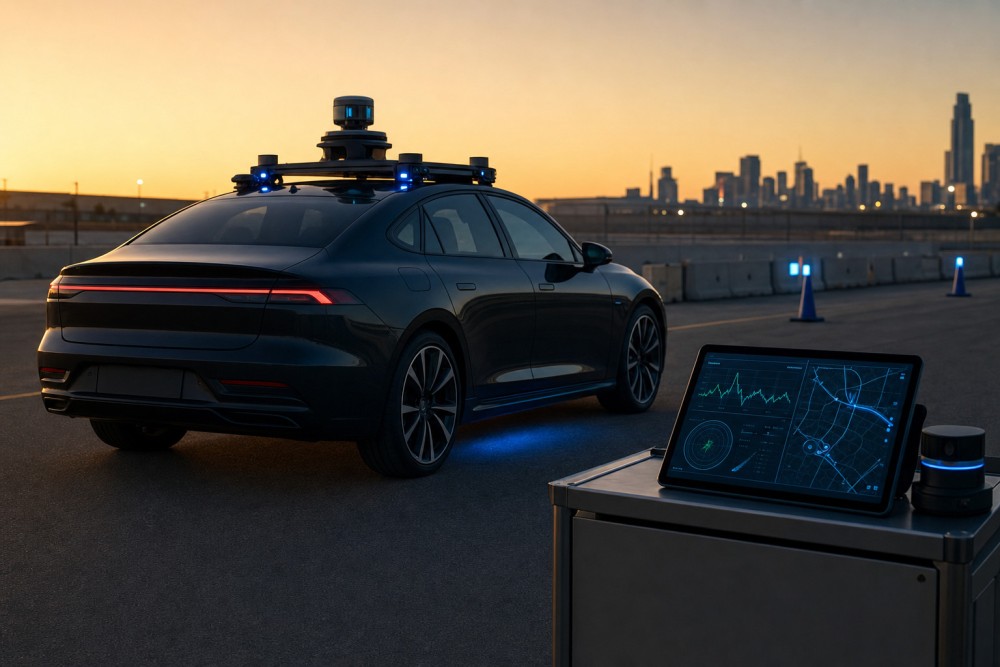
The Robotaxi rollout in Austin and the Bay Area is the single biggest valuation lever Tesla has. Management reiterated a multi-city expansion across the second half of 2026.
If unsupervised FSD reaches operational scale, the unit economics shift dramatically. A vehicle earning ride revenue 16 hours a day looks nothing like a one-time car sale.
The total addressable market for autonomous ride-hail is large but contested. Competitors at Alphabet's Waymo already operate paid rides at scale in Phoenix, San Francisco, and Los Angeles.
Ride-hail platforms like Uber and Lyft have signaled willingness to integrate third-party AV fleets. That keeps the demand side open, but it also means Tesla is not the only path to scale.
Sell-side estimates of the global autonomous ride-hail TAM range from $1T to $5T by 2035. The spread reflects deep uncertainty on adoption and regulation.
The $25B Capex Pivot: Free Cash Flow Implications
Tesla guided 2026 capex toward the $25B range, a sharp step up from the $10B level of prior years. The bulk goes to AI training compute, Dojo, and Robotaxi fleet infrastructure.
That spend pulls free cash flow lower across 2026 and likely into 2027. Investors who anchored to Tesla as a self-funding cash machine need to reset expectations.
The bull read is straightforward. If Robotaxi monetizes in 2027, the capex pays back inside three to four years and operating leverage expands.
The bear read is also straightforward. Capex this large with no proven autonomy revenue creates balance sheet risk if Robotaxi slips another year.
Tesla still holds a strong cash position and limited debt. That buys roughly two years of runway at current burn before financing pressure becomes a real constraint.
Bull vs Bear Case for TSLA at Current Valuation
The bull case rests on three pillars. Robotaxi scales, FSD licensing closes with one major OEM, and energy storage compounds at 40% plus.
In that scenario, Tesla trades less like a carmaker and more like a platform business. The current multiple, while high versus auto peers, looks reasonable.
The bear case is equally clear. Core auto margins keep compressing, Chinese EV competition intensifies, and Robotaxi slips into 2027 with another capex round needed.
Pure-play EV competitors like Rivian and legacy automakers like GM and Ford have all pulled back EV capex. That tells you something about near-term EV demand.
Tesla trades at a multiple roughly five to ten times higher than traditional auto peers. Most of that premium is the market pricing in autonomy and AI optionality.
Strip out the Robotaxi narrative and the multiple compresses sharply. That is the asymmetry investors are underwriting at current prices.
Conclusion
Our call on Tesla at current levels is Hold for existing positions, Wait for new entries.
If you already own TSLA, the Robotaxi optionality is worth keeping. Trimming makes sense only if your position is oversized relative to your portfolio risk budget.
For new positions, wait for a confirmed paid Robotaxi launch in a second city, or a pullback to the low $200s. Buying here pays full price for unproven autonomy.
The next two earnings prints are the decision points. Free cash flow trajectory and Robotaxi geographic expansion will tell you which case is winning.
FAQ
Is Tesla stock a buy in 2026?
Our view is Hold for current owners and Wait for new buyers. The Robotaxi thesis is intact but unproven, and entry price matters at this valuation.
What is the $25B Tesla capex going toward?
The majority funds AI training compute, Dojo expansion, and Robotaxi fleet infrastructure. A smaller share covers Megapack capacity and next-generation vehicle tooling.
When will Tesla Robotaxi launch in more cities?
Management guided a multi-city rollout across the second half of 2026, building on the Austin and Bay Area pilots. Specific cities have not been confirmed.
How does Tesla compare to Waymo on autonomy?
Waymo operates paid rides at scale today in Phoenix, San Francisco, and Los Angeles. Tesla is earlier in commercial deployment but has a much larger potential fleet through consumer vehicles.
What is the bear case for TSLA at current levels?
Core auto margins keep compressing, Chinese competition pressures pricing, and Robotaxi slips into 2027. In that scenario the capex spend creates real balance sheet strain.