Uber reports Q1 2026 results Wednesday morning before the open. This uber earnings preview sets the bar.
The story arc into 2026 is profitability, not growth at any cost.
Investors want adjusted EBITDA expansion, free cash flow conversion, and a clear update on the Waymo robotaxi rollout.
Consensus Revenue and Adjusted EBITDA
Wall Street consensus for uber q1 2026 sits near $13.27 billion in revenue, up roughly 15% year over year, per Zacks consensus data.
EPS consensus is around 71 cents.
Uber guided gross bookings to a $52.0 billion to $53.5 billion range for the quarter. That implies 17% to 21% constant-currency growth.
Adjusted EBITDA guidance came in at $2.37 billion to $2.47 billion. The midpoint would mark another record quarter for the platform.
Beating the high end of EBITDA guidance has been the recent pattern. A miss would force investors to question whether the uber profitability ramp is plateauing.
The headline numbers matter, but the segment mix below tells a sharper story.
Mobility vs Delivery: Which Segment Is Accelerating
Mobility is the rideshare core. Delivery is Uber Eats plus grocery and retail.
Both segments are tracking double-digit gross bookings growth into Q1. The question is which one is gaining share of incremental EBITDA.
Mobility setup
Rideshare has been the engine of margin expansion since 2024. Pricing has held firm in core US markets.
Driver supply has improved meaningfully across major metros. That keeps surge pricing contained and trip completion rates high.
The watch item is take rate. If take rate compresses to fund driver incentives, segment EBITDA growth slows even when bookings beat.
Membership penetration via Uber One is the secondary lever. Each percentage point of member share lifts frequency and lowers churn.
Delivery setup
Uber Eats is the more mature business but still levering up on advertising revenue. The ad take rate is the swing variable.
Grocery attach is the second lever. Management has flagged grocery as the highest-frequency cohort, and frequency drives lifetime value.
If Delivery EBITDA grows faster than Mobility this quarter, the multiple-expansion bull case strengthens. The market has priced Uber as a Mobility story, so a Delivery beat is the higher-leverage surprise.
Buyback Program Update and Capital Allocation
Uber announced a roughly $7 billion share repurchase authorization in February 2025. That marked the formal pivot from growth-at-all-costs to capital return.
The pace of buyback execution is the metric to watch. Slow execution signals management is hoarding cash for an acquisition or autonomous capex.
Aggressive execution signals confidence in uber free cash flow generation through the cycle.
Free cash flow conversion has been tracking near 90% of adjusted EBITDA. That is the cash math that justifies a buyback at scale.
It is also why free cash flow yield is the right lens for valuing Uber today. Legacy gross bookings multiples no longer capture the cash story.
Watch for any update on dividend initiation. Uber has not committed to a dividend yet.
As the cash pile compounds, the dividend question gets louder each quarter.
This is the chapter where Uber transitions from a growth story to a cash compounder. It is the classic growth-to-value arc that mature platforms eventually run.
The Q1 print will tell us how far along that transition the business already is.
Capital allocation discipline is the proof. Buyback pace, free cash flow conversion, and balance sheet posture are the three checkpoints.
What Investors Want to Hear About the Waymo Partnership
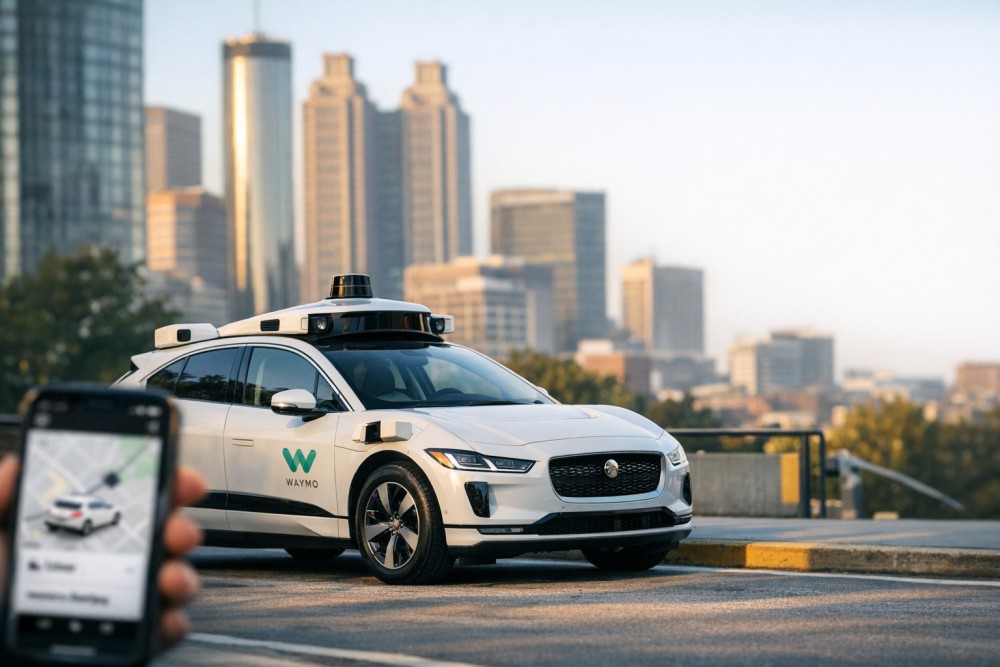
The autonomous vehicle question dominates every Uber call now. Waymo, owned by Alphabet, is the lead AV partner.
Robotaxi rides through the Uber app launched in Austin in March 2025 and Atlanta in June 2025. Investors want three specific updates this quarter.
Ride volume and fleet scale
Austin had roughly 100 Waymo vehicles on the Uber platform last summer. Investors want a current count and a trajectory for Atlanta, per CNBC reporting.
Weekly ride volume from Waymo trips is the cleanest demand signal.
Partnership economics
The market does not yet know the unit economics of a Waymo-on-Uber ride. Take rate, cost per ride, and contribution margin are the three numbers analysts will press for.
If economics are favorable, the AV partnership becomes accretive rather than dilutive to Mobility EBITDA.
Next-city pipeline
Austin and Atlanta are the proof of concept. Investors want a named third city and a launch window.
Without that, the story stays a two-city pilot rather than a national rollout.
Conclusion
The setup into Q1 2026 favors a beat on EBITDA and an in-line print on bookings. The narrative risk is in the AV update, not the headline numbers.
If management raises full-year EBITDA guidance and signals a third Waymo city, the stock can break out of its recent range. If guidance holds and Waymo updates feel incremental, expect the print to be a non-event and the multiple to stay rangebound.
Trade UBER and GOOGL on Gotrade with fractional share access from your phone.
FAQ
When does Uber report Q1 2026 earnings?
Uber reports Q1 2026 results Wednesday morning before the US market open.
What is consensus for Uber Q1 2026 revenue?
Consensus revenue is approximately $13.27 billion, representing about 15% year-over-year growth.
How big is Uber's buyback program?
Uber authorized roughly $7 billion in share repurchases in February 2025, and pace of execution is a key Q1 watch item.
What should investors watch on the Waymo partnership?
Look for ride volume in Austin and Atlanta, partnership unit economics, and any announcement of a third launch city.