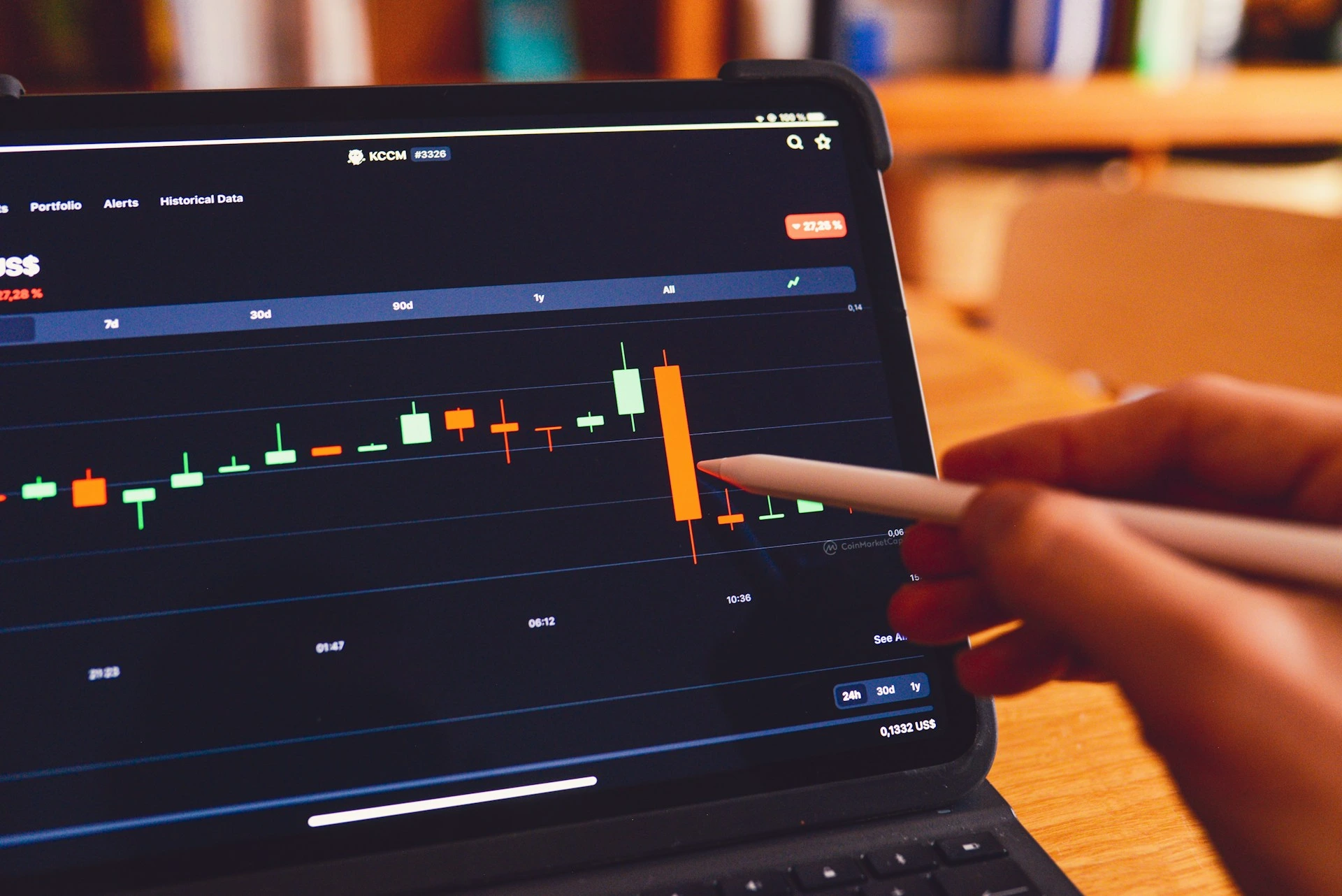
Watching a stock continue to fall after you’ve bought it is one of the most difficult situations for any investor. The instinct is often to either hold and hope, or keep buying more to lower the average price.
If you are asking stock keeps falling what to do, the key is not to react emotionally. A structured losing stock decision framework helps you assess whether to hold, cut, or adjust your position based on logic, not fear.
How to React and What to Do
1. Re-evaluate fundamentals
The first step is to revisit your original investment thesis.
Ask yourself:
- has the company’s growth outlook changed?
- are earnings or margins deteriorating?
- has there been negative news affecting the business model?
If the fundamentals remain strong, the price decline may be temporary. If the fundamentals have weakened, the drop may reflect a real shift in value.
This step is critical because price alone does not determine whether a stock is still worth holding.
2. Identify trend direction
Understanding the trend helps you separate a pullback from a downtrend.
Look at price structure:
- lower highs and lower lows indicate a downtrend
- broken support levels suggest continued weakness
If the stock is clearly trending downward, the probability of further decline increases. Trying to fight a strong downtrend without confirmation can lead to repeated losses.
Trend analysis provides context for timing and risk management.
3. Avoid averaging blindly
Averaging down can be effective, but only under the right conditions.
Blind averaging often happens when:
- investors want to reduce their average cost
- emotions override analysis
- price continues falling without clear support
This can increase exposure to a losing position.
Instead, averaging should only be considered when:
- fundamentals remain intact
- there is a clear support level
- there is evidence of stabilization
Without these conditions, averaging down becomes riskier.
4. Define maximum loss threshold
Every position should have a predefined risk level. This means deciding in advance:
- how much loss you are willing to accept
- where you will exit if the trade fails
Without a defined threshold, losses can grow uncontrollably.
For example:
- setting a percentage-based stop
- using key support levels as exit points
This creates discipline and prevents small losses from becoming large ones.
5. Decide: cut loss or long-term hold
After evaluating fundamentals and trend, you need to make a clear decision.
There are two main paths:
- cut loss if fundamentals are weakening or trend is clearly bearish
- hold if the investment thesis remains strong and the decline is temporary
Holding without conviction is risky. Cutting without analysis can also lead to missed recovery.
The decision should be based on:
- business quality
- market conditions
- your original investment plan
Clarity comes from structured thinking, not reaction.
Understanding the Psychology of Losing Positions
Falling stocks often trigger emotional biases.
Common reactions include:
- holding too long to avoid realizing a loss
- averaging down without proper analysis
- selling at the bottom due to panic
These behaviors are driven by loss aversion. A structured process helps reduce emotional influence and improve decision-making.
Conclusion
When a stock keeps falling, the priority is not to react quickly, but to think clearly. By reassessing fundamentals, understanding the trend, avoiding blind averaging, and defining risk limits, investors can make better decisions.
A disciplined losing stock decision framework turns uncertainty into a process. Instead of reacting to price alone, the focus shifts to strategy, risk control, and long-term thinking.
FAQ
What should I do if my stock keeps going down?
Re-evaluate fundamentals and trend before deciding whether to hold or exit.
Is it good to average down on a falling stock?
Only if fundamentals remain strong and there is evidence of stabilization.
When should I cut a losing stock?
When your predefined risk level is reached or the investment thesis changes.
References
- CNN, What to do if the stock market’s big drop is getting to you, 2026.
- CFA Institute, Behavioral Finance and Risk Management, 2026.