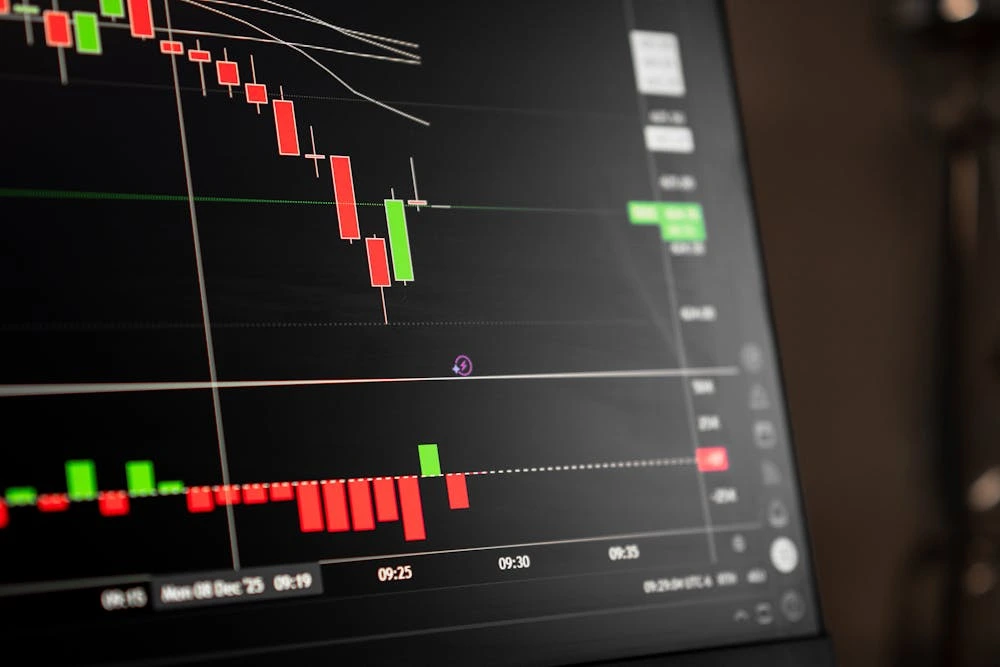
A trading journal is a structured record of your trades, decisions, and results. It helps you see not only whether a trade made money, but whether the decision behind it was good.
Many traders remember their profit and loss, but forget the setup, risk plan, and emotions behind each trade. A trading journal helps turn those details into patterns you can review and improve over time.
What Is a Trading Journal
A trading journal is a detailed log of every trade you take.
The purpose is not only to record numbers but to understand decision quality. A well-maintained journal allows traders to evaluate whether their strategy is working as intended.
If you are learning how market behavior affects execution, you can start investing in US Stocksand track live positions while maintaining a structured record separately for analysis.
What to Record After Every Trade
A practical trading journal template should capture both quantitative and qualitative data.
The more consistent the record, the easier it becomes to identify patterns. Consistency matters more than complexity.
Tracking Mistakes vs Tracking Results
Many traders focus only on profit and loss. However, tracking mistakes is often more valuable than tracking results. A winning trade taken without a plan may reinforce bad habits. A losing trade that followed rules perfectly may still represent good execution.
Common mistakes to track include:
Entering without confirmation
Ignoring stop-loss rules
Overtrading
Increasing size after losses
Holding losers too long
By separating execution quality from outcomes, traders gain clearer insight.
Tracking trading performance should include:
Win rate
Average gain
Average loss
Maximum drawdown
Risk-reward consistency
However, context matters, a 50% win rate can still be profitable if average gains exceed losses.
Reviewing Performance Metrics
Journaling becomes powerful when reviewed regularly.
Weekly or monthly reviews can focus on:
Total trades taken
Strategy breakdown by setup
Performance during different market conditions
Emotional triggers linked to losses
Important performance metrics include:
Expectancy per trade
Profit factor
Largest winning and losing streak
Risk-adjusted returns
Review sessions should answer practical questions:
Which setups consistently perform well?
Which mistakes repeat most often?
Does performance improve when following strict risk rules?
Risk control improves when traders see patterns clearly.
A journal highlights:
Whether position sizing is consistent
Whether stop-losses are respected
Whether revenge trading occurs after losses
Whether profits are cut too early
By reviewing documented behavior, traders can:
Adjust position size rules
Refine entry criteria
Limit exposure during volatile periods
Avoid repeating emotional errors
Journaling creates a feedback loop. Instead of reacting impulsively to short-term market noise, traders develop structured discipline.
Download Free Trading Journal Template by Gotrade
Trading performance improves when decisions are reviewed objectively. You can download the Excel version prepared by the Gotrade team. Click the button below to access the file now!
A trading journal is more than a trade log. It is a structured tool for tracking trading performance, identifying mistakes, and refining strategy.
By recording trade details, reviewing performance metrics, and analyzing emotional patterns, traders strengthen risk control and decision quality.
Long-term improvement in trading often depends less on finding new strategies and more on consistently evaluating existing behavior.
FAQ
What is a trading journal template? A trading journal template is a structured format used to record trade details, strategy reasoning, and performance metrics consistently.
Why is tracking trading performance important? Tracking performance helps identify strengths, weaknesses, and recurring mistakes that affect long-term profitability.
How often should I review my trading journal? Many traders review weekly and monthly to evaluate patterns and adjust strategy accordingly.
Gotrade is the trading name of Gotrade Securities Inc., which is registered with and supervised by the Labuan Financial Services Authority (LFSA). This content is for educational purposes only and does not constitute financial advice. Always do your own research (DYOR) before investing.