
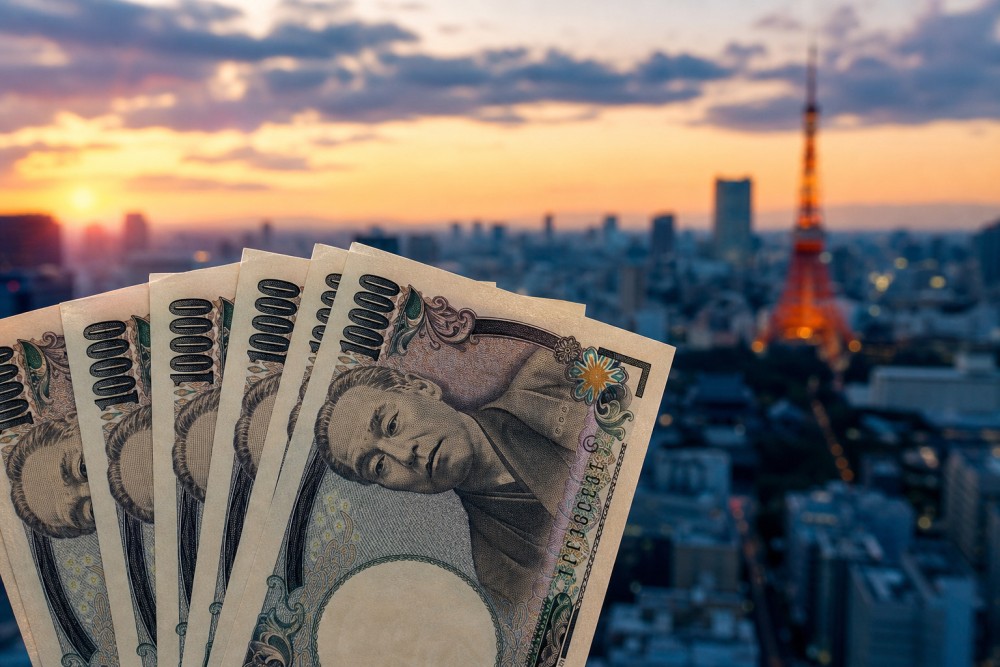
Gotrade News - Alphabet priced roughly $3.6 billion of yen-denominated Samurai bonds on Friday across eight tranches. According to Bloomberg, the deal is the largest yen bond ever issued by a foreign corporate borrower.
The Google parent tapped Japan to widen funding sources for its $190 billion 2026 capex plan. As reported by The Next Web, the order book pulled strong demand from Japanese institutional investors hunting yield.
Key Takeaways
- Alphabet (GOOGL) priced about $3.6 billion of Samurai bonds, a record for a foreign issuer in Japan.
- The eight-tranche deal spans three to forty year maturities, locking in low Japanese yields.
- Proceeds support Alphabet's $190 billion 2026 AI infrastructure spending plan.
Deal Structure And Pricing
The offering carries tenors of 3, 5, 7, 10, 15, 20, 30 and 40 years. Per Bloomberg, Mizuho, Bank of America and Morgan Stanley led the books for the debut Samurai trade.
The long-dated tranches give Alphabet (GOOGL) a chance to lock in funding before a possible Bank of Japan rate hike. According to The Economy, the low-rate lock-in could become a notable advantage if Japan tightens policy further.
Alphabet has now tapped six currency markets in roughly fifteen months of active issuance. Total proceeds across dollar, euro, sterling, Swiss franc, Canadian dollar and yen issuances approach $50 billion combined.
The yen tranches priced with relatively tight spreads versus comparable Japanese government bond benchmarks. That pricing reflects strong investor confidence in Alphabet's investment grade credit and AI-driven cash flow outlook.
Why The Samurai Market
Japanese yields remain among the lowest in the developed world despite recent policy shifts. Foreign blue-chip names like Alphabet can offer rare AAA-rated paper that domestic investors increasingly want in portfolios.
The Samurai market has been quiet for size deals since the Bank of Japan ended negative rates. Alphabet's success here could encourage other US technology peers to follow, particularly hyperscalers chasing capital for AI buildouts.
Combined Big Tech debt issuance ran past $121 billion in 2025 and may exceed that by mid-2026. The bond market has become the primary funding rail for the AI infrastructure race.
For investors, the record yen deal signals deep institutional appetite for top-tier tech credit at long tenors. It also shows Alphabet is willing to spread funding risk across currencies rather than rely on dollar markets alone.
Japanese life insurers and pension funds were reported as anchor buyers across the longer-dated tranches. Their need for high-grade, long-duration yen assets aligned cleanly with Alphabet's funding window.
Peers including Microsoft (MSFT) and Meta (META) have also raised dollar bonds to fund similar AI capex programs. A successful Samurai template may push them to diversify into yen as well.
The deal does not change Alphabet's fundamental credit profile, which remains anchored by Google search and cloud cash flow. It does, however, mark a clear shift in how big tech finances multi-year AI investment.