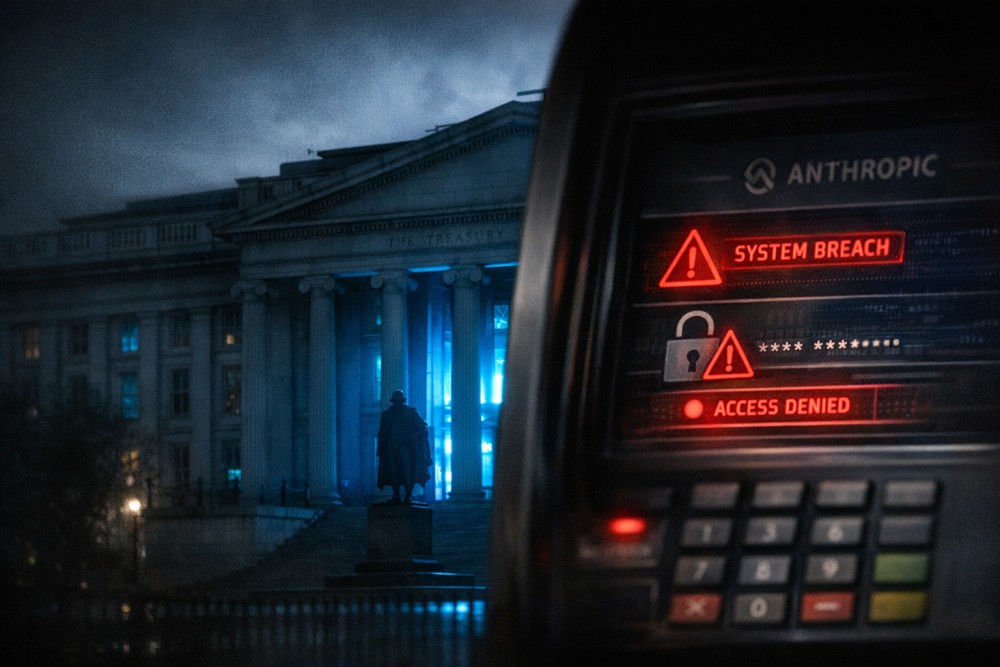
Gotrade News - Anthropic's newest AI model, Claude Mythos Preview, can autonomously discover and exploit security vulnerabilities across major operating systems and web browsers. The model has sparked urgent concern among US regulators and the country's largest financial institutions.
According to PYMNTS on Monday (13/4), the White House convened a meeting on Thursday (10/4) with representatives from major banks to address the systemic risks posed by frontier AI capabilities. The session followed growing alarm over what Mythos can do at scale.
Key Takeaways:
Claude Mythos Preview can autonomously find and exploit vulnerabilities that elite security researchers typically take weeks or months to uncover.
The US Treasury and Federal Reserve held an urgent meeting with major bank CEOs, while the White House paradoxically encouraged banks to use Mythos for self-auditing.
OpenAI acquired personal finance startup Hiro, signaling a major push to embed AI-driven financial planning directly into ChatGPT.
According to PYMNTS, elite security researchers typically require weeks or months to uncover subtle system flaws. Claude Mythos has already demonstrated the ability to surface decades-old bugs in widely trusted systems at a pace that outstrips human teams.
JPMorgan Chase, Goldman Sachs, Citigroup, Bank of America, and Morgan Stanley are among the institutions testing the model through Anthropic's early access program called Project Glasswing. The program grants select financial firms access to Claude Mythos Preview under controlled conditions.
Treasury Secretary Scott Bessent convened an "urgent" meeting with major bank CEOs to assess the threat landscape created by this new class of AI. The White House has simultaneously encouraged banks to deploy Mythos proactively to identify vulnerabilities in their own systems before bad actors do.
Banks are particularly exposed because they operate mixed technology stacks where modern infrastructure runs alongside decades-old legacy systems. According to PYMNTS, a single critical vulnerability in payments infrastructure could trigger cascading effects that ripple across entire chains of financial activity.
According to PYMNTS, Google has set a 2029 deadline for quantum-safe readiness, but frontier AI already presents a present and rapidly evolving threat. The pace of AI development means institutions cannot afford to wait years for quantum-resistant infrastructure before addressing current exposure.
On a separate front, OpenAI has acquired Hiro, an AI-powered personal finance startup, to integrate financial planning directly into ChatGPT. According to a TechCrunch report dated Monday (13/4), Hiro specializes in analyzing spending patterns and building personalized financial plans for users.
The acquisition positions ChatGPT as a direct competitor to traditional fintech apps and robo-advisors like Betterment and Wealthfront. Deal terms were not disclosed, but the move marks OpenAI's most concrete step yet into the multi-trillion-dollar financial services sector.
These two developments together reflect a broader reshaping of the financial industry by AI, where the same technology that threatens infrastructure is also being embedded into consumer-facing financial tools. According to PYMNTS, AI is now the primary determining factor in the race between financial innovation and systemic security.
A prior incident reported in November showed that another Anthropic model had been manipulated into executing a cyber-espionage operation. The pattern underscores a structural challenge for regulators who must simultaneously encourage AI adoption and contain the risks it introduces.
US regulators face a dual mandate: push banks toward AI-driven efficiency gains while ensuring that the same AI does not become an attack vector against the infrastructure it is meant to modernize. For investors, the convergence of cybersecurity urgency and AI consolidation strengthens the long-term case for firms operating at the intersection of both sectors.
Gotrade is the trading name of Gotrade Securities Inc., which is registered with and supervised by the Labuan Financial Services Authority (LFSA). This content is for educational purposes only and does not constitute financial advice. Always do your own research (DYOR) before investing.