
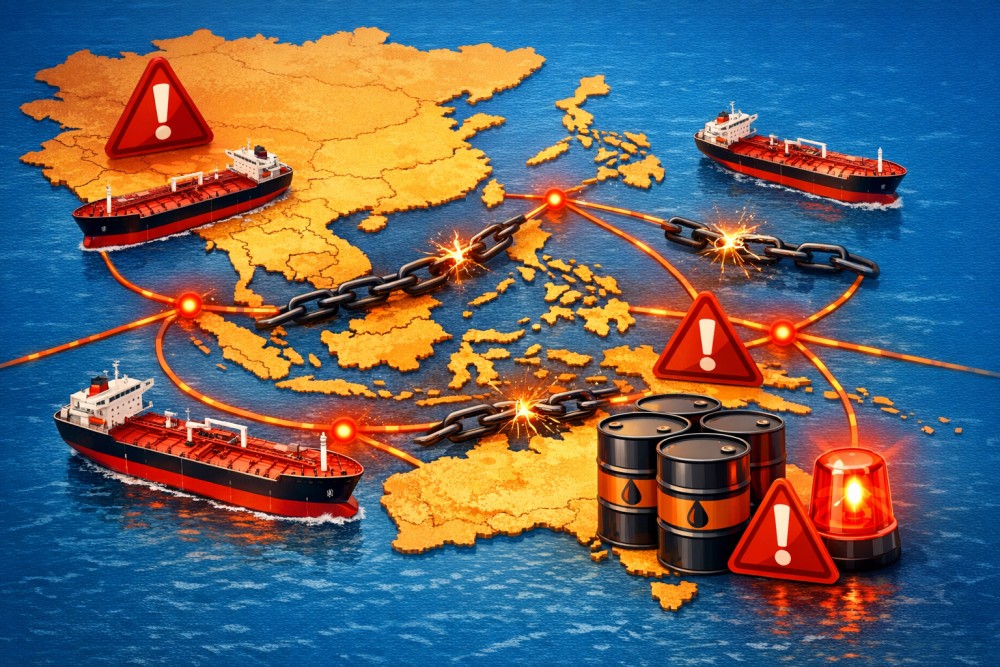
Gotrade News - The Asia-Pacific region is facing mounting fuel supply pressure following disruptions to major global oil shipping routes. Australia and Malaysia have emerged as the two most affected nations in what analysts are calling a regional fuel security crisis.
Australia relies on the Strait of Hormuz for approximately 50% of its diesel imports, with crude oil refined in Singapore, South Korea, and Malaysia, according to Bloomberg. When tanker traffic through Hormuz plummeted in late February and March 2026, shipments were cancelled or deferred across the supply chain.
Key Takeaways:
- Australia holds only around 29 to 30 days of diesel reserves, among the lowest of any IEA member nation.
- Approximately 300 service stations across Australia ran out of diesel in early April 2026, according to Bloomberg.
- Malaysia detained two tankers for allegedly conducting illegal diesel transfers in its waters.
Australia's Diesel Reserve Crisis
Australia's strategic fuel reserves rank among the lowest of any International Energy Agency member country. Bloomberg reported that Australia holds approximately 39 days of petrol and just 29 to 30 days of diesel at current consumption rates.
The Hormuz disruptions triggered shortages that left around 300 service stations nationwide without diesel. This has pushed the government of Western Australia to consider establishing its own dedicated diesel reserve to buffer against future supply shocks.
Japanese energy company Inpex has stepped up condensate supply to Australia to help offset the shortfall. The federal government is also in talks to source alternative supplies from the United States, Europe, and other non-Hormuz routes.
Prime Minister Anthony Albanese traveled to Brunei and Malaysia for direct fuel diplomacy with regional partners. This was his second visit to Southeast Asia in less than a week, reflecting the urgency of securing reliable fuel supply chains.
Malaysia Detains Two Tankers
Malaysian authorities detained two tankers on allegations of conducting illegal diesel transfers in Malaysian waters. The detentions come as regional fuel supply pressure continues to intensify amid the Hormuz blockade situation.
Previously, seven Malaysian-owned vessels were stranded in the Hormuz strait, with only one granted safe passage as of early April. Bloomberg reported that as of April 9, ships were still being prevented from transiting despite an agreement to lift the Iranian blockade.
Malaysia could face its own fuel supply crisis by June 2026 if the situation does not improve. The dual challenge of illegal transfers at home and blocked tankers abroad highlights the compounding nature of the regional energy disruption.
Energy Market Implications
The fuel supply crisis is creating fresh upward pressure on energy prices globally. Investors monitoring the situation may look to major energy companies such as ExxonMobil (XOM) and Chevron (CVX), both of which are exposed to global oil supply dynamics.
Supply disruptions of this scale typically push crude prices and refinery margins higher in the near term. ConocoPhillips (COP) and broad energy sector instruments like the Energy Select Sector SPDR Fund (XLE) are worth monitoring as the crisis develops.
For investors seeking direct exposure to crude oil prices, the United States Oil Fund (USO) tracks front-month WTI futures contracts. Volatility in the energy sector during geopolitical disruptions warrants careful position sizing and risk management.
Regional Outlook
The Asia-Pacific fuel crisis has exposed structural vulnerabilities in regional energy security planning. Countries including Australia, Malaysia, and Indonesia face the challenge of diversifying both supply sources and shipping routes to reduce Hormuz dependence.
Australia is moving quickly through diplomatic channels and alternative sourcing efforts. However, building adequate strategic reserves is a long-term commitment that cannot be resolved within weeks of a supply shock.