Gotrade News - A wave of AI-driven announcements from major U.S. corporations is reinforcing the thesis that artificial intelligence spending is accelerating across every sector, not just semiconductors. Companies from Google to UnitedHealth are betting that AI deployment and monetization will define their next growth chapter.
The breadth of this week's moves is what makes them significant for global retail investors tracking the AI investment cycle closely. Consumer tech, enterprise software, healthcare operations, and data center infrastructure are all absorbing fresh capital simultaneously, suggesting durable demand across the full technology stack from chips to end-user applications.
Key Takeaways
- Google is embedding Gemini AI directly into Chrome, reaching 3.5 billion devices and cementing its position as the default AI interface for most internet users worldwide.
- Adobe's shift to outcome-based AI pricing could reshape how enterprise software companies monetize, tying revenue to measurable business results rather than token consumption.
- UnitedHealth raised its 2026 earnings guidance while committing to significant AI and cybersecurity investments, proving that AI spending now extends well beyond the traditional tech sector.
Google and Adobe Reshape How AI Reaches Users and Businesses
Alphabet introduced two AI features that embed its Gemini assistant directly into the Chrome browser, fundamentally changing how billions of people interact with AI daily. The first feature, called Skills for Gemini, lets users save custom AI prompts and reuse them with a single click across any webpage they visit.
Skills launches with pre-built categories spanning shopping comparisons, recipe modifications, personal budgeting, and productivity workflows. The second feature updates Chrome's AI Mode so that merchant product pages open in a side panel alongside an active Gemini conversation session, keeping full AI context intact while browsing retail sites.
The distribution advantage here is difficult to overstate for investors evaluating Alphabet's AI monetization runway over the next several quarters. Chrome commands roughly 65% of the global browser market across 3.5 billion active devices, giving Gemini an unmatched consumer surface area that no competing AI assistant from Microsoft, Apple, or OpenAI can replicate overnight.
Gemini itself has grown to 750 million monthly active users, representing a staggering 100-fold increase over just two years. Google also launched Gemini as a native macOS desktop application this week, extending its reach beyond the browser into standalone computing workflows that compete directly with dedicated AI tools.
On the enterprise side, Adobe is pioneering a fundamentally different approach to AI monetization that could reshape the entire software pricing landscape. The company plans to introduce outcome-based pricing for its CX Enterprise suite, charging customers based on demonstrable business value delivered rather than raw token consumption or flat subscription fees.
Adobe President Anil Chakravarthy explained the logic bluntly, according to PYMNTS: "Tokens don't equate to value." Pricing under the new model would be measured partly by the quantity of advertising campaigns that AI agents successfully complete for each client, tying software cost directly to revenue-generating business output.
This pricing shift matters because it addresses a core tension that has slowed enterprise AI adoption broadly across industries since the generative AI boom began. Many companies have been reluctant to commit large budgets to per-token AI tools when the actual productivity gains from those tools remain difficult to quantify in advance of deployment.
Healthcare and Infrastructure Join the AI Capital Cycle
UnitedHealth Group climbed 6.96% to $346.01 after unveiling plans for significant new investments in both AI capabilities and cybersecurity infrastructure. The healthcare giant is streamlining its existing operations and exiting non-U.S. business lines to concentrate resources on domestic AI-powered healthcare transformation.
The financial results backing this strategic pivot are solid and give management credibility with Wall Street to execute ambitiously. UnitedHealth raised its full-year 2026 adjusted earnings per share guidance to $18.25, up meaningfully from the prior $17.75 estimate, while reporting quarterly revenue of $111.7 billion that grew 2% year over year.
Management also committed to completing a $2 billion share buyback program by the end of Q2, according to Insider Monkey. The combination of raised guidance, aggressive buybacks, and new AI investment spending signals strong confidence that earnings power can sustain multiple capital allocation priorities at once.
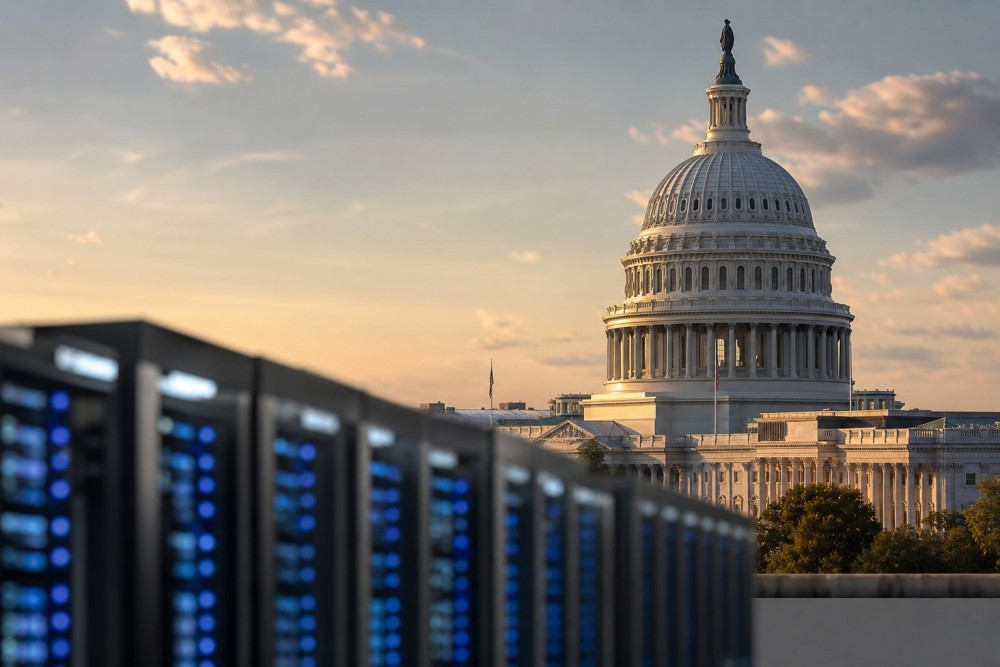
The physical infrastructure layer supporting all of this surging AI deployment is expanding just as aggressively through alternative asset managers like Blackstone, which has been rapidly building out hyperscale data center capacity across North America. Data center investment represents the picks-and-shovels opportunity of the current AI cycle, generating steady recurring demand for real asset operators regardless of which specific AI applications ultimately win consumer and enterprise market share.
The common thread linking these announcements is that corporate AI spending has clearly matured from experimental pilots into full-scale deployment and monetization. Google is distributing AI to 3.5 billion consumers through Chrome, Adobe is aligning its enterprise pricing model with AI-driven business outcomes, and UnitedHealth is applying machine intelligence to transform one of America's largest healthcare operations.
For investors evaluating the AI investment theme heading into the second half of 2026, the signal from this week across multiple sectors is unmistakable. The market cycle has moved decisively past the question of whether companies will spend on AI and into the more consequential phase of how they will generate measurable, sustainable returns from that spending.
Sources
PYMNTS, Google Introduces 'Skills' Feature for Chrome's Gemini Integration, 2026.
PYMNTS, Adobe Plans Outcome-Based Pricing for CX Enterprise AI, 2026.
Insider Monkey, UnitedHealth Group (UNH) Stock Rose 6.96% on April 22: What Happened?, 2026.