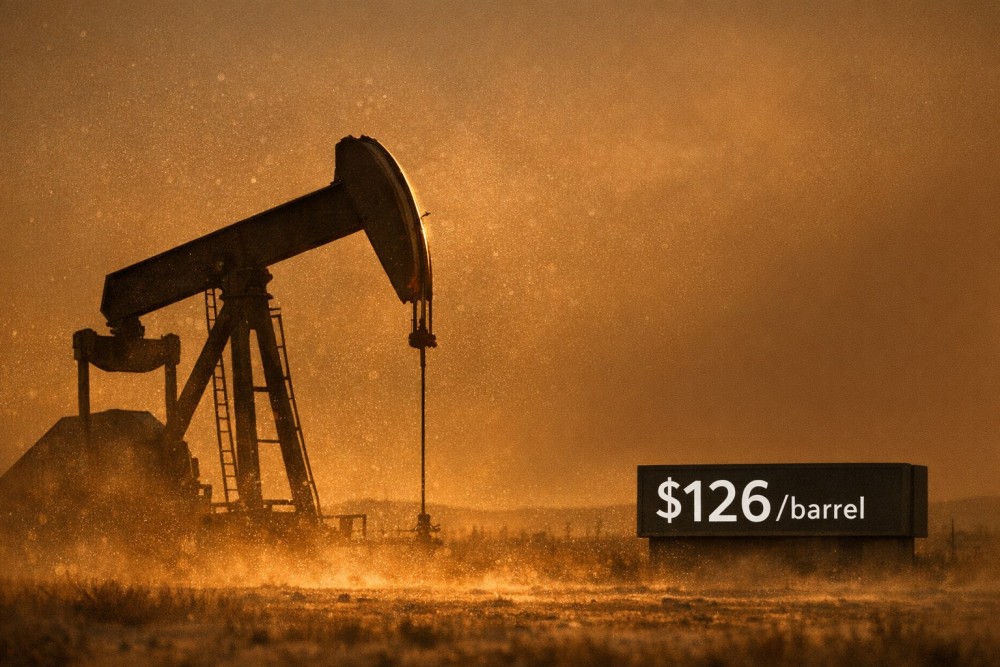
Gotrade News - Brent crude broke USD 126.10 per barrel on Wednesday (30/04), the highest level since early 2022. The rally is driven by escalating US-Iran tensions and severe disruption at the Strait of Hormuz.
West Texas Intermediate (WTI) climbed to USD 110.24 per barrel on the same day. Both benchmarks recorded sharp gains amid a global supply squeeze, according to Liputan6.
Key Takeaways:
- Brent broke USD 126.10 per barrel, the highest in 4 years
- Strait of Hormuz operating at only 4% of normal capacity
- Indonesia projects retail gasoline prices to jump to Rp16,550 in May
The Strait of Hormuz remains the central pressure point for global energy markets. Goldman Sachs estimates exports through the chokepoint are running at just 4% of normal capacity, according to Liputan6.
The US military is reportedly preparing action options against Iran. President Trump also issued aggressive statements via Truth Social, adding to market uncertainty.
Bill Perkins of Skylar Capital Management said current moves reflect physical disruption and investor psychology. He projects oil could reach USD 140 to USD 150 per barrel if the disruption persists.
Global oil consumption fell by roughly 3.6 million barrels per day in April. Goldman Sachs noted the decline came mainly from jet fuel and petrochemical demand, according to Liputan6.
Indonesia Retail Fuel Impact
Indonesia projects sharp increases in retail gasoline prices for May. RON 92 gasoline (Pertamax-grade, the standard 92-octane fuel sold by state oil firm Pertamina) could jump from Rp12,300 to Rp16,550 per liter.
The forecast assumes crude oil stays above USD 100 per barrel. Lukman Leong, Chief Analyst at Doo Financial Futures, noted crude has risen about 54% from pre-conflict levels around USD 65 per barrel, according to Bloomberg Technoz.
Crude price moves typically account for 60% to 70% of final retail fuel costs. The rest comes from logistics and distribution components that add to consumer prices.
Asian Markets React
Asian stock markets came under pressure from the energy spike. Japan's Nikkei 225 fell 1.4% while Hong Kong's Hang Seng dropped 1.5% on Wednesday (30/04), according to Kabar Bursa.
India's Nifty 50 also weakened 1.1% in the morning session. Only Singapore's Straits Times bucked the trend with a 0.5% gain.
Federal Reserve Chair Jerome Powell warned that inflation risks remain elevated due to rising energy prices. The comment added to concerns over the global rate path.
Oil price spikes typically lift US energy producers like Exxon Mobil and Chevron. Retail investors can also track oil-linked ETFs such as USO for sector exposure.
References: