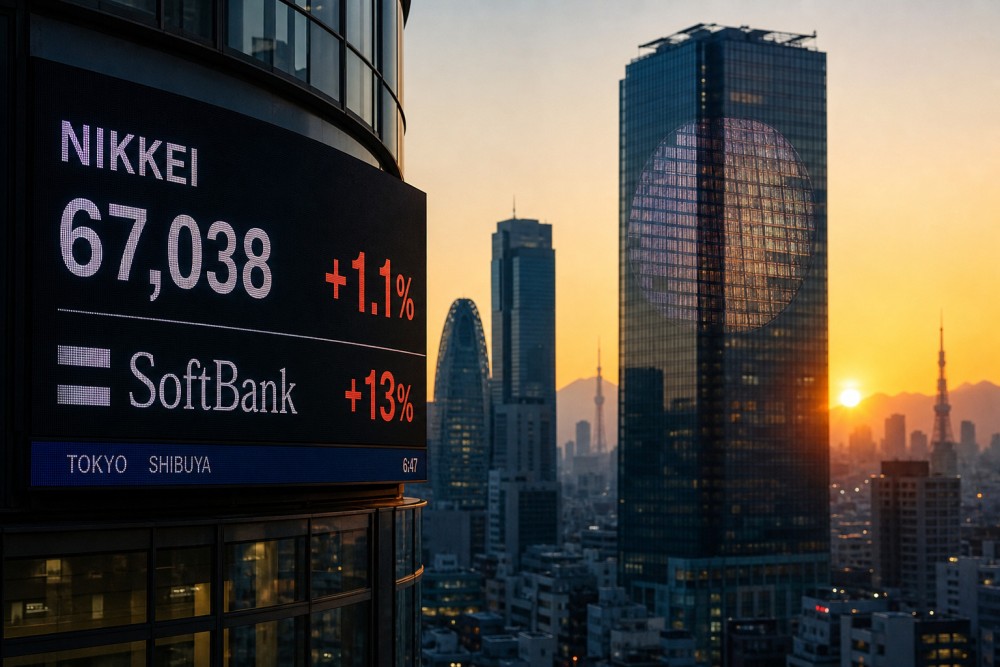

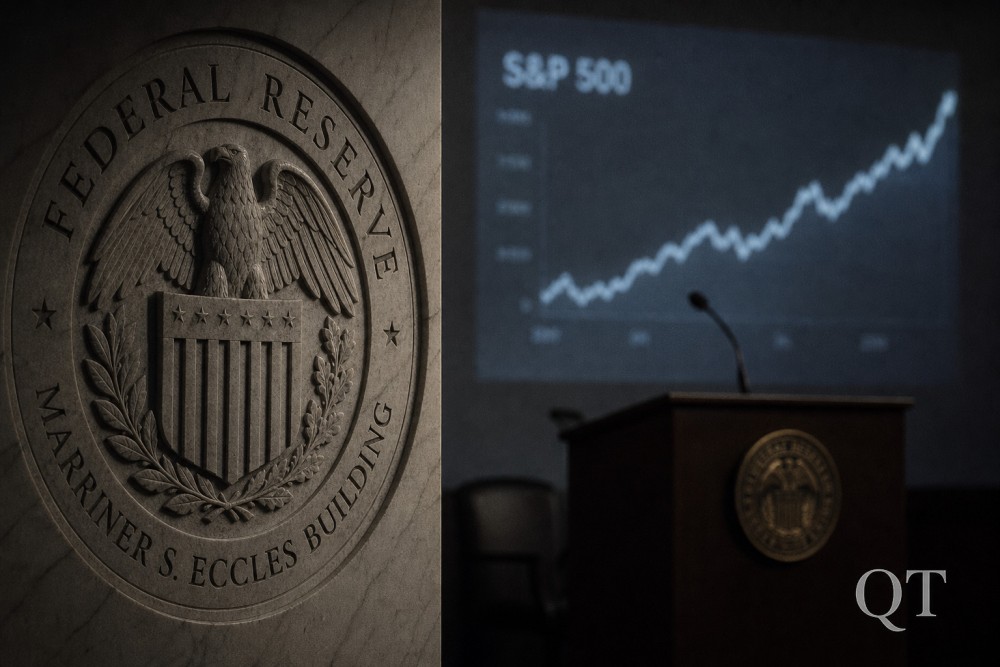
Gotrade News - New Federal Reserve Chair Kevin Warsh has signaled plans to shrink the central bank's $6.7 trillion balance sheet through aggressive quantitative tightening. The announcement comes as roughly 84% of S&P 500 companies beat first-quarter earnings estimates despite oil, inflation, and housing headwinds.
Warsh's push to drain liquidity could lift borrowing costs and pressure debt-funded AI infrastructure spending. Investors are weighing that policy risk against unexpectedly resilient corporate profits and steady consumer activity.
Key Takeaways
- Warsh wants to cut the Fed's $6.7 trillion balance sheet from its post-2008 expansion.
- About 84% of S&P 500 companies beat Q1 earnings estimates despite macro headwinds.
- Higher rates from QT could pressure capital-intensive AI build-outs reliant on debt.
According to The Motley Fool, the Fed's portfolio of Treasuries and mortgage-backed securities now totals roughly $6.7 trillion. That balance sheet has expanded from about $800 billion before the 2008 financial crisis.
Warsh has publicly described the portfolio as bloated and wants to reverse the years of asset accumulation. He supports steady quantitative tightening that pulls money out of the financial system over time.
Balance Sheet Reset Risks AI Boom
The shift would push interest rates higher just as Nvidia (NVDA) and other chip leaders ride a historic data center investment cycle. The AI build-out is extraordinarily capital-intensive and increasingly reliant on debt financing, according to The Motley Fool.
Equity benchmarks have already rallied sharply on AI optimism before any tightening lands. The S&P 500 is up 18% from its March 30 low, while the Nasdaq Composite has climbed 28% in the same period.
That rally has lifted broad index trackers like the SPDR S&P 500 ETF (SPY), which mirrors the benchmark's gains. Investors are now testing whether earnings strength can offset a less accommodative Fed stance.
Companies Still Topping Estimates
As reported by The Motley Fool, about 84% of S&P 500 companies reporting first-quarter results exceeded analysts' earnings-per-share estimates. Cost discipline from the inflation surge has carried over into permanently leaner operating structures.
Many firms aggressively cut costs, automated operations, and streamlined supply chains during the recent inflation cycle. Most of those efficiency measures did not disappear when inflation moderated, the report noted.
Consumer activity has also stayed firmer than feared across discretionary categories. U.S. retail sales still totaled more than $757 billion in April, while unemployment remained relatively low at 4.3%, per The Motley Fool.
Mega-cap technology results continue to anchor index-level growth figures. Microsoft (MSFT) recently reported quarterly revenue growth of 18%, while Nvidia's data center revenue nearly doubled year over year.
Wall Street analysts spent much of the past year trimming earnings forecasts on recession and rate concerns. In many cases, companies did not even need spectacular results to clear those lowered estimates.
The combination keeps the macro backdrop finely balanced for the second half of 2026. A tighter Fed under Warsh could reset valuations, while broad earnings strength continues to support equity markets.