

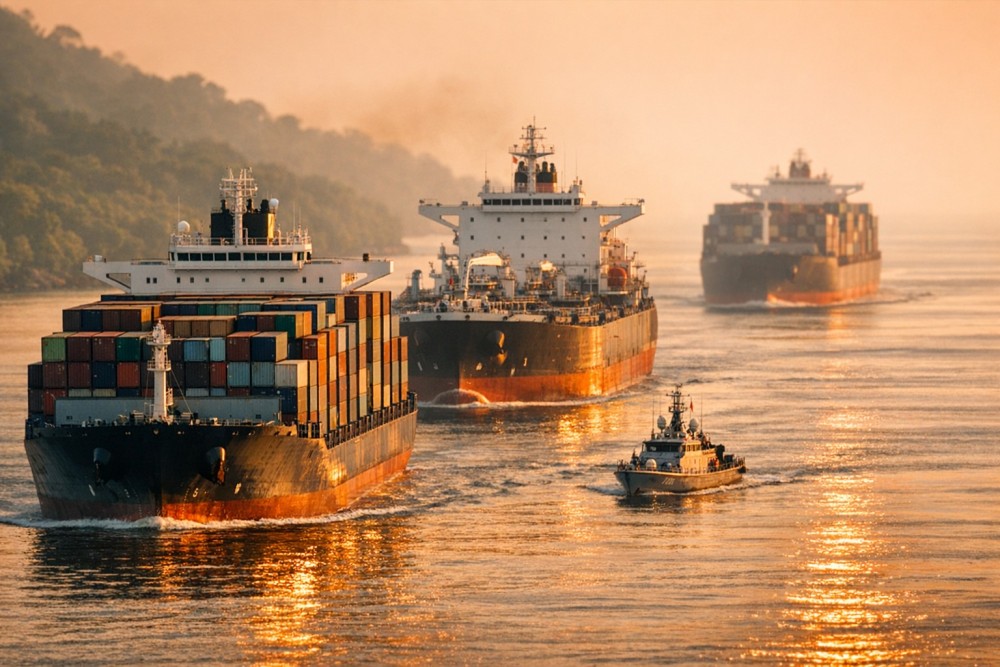
Gotrade News - The US blockade of the Strait of Hormuz is sending shockwaves across Southeast Asia, with tensions rising along the Malacca Strait. IEA chief Fatih Birol warned that Middle East energy production could take two years to return to pre-war levels.
Key Takeaways:
- Hormuz blockade is disrupting the Malacca Strait, which handles 40% of global trade and 82,000 ships annually
- IEA estimates Middle East energy production needs 2 years to recover to pre-war capacity
- No new tanker loadings occurred throughout March, cutting off fresh oil and gas supplies to Asian markets
The Malacca Strait has become a critical flashpoint as 40% of global trade passes through its waters. Approximately 82,000 ships transit the strait annually, which narrows to just 2.7 km at its tightest point, according to Kumparan's reporting.
President Trump instructed the US Navy to intercept vessels paying tariffs to Iran in international waters. The Malacca waterway has become a key transfer point for Iranian oil shipments to Asian nations, particularly China.
Asian Energy Supplies Under Threat
Birol warned that markets are still underestimating the long-term impact of Hormuz's closure. No new tanker loadings took place throughout March, effectively cutting off fresh oil, gas, and fuel deliveries to Asian markets including Indonesia, Reuters reported.
"If the Strait of Hormuz is not reopened soon, we must prepare for significantly higher energy prices," Birol stated. The IEA confirmed its readiness to release emergency oil reserves if necessary as a market intervention measure.
Southeast Asian Nations Respond Differently
Indonesia's President Prabowo is weighing a US proposal for military flight access over Indonesian airspace. However, Indonesia's military leadership has pushed back, citing sovereignty concerns, according to the same Kumparan report.
Singapore rejected negotiations with Iran, emphasizing transit rights under international law. Malaysia took a separate path, reaching a deal with Iran through high-level dialogue to secure its shipping lanes.
About 70% of East Asian energy and trade flows through Indonesian waters including the Malacca Strait. The crisis has placed the region at a crossroads between global economic interests and national sovereignty.
Sources: