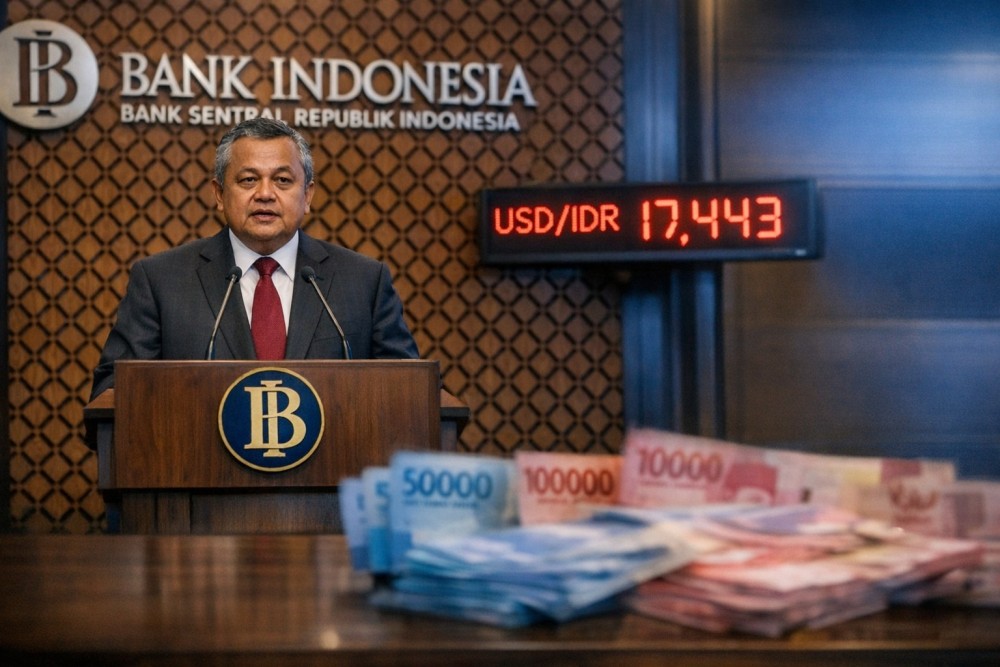

Gotrade News - Indonesia's foreign capital outflow has become a top-level concern for the government this week. President Prabowo Subianto raised the issue directly during a cabinet-level meeting at the Presidential Palace.
Coordinating Economic Minister Airlangga Hartarto conveyed the concern after a Tuesday (05/05) meeting at the State Palace. The statement followed sustained foreign selling pressure across both equity and bond markets.
Key Takeaways:
- Foreign investors logged net outflow of Rp518.39 billion in Indonesian equities on May 5
- The JCI is down roughly 19.55% year-to-date through early May 2026
- OJK cited geopolitical pressure and Fed policy as the primary outflow drivers
"The President is focused on capital outflow," Airlangga said, referencing Prabowo's attention on three priority areas. Those areas are the stock market, government bonds, and SRBI instrument neutralization.
Airlangga also noted a coordination arrangement between Bank Indonesia and the Finance Ministry going forward. The cooperation aims to manage ongoing capital outflow risk through joint policy tools.
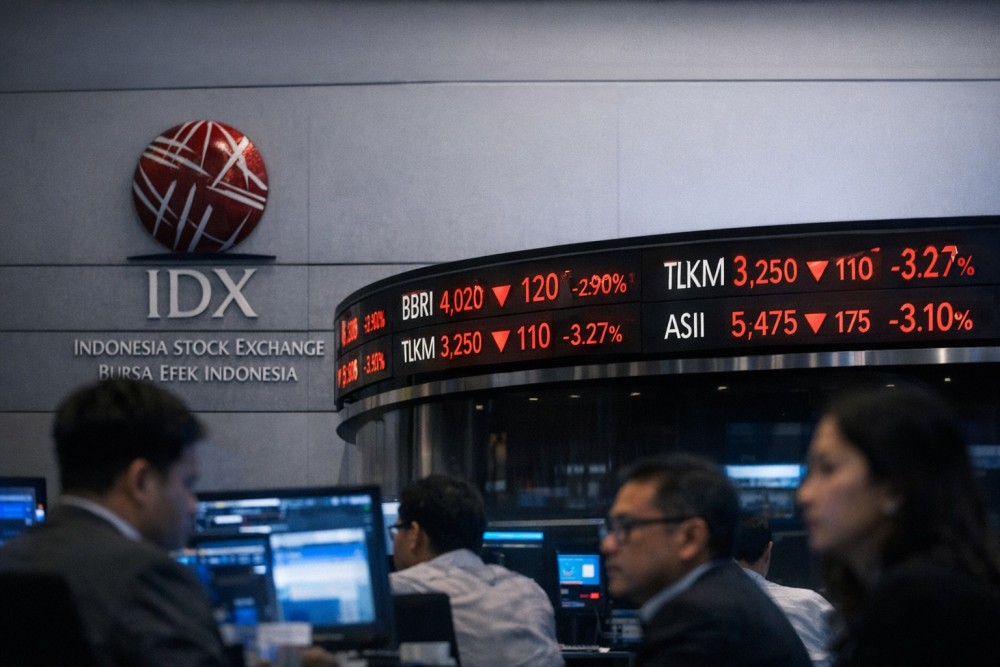
Indonesia Stock Exchange data showed foreign investors logged a net sell of Rp518.39 billion on Monday (05/05). The regular market saw Rp317.94 billion in net sells and the negotiation market Rp200.44 billion.
Foreign investor activity accounted for 29.25% of total transaction value that day. Total foreign buys reached Rp4.8 trillion while total sells hit Rp5.3 trillion.
The Financial Services Authority explained the root cause in a separate meeting at the State Palace. "If you look at the outflow, it's happening because of current global geopolitical and geoeconomic factors," said OJK Board Chair Friderica Widyasari Dewi.
Friderica pointed to the prolonged high interest rate policy from the US Federal Reserve as a key driver. Broad emerging market pressure has compounded the challenge for Indonesia.
OJK has already implemented multiple reforms to boost the appeal of Indonesia's capital market. Those measures include investor data transparency, disclosure of shareholders above 1%, and Ultimate Beneficial Owner requirements.
OJK also raised the minimum free float threshold above 15%. The goal is to deepen liquidity and improve the market's capacity to absorb foreign selling pressure.
Cumulative pressure on the JCI has been heavy through 2026. The composite index declined roughly 19.55% year-to-date through early May 2026.
For retail investors, the setup demands extra caution around short-term volatility. Cross-asset diversification has become more relevant as external pressure remains elevated.
The government and market regulators appear aligned on signaling readiness to defend stability. Market participants are now watching for concrete policy moves from the BI and Finance Ministry coordination Airlangga referenced.