

Gotrade News - Indonesia's Finance Minister Purbaya Yudhi Sadewa revived the Bond Stabilization Fund (BSF) to defend the local government bond market. The mechanism is designed to absorb selling pressure from foreign investors in domestic debt markets.
Purbaya described the BSF design as deliberately simple, aimed at keeping bond prices stable without being easily shaken by foreign capital flows. Implementation will be coordinated with Bank Indonesia as the monetary authority.
Key Takeaways
- Bond Stabilization Fund revived to defend the local government bond market from foreign-driven volatility
- Funding sources expand beyond SAL to include all special mission vehicles under the finance ministry
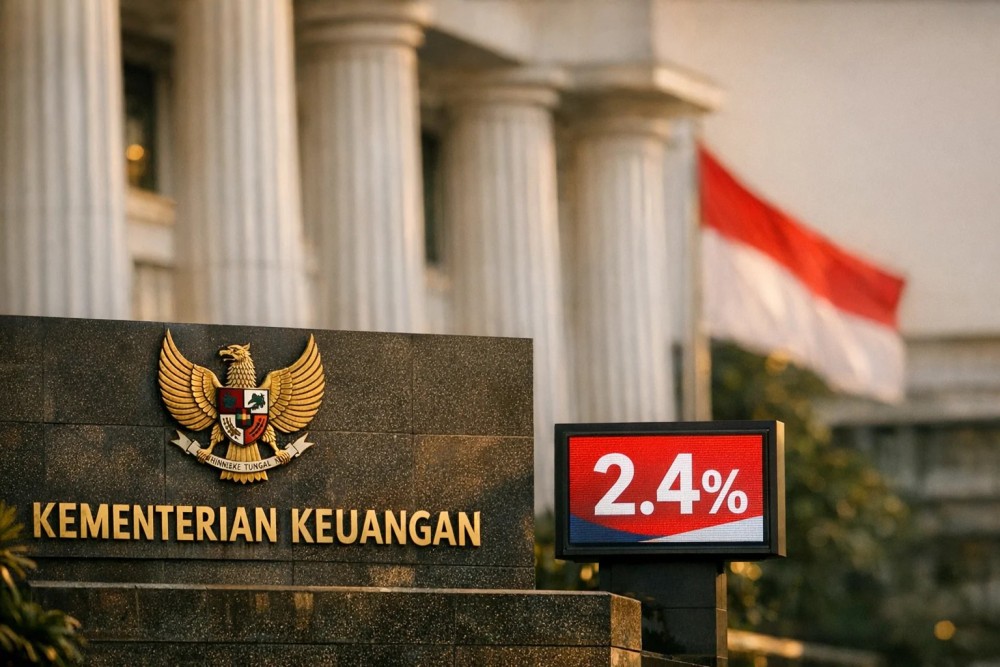
- April 2026 inflation prints at 2.4%, well below any hyperinflation threshold
Funding will not rely solely on the State Budget Surplus or SAL. A range of agencies and special mission vehicles (SMVs) under the finance ministry will participate in the stabilization scheme.
Purbaya said the original design involved several institutions, including all SMVs under finance. Those entities will step in whenever the government needs to stabilize bond prices in the secondary market.
Foreign-driven pressure on the SBN market is currently assessed as manageable, according to the finance ministry. Purbaya stated that funding capacity for BSF operations also remains adequate at this stage.
On the inflation front, Purbaya pushed back on hyperinflation narratives circulating on social media. April 2026 inflation came in at 2.4%, down from 3.48% in March 2026 according to official data.
Purbaya argued that even a 4% to 5% reading would not qualify as hyperinflation under the standard macroeconomic definition. He framed the social media narrative as a misreading of the underlying definition.
An active BSF combined with cooling inflation gives macro stabilization a more concrete framework. For retail investors, this combination matters when calibrating risk on rupiah-denominated assets.
References