

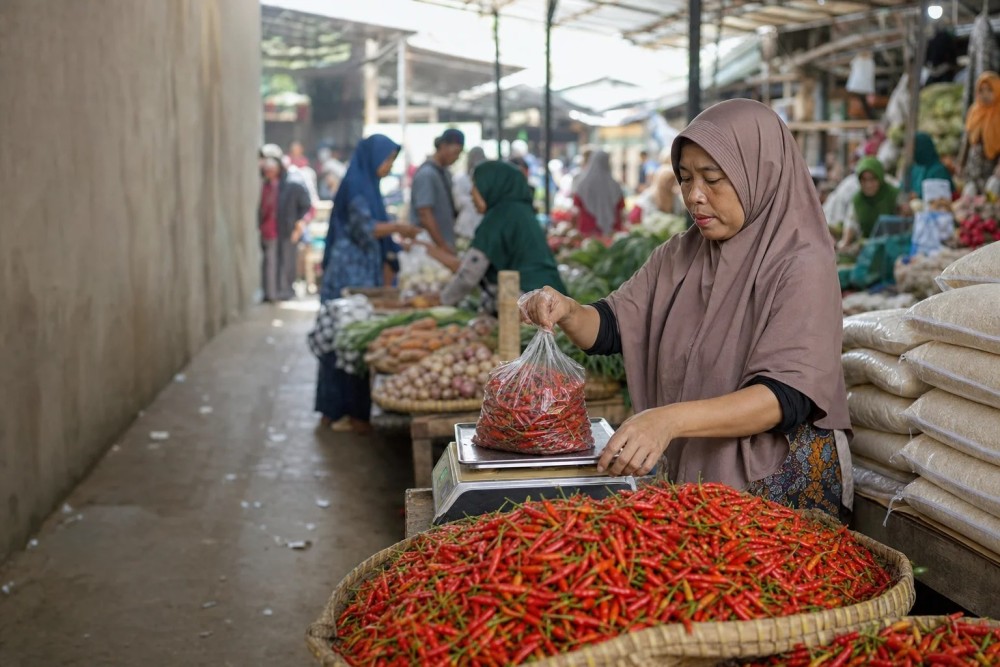
Gotrade News - Indonesian staple food prices broadly climbed ahead of Eid al-Adha, with bird's eye chili surging to Rp 82,000 per kg. Shallots reached Rp 56,000 per kg while beef held at Rp 150,000 per kg across major wholesale markets.
The pre-holiday demand surge in the world's fourth-most-populous country is tightening regional supply chains for agricultural inputs. Persistent food inflation may also support global names exposed to fertilizer, grain, and protein markets.
Key Takeaways
- Bird's eye chili hit Rp 82,000 per kg, with large red chili at Rp 61,000 per kg.
- Bank Indonesia data showed rice grades rising between 1.72% and 3.09% on May 19.
- Seasonal Eid al-Adha demand from over 240 million Muslims is pressuring protein and condiment prices.
According to Liputan6, Reynaldi Sarijowan of Ikappi reported the price climb started two weeks before the holiday. Rice remained relatively stable while chili, shallots, and cooking oil led the broader increase.
Curly red chili traded near Rp 57,000 per kg, while garlic settled at Rp 43,000 per kg across Greater Jakarta. Broiler chicken averaged Rp 45,000 per kg and eggs held at Rp 28,000 per kg in major markets.
Bulk cooking oil ranged near Rp 21,200 per liter, with subsidized Minyakita branded oil between Rp 19,000 and Rp 20,000 per liter. The cooking oil complex remains a key inflation pressure point for Indonesian households this season.
Bank Indonesia Price Data
Per Bloomberg Technoz, Bank Indonesia's PIHPS index showed lower grade I rice rising 3.09% to Rp 15,000 per kg. Medium grade I rice climbed 2.17% to Rp 16,450 per kg in the latest May 19 reading.
Lower grade II rice rose 1.72% to Rp 14,800 per kg, while bulk cooking oil advanced 1.95% to Rp 20,950 per kg. Branded 1-liter cooking oil gained 0.84% to Rp 24,050 per kg across monitored regions.
Premium sugar and medium shallots also entered the rising category in the central bank's daily price monitoring system. The breadth of the increase signals demand-driven pressure rather than isolated supply disruptions.
Eid al-Adha, the Islamic Festival of Sacrifice, falls in late May 2026 across Indonesia's archipelago of 17,000 islands. The holiday traditionally drives a sharp uptick in beef, poultry, and condiment consumption among the country's Muslim majority.
Global Agribusiness Implications
Indonesia is a structural net importer of soybeans, wheat, sugar, and fertilizer inputs from global commodity markets. Sustained domestic food inflation may translate into firmer import demand through the second half of 2026.
Global grain trader Archer-Daniels-Midland remains exposed to Southeast Asian feed and edible oil flows. Peer Bunge also processes soybeans and vegetable oils heavily consumed across the Indonesian archipelago.
Fertilizer producer Nutrien supplies potash and nitrogen inputs critical to Indonesian rice and palm oil cultivation. Elevated agricultural input prices typically widen margins for upstream nutrient and seed suppliers.
Bank Indonesia faces a narrower policy corridor if food prices remain elevated into the third quarter of 2026. The central bank has limited room to cut rates while volatile-food inflation runs ahead of the headline target band.
Retail investors tracking Indonesian consumption themes can monitor seasonal price normalization in the weeks following Eid al-Adha. Historical patterns suggest chili and shallot prices typically retrace within three to four weeks after major religious holidays.