

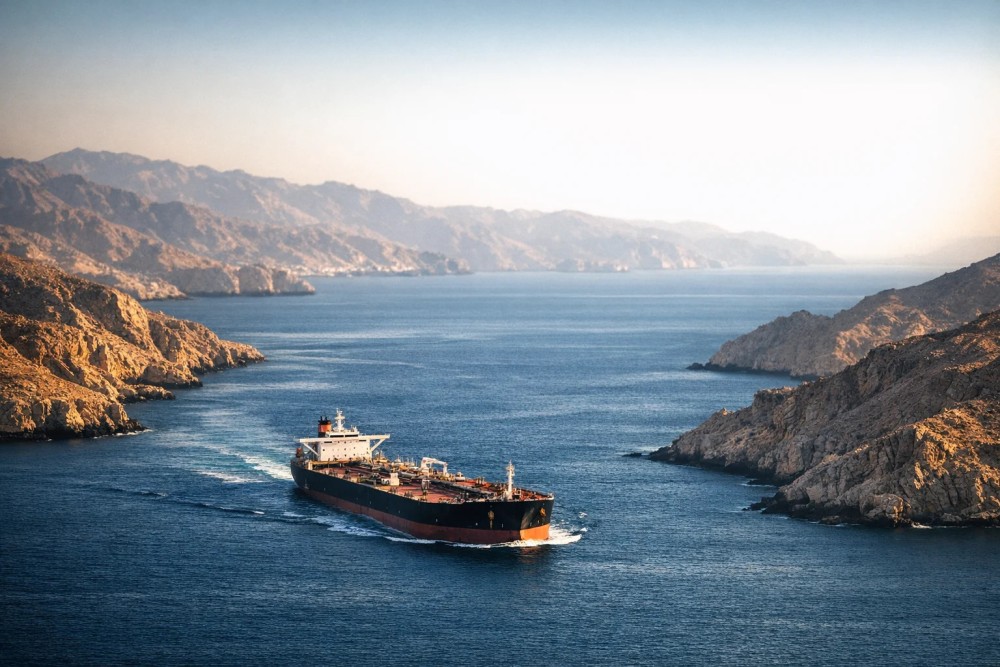
Gotrade News - President Trump declared the Strait of Hormuz "permanently" open on Tuesday (15/04), but shipping data tells a very different story. According to Kpler tracking data, only six commercial vessels crossed the strait on April 13, compared to approximately 60 crossings per day before the conflict began.
Goldman Sachs estimated current Hormuz oil flow at 2.1 million barrels daily, representing just 10% of pre-conflict levels. Brent crude held at $95.10 per barrel while WTI traded at $91.12, both well above pre-war levels despite diplomatic optimism.
Key Takeaways:
- Strait of Hormuz traffic is at roughly 10% of normal levels despite Trump's declaration it is permanently open
- Prediction markets give only 26% odds that Hormuz normalizes by April 30 and 33% odds of a peace deal
- Oil prices remain elevated near $95 Brent as shipowners demand verified mine-clearance and normalized insurance before resuming transit
The gap between political statements and operational reality is the key dynamic for energy investors right now. Trump cited US military superiority and an agreement with China to stop shipping weapons to Iran as reasons for his declaration, according to Benzinga.
Six vessels were reported turning back to Iranian ports within 24 hours of the US blockade, according to military reports cited by Benzinga. The blockade has completely halted Iran's seaborne trade, creating a standoff that diplomatic talks alone have not resolved.
Diplomatic Progress and Market Skepticism
Vice President JD Vance led negotiations in Islamabad last weekend and expressed optimism about progress. Trump suggested peace talks could restart within two days, keeping alive the possibility of a resolution.
However, prediction markets reveal deep skepticism about the timeline. Polymarket data shows only 26% odds that Hormuz normalizes by April 30. The probability of Iran ending uranium enrichment by June 30 sits at just 54%.
Benzinga's analysis highlights a critical distinction that markets are pricing in. A ceasefire is not the same as an open strait, and shipowners require normalized insurance premiums, verified mine-clearance, and legal certainty before resuming transit through a $20 trillion annual oil corridor.
Energy Stocks and the Oil Premium
European markets opened mixed on the diplomatic signals, with the Stoxx 600 down 0.4% as of mid-morning, according to Investing.com. The muted reaction reflects investor uncertainty about whether talks will produce concrete results for energy supply chains.
ExxonMobil, Chevron, and ConocoPhillips remain the primary beneficiaries of elevated oil prices among US-listed energy majors. These companies have seen sustained revenue tailwinds since the conflict pushed crude above $90 per barrel.
The IMF warned on Tuesday that a prolonged oil shock from the Hormuz disruption could push the global economy toward recession. Import prices in the US already rose 0.8% in March, with the year-over-year increase of 2.1% hitting its highest level since late 2024.
For investors, the trade is conditional. Energy stocks benefit as long as oil stays elevated, but a genuine diplomatic breakthrough would likely send crude sharply lower and compress energy sector margins.
On Gotrade, you can trade energy stocks like ExxonMobil, Chevron, or ConocoPhillips starting from $1 with fractional shares. The Hormuz situation creates both opportunity and risk, so position sizing matters more than ever.
Sources:
- Benzinga, [Trump: Hormuz Permanent Open Versus Data Reality](https://www.benzinga.com/markets/commodities/26/04/51828866/trump-hormuz-permanent-open-versus-data-reality), 2026.
- Investing.com, [European Stocks Open Mostly Higher as Trump Signals More Iran Talks](https://www.investing.com/news/stock-market-news/european-stocks-open-mostly-higher-as-trump-signals-more-iran-talks-ahead-4614381), 2026.
- Watcher Guru, [War Oil Shock Could Push World Into Recession IMF Warns](https://watcher.guru/news/war-oil-shock-could-push-world-into-recession-imf-warns), 2026.