
Gotrade News - Iran-US de-escalation signals are surfacing ahead of President Donald Trump's visit to Beijing this week. Asian markets are bracing for a geopolitical shift while oil prices remain elevated.
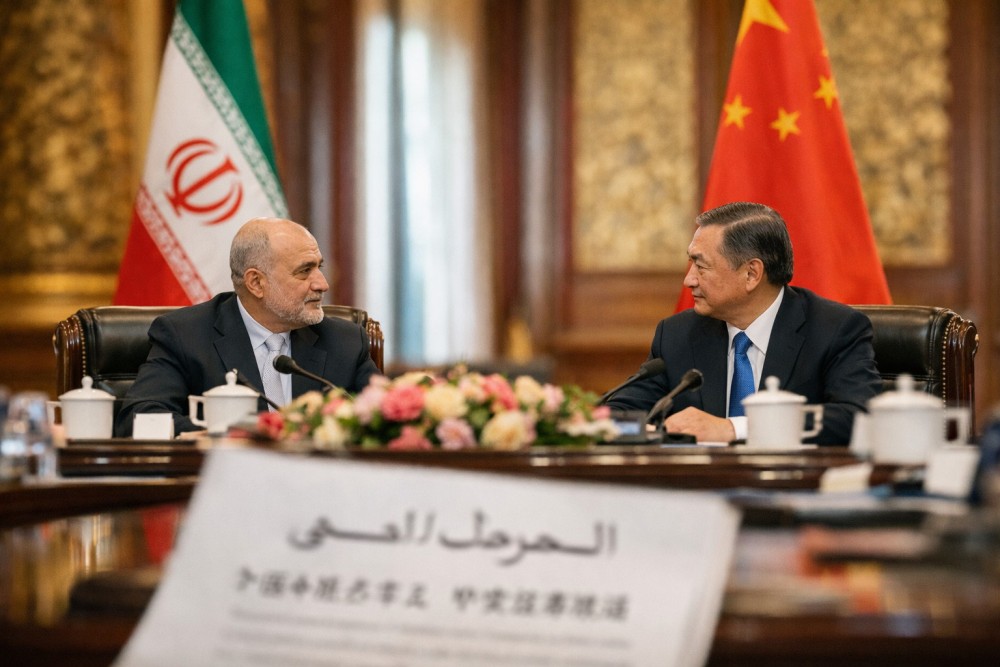
Iran's Foreign Minister Abbas Araghchi met with China's top diplomat Wang Yi in Beijing on Wednesday (06/05). The meeting took place days before the scheduled Trump-Xi summit on May 14-15, 2026.
Key Takeaways:
- Philippines April inflation jumped to 7.2% year-over-year, driven by global oil price pressure
- US oil exports hit a record 5.2 million barrels per day, up over 30% from pre-conflict levels
- Iran-China meeting in Beijing reinforced de-escalation signals ahead of the Trump-Xi summit
China currently absorbs roughly 90% of Iran's oil exports, making Beijing central to any geopolitical calculation. Bloomberg reported the two foreign ministers have held at least three phone calls during the nine-week conflict.
Global oil pressure has not eased despite the diplomatic thaw. Crude oil prices traded between US$101.06 and US$114.01 per barrel through April 2026, according to Bloomberg Technoz data.
Asian inflation is feeling the energy-price pass-through directly. The Philippines reported April inflation at 7.2% year-over-year, a sharp climb from 4.1% in March.
The reading came in well above the economist consensus of 5.5%. Food prices in the Philippines surged to 6.1% from 2.7% the prior month.
Rice inflation alone hit 13.7% annually, while transportation costs jumped to 21% from 9.9%. Core inflation widened to 3.9%, signaling the pressure has broadened beyond energy.
"Asia, largely dependent on energy imports, is one of the most vulnerable regions to oil price shocks," wrote Bloomberg Technoz. The pressure could force regional central banks to keep monetary policy tighter for longer.
On the supply side, Exxon Mobil and Chevron operate in a US export market that just broke records. US oil exports reached 5.2 million barrels per day in April 2026, up from 3.9 million bpd in February before the conflict began.
The Port of Corpus Christi logged more than 240 tankers in March. That figure sits well above the typical monthly average of 200 vessels before the conflict.
Port of Corpus Christi CEO Kent Britton said oil exports have climbed roughly 2.5 million barrels per day since the war began. Most of the increase has been driven by Asian buyers seeking alternative supply.
However Kpler warned US crude is not a perfect substitute for Middle Eastern oil. "This is a hole that cannot be filled," said Kpler Commodities Research Director Matt Smith, referring to a structural supply gap.
For Asian markets including Indonesia, the mix of de-escalation and high inflation creates directional uncertainty. Investors are waiting for confirmation from the Trump-Xi summit before taking large positions.