

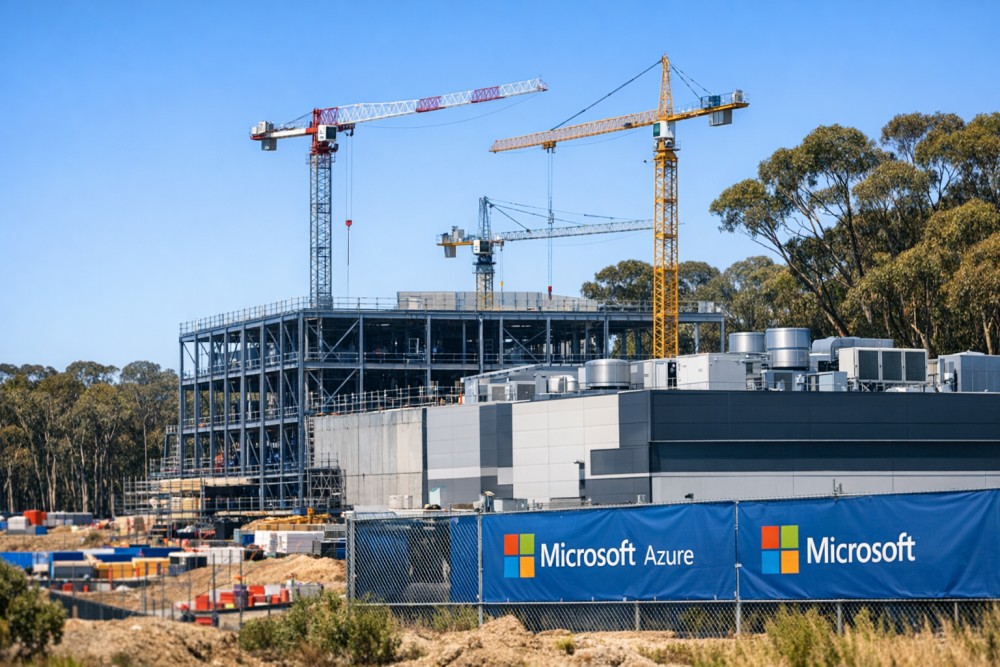
Gotrade News - Microsoft (MSFT) announced an A$25 billion investment, roughly US$17.9 billion, to build AI infrastructure across Australia. This marks the company's largest-ever investment commitment in the country.
Key Takeaways
- Microsoft is investing A$25 billion in Australian AI infrastructure through 2029
- The expansion includes 29 data centre sites across three Azure regions
- Three million Australians will receive AI skills training by 2028
The announcement was made on Wednesday (23/04) alongside Prime Minister Anthony Albanese. CEO Satya Nadella was present to formalize the landmark investment commitment.
Microsoft plans to expand its Azure AI supercomputing and cloud infrastructure capacity significantly. The company's Australian footprint will grow by more than 140% by the end of 2029.
A total of 29 data centre sites will be distributed across three Azure regions in Australia. This scale of deployment positions Australia as one of the most important AI hubs in the Asia-Pacific.
Economic and Workforce Impact
Microsoft has also committed to training three million Australians in AI skills before 2028. This initiative aligns with a Memorandum of Understanding signed with the Australian Government.
Nadella stated that Australia has an enormous opportunity to translate AI into real economic growth. The investment is designed to accelerate digital transformation across multiple industry sectors.
Cybersecurity Partnership
Microsoft is expanding its cybersecurity collaboration with the Australian Signals Directorate through the Cyber-Shield program. This partnership has already identified 35 previously unknown vulnerabilities.
A new partnership with the Australian AI Safety Institute further strengthens the commitment to responsible AI development. The Cyber-Shield expansion will cover additional federal agencies across Australia.
For investors, Microsoft's aggressive push into Australia reflects a consistent global AI infrastructure expansion strategy. Capital expenditure commitments of this magnitude typically support medium-term revenue growth prospects.