
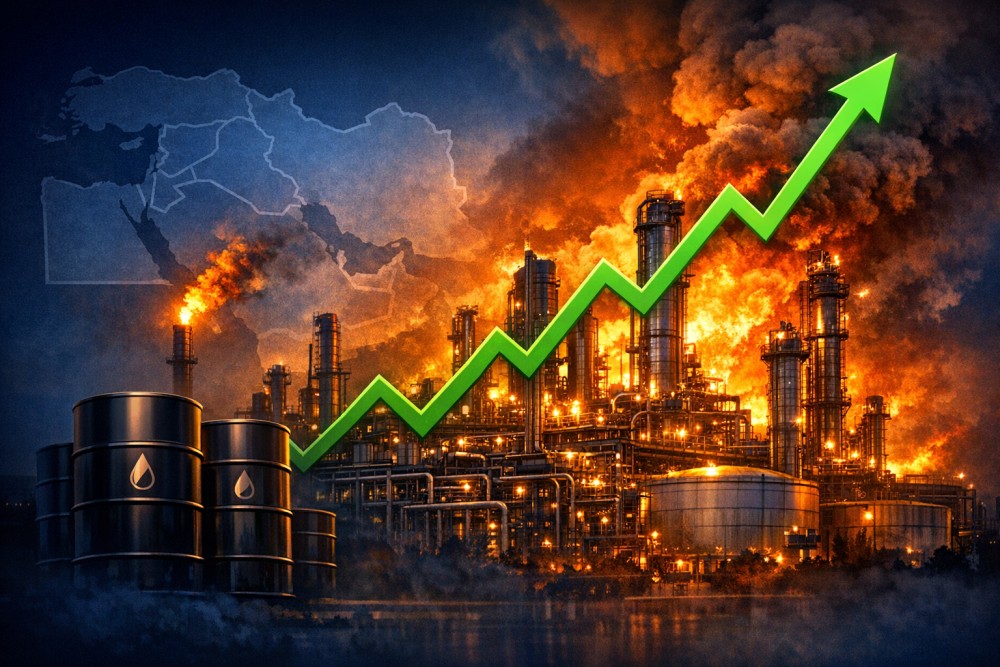
Gotrade News - Global oil prices rose again on Thursday (04/10), with WTI crude climbing over 2% to $97.53 per barrel. The rally was triggered by an attack on Saudi Arabia's Jubail petrochemical complex carried out by Iran's Islamic Revolutionary Guard Corps (IRGC).
Brent crude also gained 83 cents to $96.75 per barrel from the previous close. Markets now expect the geopolitical risk premium to remain elevated as long as Gulf energy infrastructure continues to be targeted.
Key Takeaways:
- Iran's attack on the Jubail complex cut Saudi production capacity by 600,000 barrels per day, equivalent to 10% of normal exports
- Around 50 energy infrastructure assets in the Gulf have been damaged during six weeks of conflict, with 2.4 million barrels per day of refining capacity offline
- Japan and the U.S. are preparing strategic oil reserve releases to ease global price pressure
Jubail Attack and Saudi Production Impact
Iran's Revolutionary Guard claimed responsibility for the attack on the giant Jubail petrochemical complex on Saudi Arabia's eastern coast. Saudi state media confirmed that the country's oil production capacity dropped by approximately 600,000 barrels per day due to facility damage.
That figure represents roughly 10% of Saudi Arabia's normal crude oil exports. Around 50 energy infrastructure assets across the Gulf have been damaged by drone and missile strikes over the past six weeks of conflict.
Major oil stocks like Exxon Mobil (XOM) and Chevron (CVX) typically benefit when crude oil prices rise. However, extreme geopolitical volatility also raises the risk of sharp corrections at any time.
Global Response and Strategic Reserves
Japan announced plans to release oil reserves equivalent to 20 days of national consumption starting in May. The decision was announced directly by Prime Minister Sanae Takaichi in response to Middle Eastern supply disruptions.
The United States also offered up to 30 million barrels from its Strategic Petroleum Reserve (SPR) through an exchange scheme. Both countries aim to cushion the impact of rising energy costs on consumers and global industry.
Reserve releases may offer temporary market relief, but analysts warn this is a short-term fix. Investors seeking diversified energy exposure may consider the Energy Select Sector ETF (XLE), which provides broad coverage across U.S. energy stocks.
Implications for Emerging Markets and Investor Strategy
Net energy-importing countries across Asia are feeling direct pressure from oil prices sustained above $95 per barrel. Rising fuel and logistics costs pose tangible risks for businesses and consumers in the region.
Imported inflation pressure complicates central banks' ability to manage monetary policy effectively. Investors should understand how geopolitical events affect portfolios through a macro trading framework that connects commodity moves to asset allocation.
Independent oil producers like ConocoPhillips (COP) are worth monitoring given their significant exposure to global oil prices. Reassessing investment risk profiles is essential for investors with existing positions in the energy sector.
This situation is expected to persist at least through the end of April, depending on the U.S.-Iran ceasefire developments. Oil markets will remain sensitive to any new attacks and OPEC+ production adjustment decisions.
Sources: