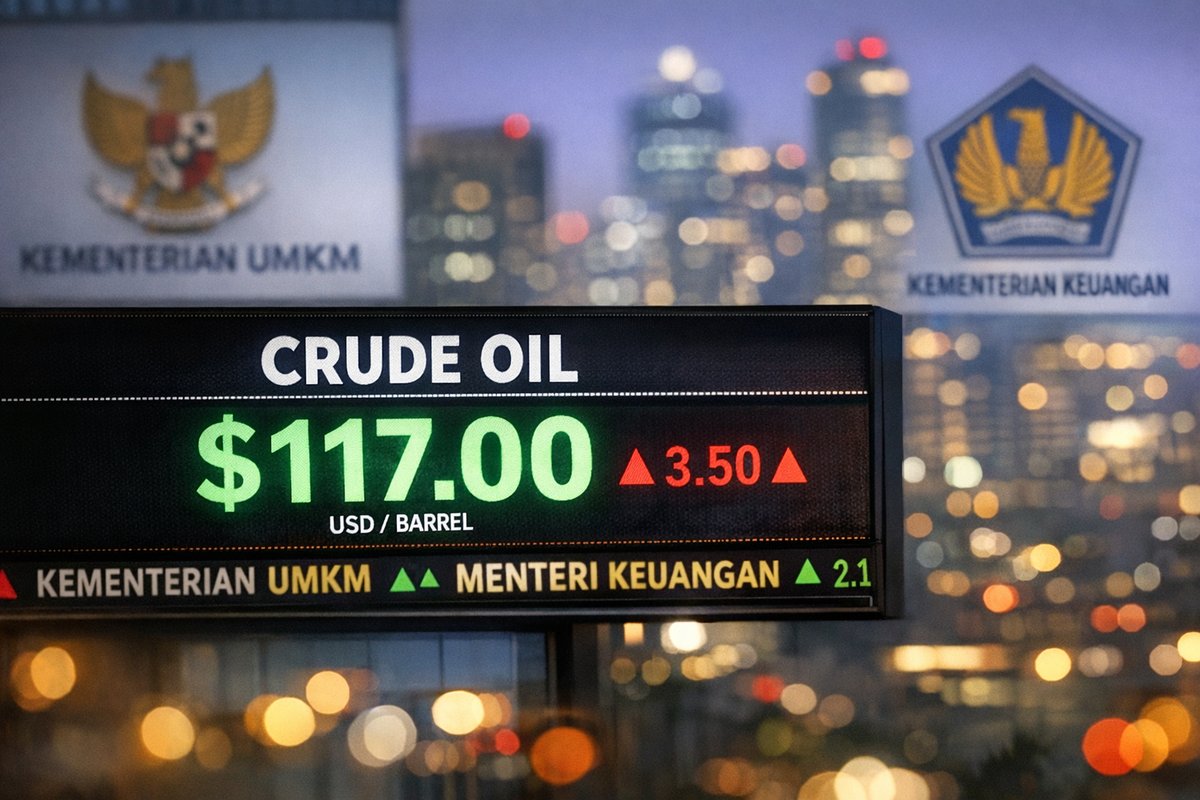
Geopolitical tensions between the United States and Iran have triggered a surge in global oil prices, potentially impacting the welfare of Small and Medium Enterprises (SMEs) in Indonesia. The Ministry of SMEs noted that with global oil prices surpassing USD117 per barrel, far exceeding the 2026 state budget assumption of USD70 per barrel, significant ramifications are likely. This development necessitates increased caution among SMEs in managing rising cost of goods sold.
Key Takeaways:
- The rise in oil prices is pushing up operational costs for SMEs in Indonesia's service sector.
- The Ministry of SMEs emphasizes the importance of strengthening the domestic market.
- The Indonesian government is temporarily holding off on increasing subsidized fuel prices.
This surge in global oil prices has prompted the government to consider adjustments to energy subsidies, potentially affecting essential goods prices and operational costs for SMEs, especially in the transportation and distribution sectors. This was highlighted by Deputy for Small Business at the Ministry of SMEs, Temmy Satya Permana, during a media briefing in Jakarta.
Meanwhile, US military operations targeting Iranian mine-laying ships in the Strait of Hormuz have heightened uncertainties in the global energy distribution corridor, driving oil prices higher. US Defense Secretary, Pete Hegseth, described the situation as among the most intense days of their military campaign, aimed at ensuring Tehran does not possess nuclear weapons in the future.
Nevertheless, Indonesia's Finance Minister, Purbaya Yudhi Sadewa, reaffirmed that there are no immediate plans to raise subsidized fuel prices. The Indonesian government intends to take about a month to study the impact of rising global oil prices on domestic fiscal policies.
Moreover, a sensitivity analysis of the 2026 state budget shows a potential budget deficit increase of about Rp6.8 trillion for each USD1 rise per barrel in the average Indonesian crude price (ICP). Thus, it is crucial for market players and investors to closely observe these developments, as prolonged tensions could result in deeper economic impacts.
Separately, US reports indicate a 90% reduction in Iranian ballistic missile attacks since the conflict began in late February, compared to when hostilities initially erupted. The conflict has also caused significant losses for both sides, including casualties and material damage.
It is vital for SMEs to enhance competitiveness in the domestic market even amidst uncertain economic conditions. Strengthening the domestic market might be one strategic approach to facing challenges from volatile oil prices.
Reference:
- MetroTV, Konflik AS-Iran Dorong Kenaikan Harga Jual Produk UMKM. Accessed on March 11, 2026
- Tirto, Update Perang Iran vs Israel Hari Ini: AS Serang Kapal di Hormuz. Accessed on March 11, 2026
- Tirto, AS Klaim Hancurkan 16 Kapal Penebar Ranjau Iran di Selat Hormuz. Accessed on March 11, 2026
Featured Image: GPT Image 1.5