
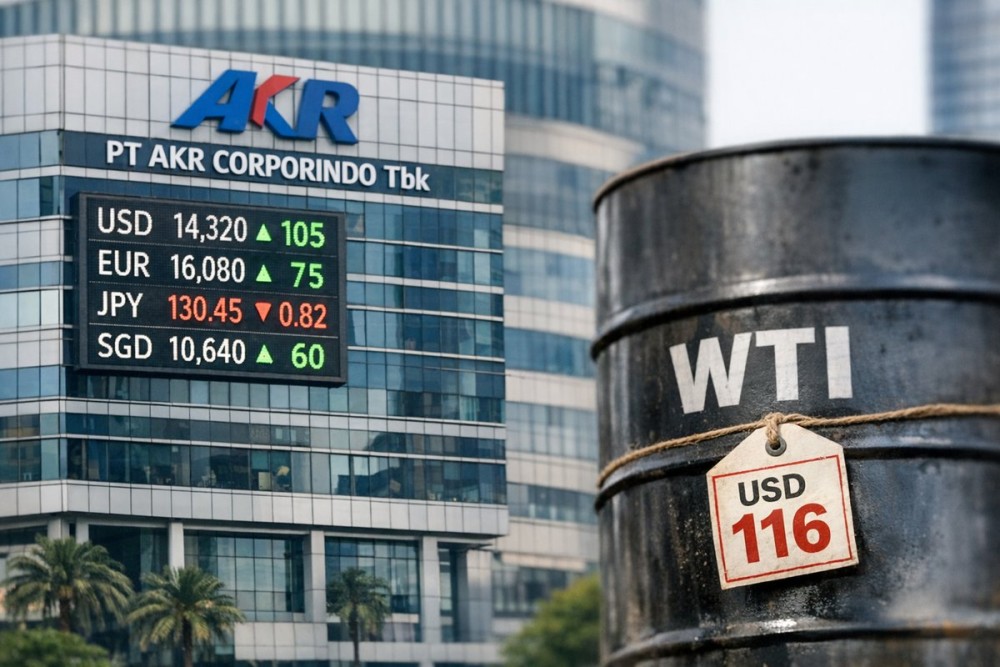
Gotrade News - The rupiah exchange rate is predicted to weaken, potentially breaching the Rp17,100 per USD level. This depreciation is driven by surging global oil prices and geopolitical tensions. Currently, the price of West Texas Intermediate (WTI) crude oil may soar to USD116 per barrel. This situation significantly impacts the economy, especially for oil-importing countries like Indonesia.
Key Takeaways:
- The rupiah's weakness is influenced by the surge in oil prices.
- Geopolitical tensions escalate the demand for foreign exchange for energy imports.
- AKRA is preparing worst-case scenarios due to the potential closure of the Strait of Hormuz.
Financial Analyst Ibrahim Assuaibi emphasizes that the strengthening of the US dollar and rising energy prices are major factors pressuring the rupiah. Increasing tensions in the Middle East affect global oil prices, compelling oil-importing countries such as Indonesia to allocate more foreign currency, which provides substantial pressure on emerging market currencies like the rupiah.
On the other hand, PT AKR Corporindo Tbk (AKRA) has stated that the closure of the Strait of Hormuz could negatively impact financial performance. Conflict in the Middle East is driving up logistics and energy costs. While no specific impacts have been felt yet, AKRA is preparing worst-case scenarios due to this potential closure.
In its annual report, AKRA mentions that global uncertainty is on the rise. The potential scarcity of energy supply may affect its operations. AKRA's management is closely monitoring the impact of conflict on both operations and finances.
AKRA also advocates a prudent stance in credit analysis with a focus on customer performance. The company plans to reflect the impact of conflicts in its future financial reports, demonstrating AKRA's cautious approach toward facing the uncertainty in the energy market.
Market observers anticipate that geopolitical uncertainty will persist, prompting investors and stakeholders to be more vigilant. The surge in oil prices and geopolitical tensions poses challenges for the Indonesian economy.
As these developments unfold, market participants are expected to continuously monitor the global situation. Geopolitical dynamics remain a crucial element in shaping investment strategies and risk management.
Reference:
- IDX Channel, Rupiah Diprediksi Tembus Rp17.100 Imbas Lonjakan Harga Minyak dan Konflik Global. Accessed on April 5, 2026
- Bloomberg Technoz, AKRA Siapkan Skenario Terburuk Imbas Penutupan Selat Hormuz. Accessed on April 5, 2026
- Kompas, Korsel Minta Negara Teluk Jaga Pasokan Energi dan Keamanan di Selat Hormuz. Accessed on April 5, 2026
Featured Image: GPT Image 1.5