
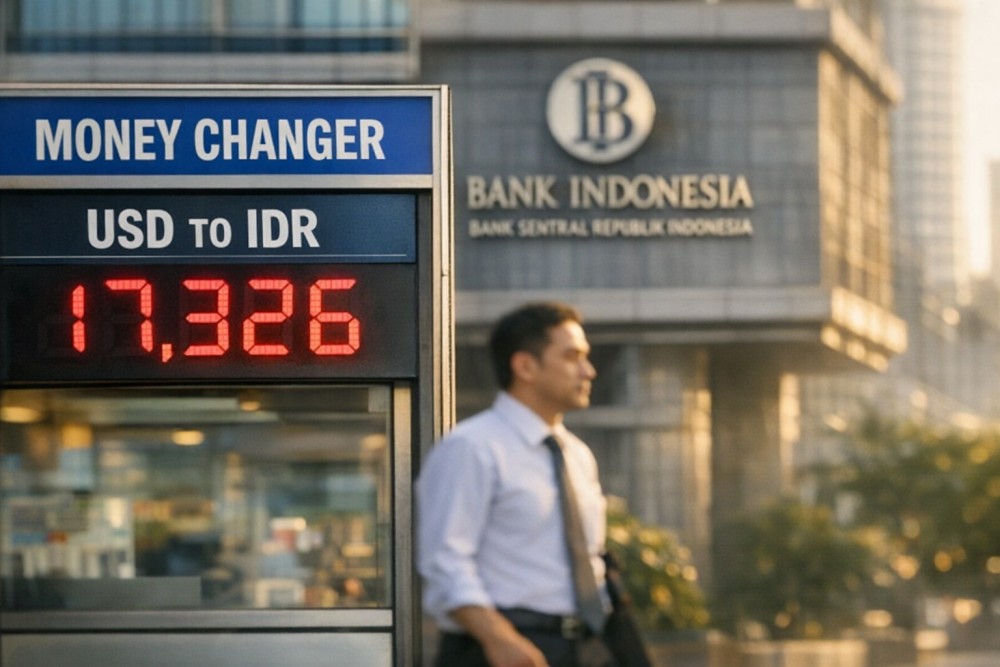
Gotrade News - Indonesia's rupiah weakened 0.48% to Rp 17,326 per US dollar on Wednesday (29 Apr). The level marks an all-time low, slipping 83 points from the prior close.
Domestic sentiment drove the move, ranging from governance concerns at sovereign wealth fund Danantara to Bank Indonesia's hold on policy rates. External pressure came from Middle East tensions and a fresh leg up in global oil prices.
Key Takeaways
- The rupiah closed at Rp 17,326 per US dollar, the weakest level on record for the currency.
- Danantara governance concerns and BI's rate hold drove the domestic side of the slide.
- UAE's exit from OPEC and Iran tensions added external pressure on the rupiah.
Bank Indonesia's Jisdor reference rate fixed the rupiah at Rp 17,324 per dollar at Wednesday's close. The fix slipped 79 points or 0.46% from the prior session, according to BI data.
Domestic concerns surfaced after Fitch Ratings flagged governance issues at Badan Pengelola Investasi Daya Anagata Nusantara (Danantara). The agency views Danantara's structure as overly centralized given its direct reporting line to the President.
Currency analyst Ibrahim Assuaibi said legal uncertainty has made decision-makers excessively cautious. He added that Indonesia's 8% growth target looks difficult to reach if the conditions persist, citing Kompas.
Bank Indonesia holding policy rates is another headwind, according to Lukman Leong of Doo Financial Futures. Falling foreign exchange reserves are also weighing on rupiah sentiment in the near term.
Externally, crude oil prices climbed during Tuesday's (28 Apr) Asia session on US-Iran tensions. Peace talks stalled after Washington rejected Tehran's proposal to reopen the Strait of Hormuz.
Permata Bank chief economist Josua Pardede said global inflation concerns are pressuring Asian currencies broadly. He added the pressure is dragging the rupiah lower alongside dollar strength.
Doo Financial Futures projects the rupiah to trade between Rp 17,250 and Rp 17,400 per dollar on Thursday (30 Apr). Downside risks remain unless Middle East tensions ease or the Federal Reserve turns dovish.