

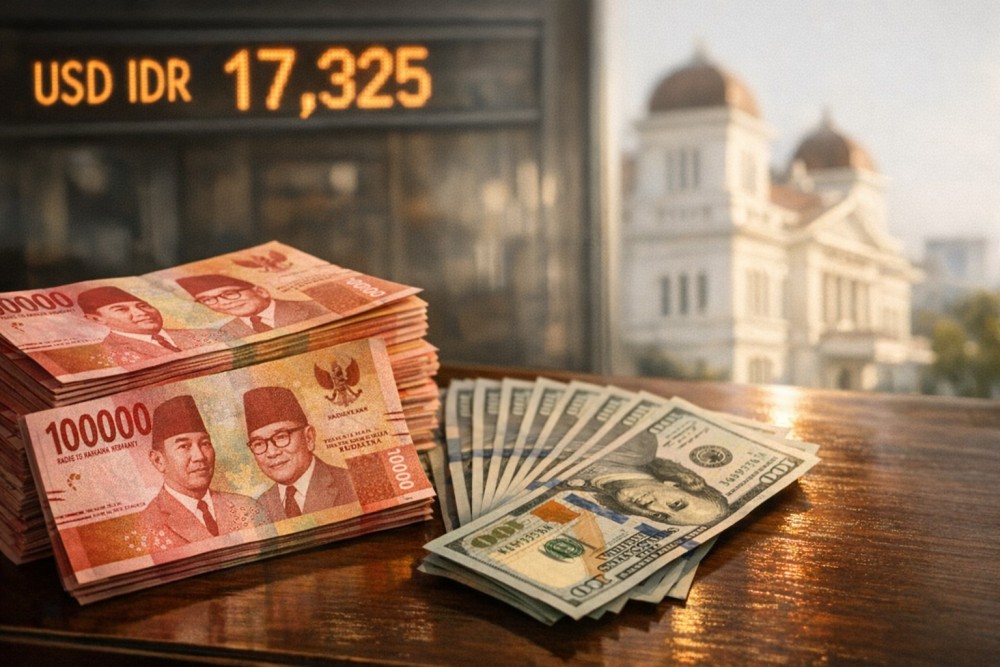
Gotrade News - The Indonesian rupiah held near Rp17,325 per US dollar on Thursday morning, May 7, after touching a recent low of Rp17,400. The currency softness is squeezing pharmaceutical and dollar-indebted issuers on the Jakarta exchange.
Exporters, by contrast, may benefit from earning revenue in dollars while keeping costs largely in rupiah. Market participants are watching Bank Indonesia for the next policy signal.
Key Takeaways
- Rupiah trades at Rp17,325 per US dollar, near a recent low of Rp17,400
- Pharma is the most exposed sector with about 90% of raw materials imported, per Mirae Asset Sekuritas
- Issuers carrying USD debt without USD cash reserves face higher servicing costs, per Reliance Sekuritas
The Indonesian rupiah was quoted at Rp17,325 per US dollar on Thursday morning. The level marks a slight 0.36% improvement of 62 points from the previous close of Rp17,387.
The currency has hovered near multi-year lows in recent sessions. Persistent dollar strength continues to set the tone for Indonesian equities.
Pharma faces the highest cost-push exposure
Senior Market Analyst Nafan Aji Gusta of Mirae Asset Sekuritas singled out pharmaceuticals as the most vulnerable sector. Indonesian drugmakers depend on imported raw materials for roughly 90% of their production needs.
Cost-push pressure rises whenever the rupiah weakens against the dollar, Nafan told Kompas. Retail and consumer electronics are also exposed because much of their inventory is sourced abroad.
USD debt servicing weighs on indebted issuers
Reza Priyambada, Director of Reliance Sekuritas Indonesia, warned that issuers with USD-denominated debt face direct margin pressure. "A weakening rupiah will inevitably weigh on issuers that have USD exposure," Reza told Liputan6.
The impact runs through both debt servicing and import-based raw material costs. Issuers holding USD cash reserves are relatively shielded from the swing.
Domestic large caps moved mixed in the morning session. Medco Energi, CDIA, and Barito Pacific were among the names trading lower as rupiah pressure persisted.
Exporters such as commodity producers stand on the other side of the trade. Earning in dollars while paying in rupiah lifts their reported margins when the local currency softens.
Traders will continue to monitor the rupiah path through the rest of the week. Bank Indonesia policy signals and global macro data are likely to drive the next move.