
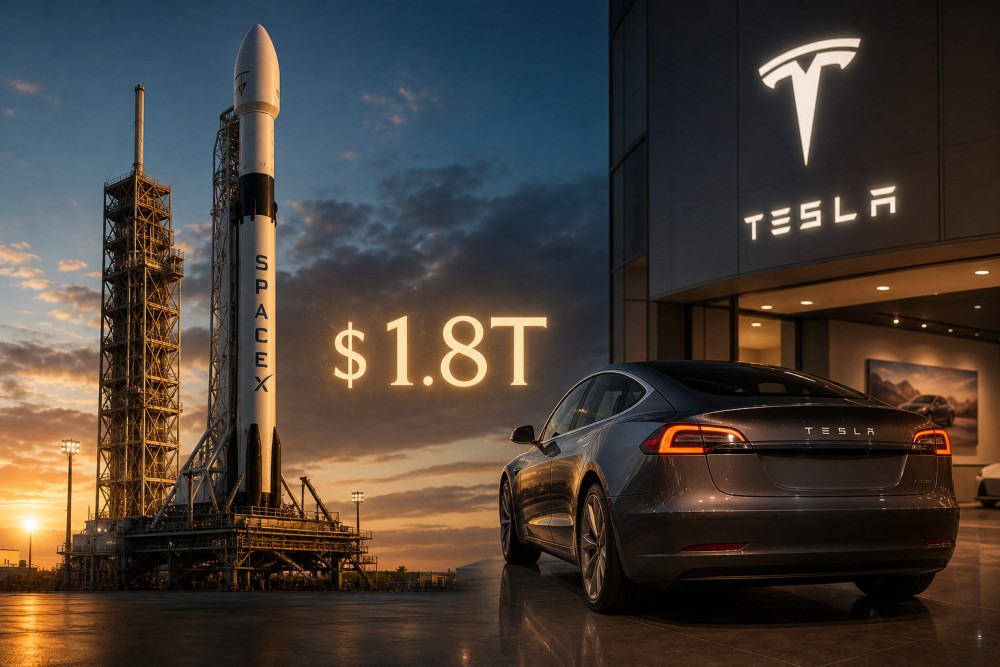
Gotrade News - SpaceX lowered its IPO valuation target by $200 billion to roughly $1.8 trillion ahead of a June 12 debut. The rocket maker still aims to raise up to $75 billion in the offering.
The cut signals pricing discipline as merger chatter with Tesla (TSLA) intensifies. Investors are weighing valuation risk against Elon Musk's expanding cross-company ambitions.
Key Takeaways
- SpaceX cut its IPO valuation target by $200 billion to about $1.8 trillion.
- Combined 2025 sales reached $18.67 billion, implying a steep 96x price-to-sales ratio.
- Tesla merger speculation grows, with Wedbush's Dan Ives predicting a deal next year.
SpaceX Trims IPO Goal
According to Motley Fool, SpaceX trimmed its valuation target from $2 trillion to $1.8 trillion. The debut is scheduled for June 12 on Nasdaq.
Potential Nasdaq-100 inclusion could come as soon as July 7, broadening passive-fund demand. Underwriters led by Goldman Sachs (GS) are managing the raise.
Combined 2025 sales across SpaceX units totaled $18.67 billion, per the same report. That implies a price-to-sales ratio near 96x at the revised $1.8 trillion target.
Analysts called the multiple "egregious" given a 2025 net loss above $4.9 billion. The xAI subsidiary grew only 12.5% year over year, undercutting bullish growth narratives.
The valuation cut may reflect pushback from institutional investors during pre-marketing roadshows. Morgan Stanley (MS) is also among the syndicate banks pricing the deal.
Even at $1.8 trillion, SpaceX would rank among the largest listings ever staged. The size leaves little margin for execution missteps in early trading sessions.
Tesla Merger Chatter Grows
Per Motley Fool, CNBC reports Tesla employees say a merger is discussed regularly inside the company. Wedbush analyst Dan Ives predicts the combination could occur next year.
Tesla's market capitalization sits near $1.4 trillion, with SpaceX targeted around $2 trillion. A merged entity would carry an implied value close to $3.4 trillion.
Musk controls roughly 85% of SpaceX voting power but only around 20% at Tesla. That structural gap complicates any straightforward share-for-share exchange ratio.
Gary Black of The Future Fund warned the combination could re-rate lower. He estimates a merged group might trade closer to $2.25 trillion versus $3 trillion standalone.
Prediction market Kalshi shows over 50% odds of a deal completing before May 1, 2027. That implied probability has climbed steadily through recent weeks.
A merger would consolidate Musk's electric-vehicle, energy, and aerospace assets under one ticker. The structure could also simplify capital allocation across his portfolio of bets.
Skeptics note the regulatory and minority-shareholder hurdles for such a transformative deal. Antitrust review and conflict-of-interest disclosures would likely extend any timeline.
For now, investors face a near-term IPO catalyst alongside a longer-dated merger overhang. Both threads will shape Tesla's trading range through the second half of 2026.