
Gotrade News - The US-Iran conflict continues to paralyze the Strait of Hormuz as the world's primary oil distribution route. The International Energy Agency has called this the largest supply disruption in modern history.
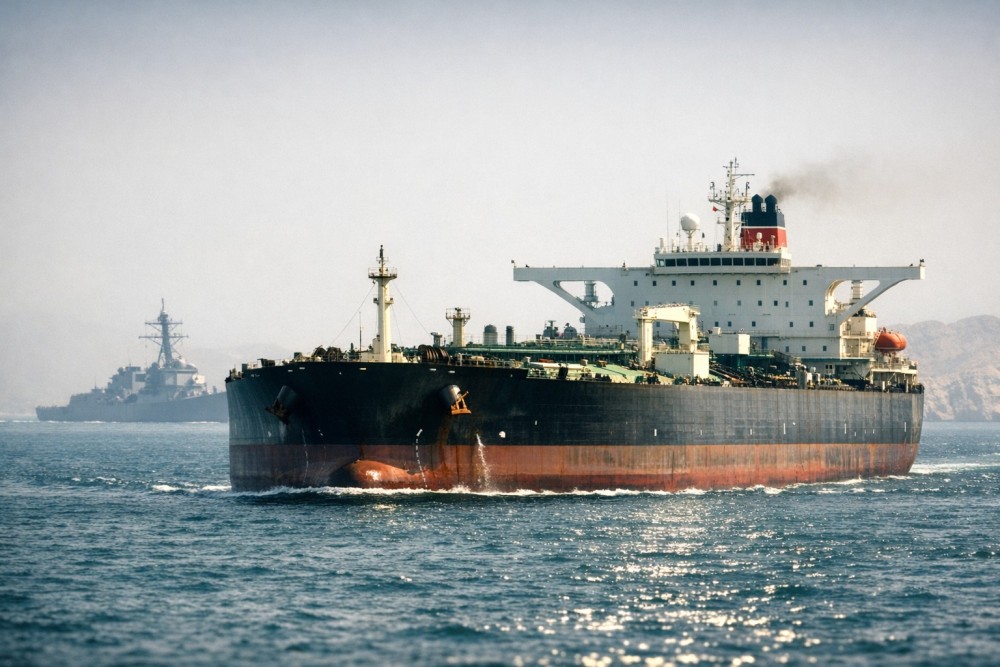
Two Iranian supertankers named Hero II and Hedy broke through the US blockade on Sunday (20/04). The vessels carried a combined cargo of up to 4 million barrels of crude oil into the Arabian Sea.
Key Takeaways:
- IEA calls the Hormuz disruption the largest oil supply shock in modern history
- Two Iranian supertankers breached the US blockade carrying 4 million barrels of crude
- Alternative oil routes can only handle about 4.5 million barrels per day against global demand
The two tankers are part of a larger fleet transporting approximately 9 million barrels to market. Trump had previously declared a blockade prohibiting Iranian vessels from entering or exiting the Persian Gulf.
The US responded by seizing one cargo ship and boarding a sanctioned oil tanker east of Sri Lanka. However, the Iranian fleet managed to pass US warships without direct confrontation.
Alternative Routes Under Strain
Saudi Arabia's East-West Pipeline stretches 1,200 kilometers from oil fields to the Port of Yanbu. While its theoretical capacity reaches 7 million barrels per day, effective throughput is only about 4.5 million barrels.
The UAE's Habshan-Fujairah Pipeline spanning 360 kilometers offers another workaround. This route connects onshore fields to the Port of Fujairah outside the Strait of Hormuz.
However, total alternative route capacity remains far from sufficient for global demand. Threats from Houthi rebels targeting tankers near the Strait of Bab el-Mandeb add another layer of distribution risk.
Impact on Indonesia
Indonesia has been directly affected after two Pertamina tankers became trapped in the Strait of Hormuz. The government faces pressure to lobby Iran more actively to secure national oil supplies.
Pertamina has begun diverting oil purchases to West Africa and Brazil to maintain supply chains. Source diversification has become an emergency measure amid the prolonged Hormuz disruption.
Trump is also reviewing an extension of the Jones Act waiver issued on March 18, 2026. The policy exempts inter-port oil shipments in the US from the requirement to use American-flagged vessels.
The 60-day waiver is set to expire in May 2026. The US government considers an extension necessary to ease domestic oil price pressures.