

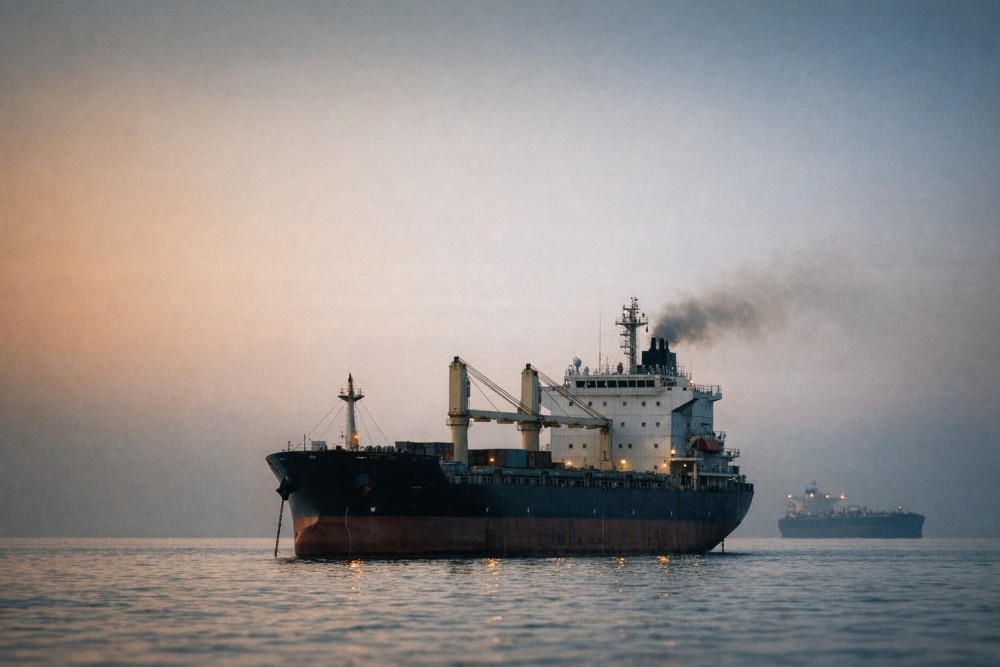
Gotrade News - The HMM Namu cargo ship fire in the Strait of Hormuz on Monday (05/04) reignited US and Iran tensions. President Donald Trump claimed Iran fired shots at the ship, while South Korea is still investigating the exact cause of the incident.
The Strait of Hormuz carries roughly 20% of the world's oil and LNG every day. Any military escalation in this corridor could shake energy prices and US defense spending in the coming weeks.
Key Takeaways:
- The 35,000-ton HMM Namu caught fire in its engine room while anchored in the Strait of Hormuz with no casualties.
- Trump accused Iran of firing on the ship while South Korea said further investigation is needed first.
- 26 Korean-flagged vessels stranded near the Strait have been asked to relocate to safer areas.
According to Investing.com, the Panama-flagged HMM Namu, operated by South Korea's HMM, caught fire in its engine room while anchored empty in the Strait of Hormuz. Surveillance footage confirmed the fire was extinguished and all 24 crew members were safe.
South Korea's Foreign Ministry stated the exact cause would only be known after the vessel is towed and damage is assessed. British maritime risk group Vanguard said investigators would examine whether damage came from an attack, a drifting sea mine, or another external object.
Trump posted on Truth Social that Iran fired shots at the ship and other targets in the area. He added that the US had launched operations to reopen the Strait of Hormuz to commercial shipping.
Energy and US Equity Market Impact
Crude Oil WTI sat at USD 105.12 during the same session per Investing.com. Oil price action remained volatile given that geopolitical risk premiums typically push prices higher when Hormuz disruptions emerge.
Shares of Exxon Mobil (XOM) and Chevron (CVX) drew attention given direct exposure to oil price cycles. Analysts often watch both as early indicators when Middle East supply disruption appears.
The S&P 500 closed down 0.41% and the Dow Jones fell 1.13% during the same session. Investors digested fresh geopolitical risk alongside continued uncertainty over Federal Reserve policy direction this week.
Defense Names as Typical Beneficiaries
Lockheed Martin (LMT) and RTX Corporation (RTX) historically rallied when Middle East tensions escalated. Both serve as major Pentagon contractors for missile defense systems and combat fleet platforms.
Bloomberg reported that the US and Iran traded fire in the Gulf, shaking a four-week-old ceasefire. The renewed escalation could trigger short-term demand for new defense contract awards.
The South Korean government has not responded to Trump's coalition security proposal yet. Earlier statements emphasized that any involvement would require careful consideration and legislative approval.
Investors should track official investigation updates from South Korean authorities to confirm whether the damage was indeed from an attack. Official confirmation will determine whether the Hormuz risk premium stays elevated or fades quickly in the days ahead.
Sources: