Trump Slaps Brazil With 25% Tariff, Amends Metals Duties
Rendy Andriyanto
Gotrade Team
Reviewed by Gotrade Internal Analyst
Share this article
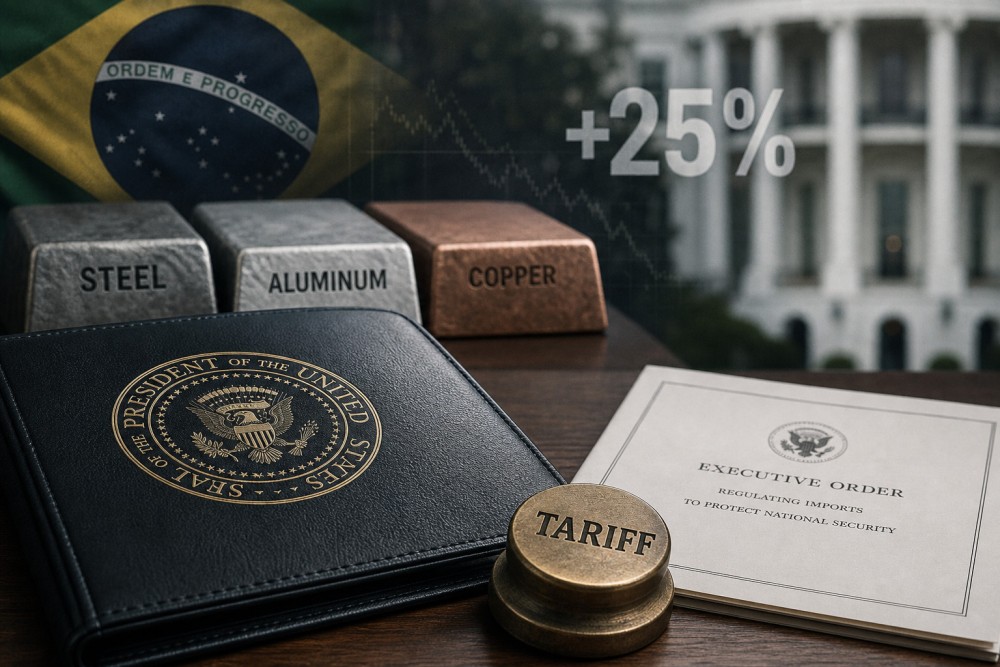
Gotrade News - President Trump imposed a new 25% tariff on Brazilian imports and amended existing duties on steel, aluminum, and copper. The coordinated trade action escalates Washington's enforcement agenda and pressures emerging-market assets.
According to Bloomberg, the move cites longstanding trade-practice concerns. Markets responded with weakness in Brazil-exposed equities and softer emerging-market sentiment.
Key Takeaways
Washington imposed a fresh 25% tariff covering a broad range of Brazilian exports.
Executive order amendments tighten Section 232 enforcement on steel, aluminum, and copper.
Brazil-linked equities and the real fell as investors priced in escalation risk.
The administration framed the Brazil duty as a response to tariff barriers, currency practices, and weak intellectual-property enforcement. Officials said the measure targets a broad swath of goods crossing into the United States.
As reported by Bloomberg, the new duty layers on top of existing frictions between Washington and Brasilia. The escalation also coincides with the parallel metals tariff amendments.
Brazilian commodity exporters absorbed the brunt of the initial selling. Shares of Petrobras (PBR) traded under pressure as investors weighed the impact on US-bound crude and refined product flows.
Mining giant Vale (VALE) also slipped on concerns that iron ore and base metals shipments could face higher landed costs in the United States. Sentiment across Latin American ADRs turned defensive within hours of the announcement.
The Brazilian real weakened against the dollar as currency traders priced in slower export receipts. Broader emerging-market funds saw outflows as risk appetite cooled across the region.
Per Bloomberg, the announcement deepens 2026's pattern of tariff policy as a primary market driver. Analysts flagged risks of retaliatory measures from Brasilia in the coming weeks.
President Trump signed an executive order amending the existing tariff regime on imported steel, aluminum, and copper. The order adjusts product classifications, country exemptions, and rate schedules.
According to The Hill, the amendments tighten enforcement of the underlying Section 232 framework. The changes arrived alongside the new Brazil duty, signaling a coordinated trade push.
Domestic metals producers welcomed the move as a defense against subsidized foreign competition. Shares of Nucor (NUE) and other US steelmakers drew buying interest on expectations of stronger pricing power.
Downstream manufacturers struck a more cautious tone. Construction firms, automakers, and industrial machinery producers warned of fresh input-cost pressure if exemptions narrow further in the coming months.
As reported by The Hill, domestic steel and aluminum producers had lobbied for tighter enforcement for months. Metal-intensive users continue to push for broader product exemptions to limit pass-through costs.
The net market impact remains contested across the analyst community. Some strategists highlight inflation pass-through risk, while others see reshoring incentives boosting domestic capex over the medium term.
Equity desks noted divergence between integrated producers and metals-intensive end users. The split underscores how tariff design choices ripple unevenly through industrial value chains.
Tariff policy continues to dominate cross-asset positioning into mid-2026. Investors are watching for retaliatory steps from Brazil and for further amendments to the Section 232 metals framework in the weeks ahead.
Gotrade is the trading name of Gotrade Securities Inc., which is registered with and supervised by the Labuan Financial Services Authority (LFSA). This content is for educational purposes only and does not constitute financial advice. Always do your own research (DYOR) before investing.