
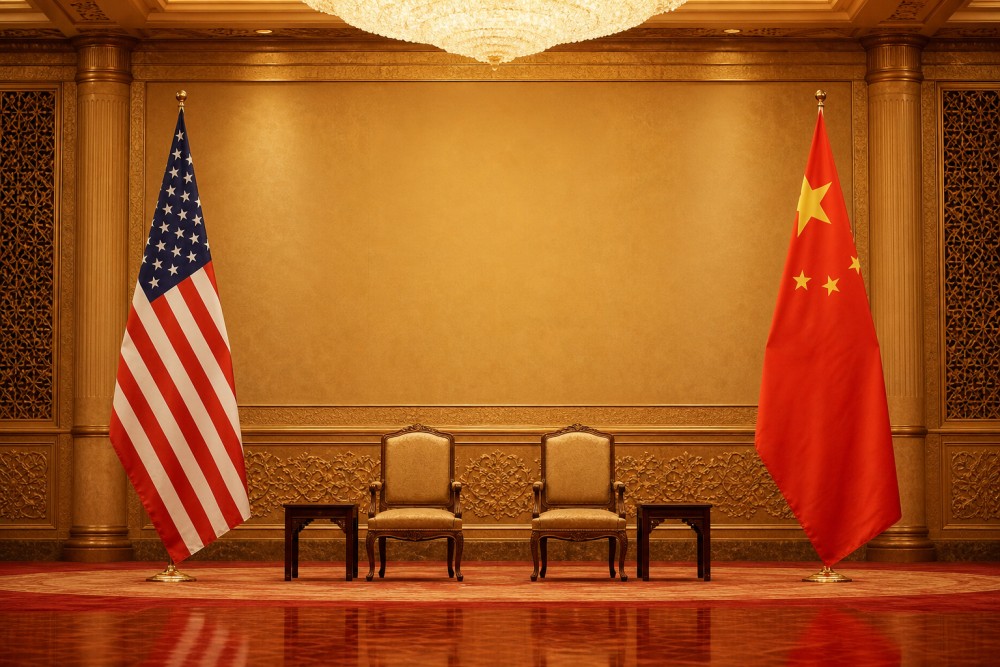
Gotrade News - US President Donald Trump and Chinese President Xi Jinping held a nearly 2.5-hour summit in Beijing on Thursday. The leaders discussed trade frictions, economic security, and broader market access for Chinese firms in the United States.
The meeting lifted risk sentiment, with S&P 500 futures up 0.27% and Nasdaq 100 futures 0.24% higher pre-market. Treasury yields eased as investors priced in a softer path on tariffs and chip export curbs.
Key Takeaways
- Trump and Xi met for almost 2.5 hours in Beijing on trade and economic security.
- Talks covered broader US access for Chinese firms and Chinese energy and agricultural purchases.
- Nvidia rose 2% pre-market after H200 chip approval for sales into China.
Summit Outcomes And Market Reaction
According to Bloomberg, the two leaders met on May 14 to discuss trade and economic security. The Beijing session marked the most substantive engagement between the powers this year.
Trump told reporters that the two nations would have a "fantastic future" together after the talks. Xi emphasized partnership while warning that mishandling of Taiwan could still trigger broader conflict.
The agenda reportedly covered broader US market access for Chinese firms operating in technology and finance. China also signaled potential additional purchases of US energy and agricultural goods to narrow the bilateral deficit.
Risk assets responded quickly to the constructive tone from both delegations in Beijing. According to Barchart, S&P 500 futures gained 0.27% and Nasdaq 100 futures rose 0.24% pre-market.
The 10-Year Treasury yield slipped to 4.46%, down 0.20% on the session. Lower yields supported large-cap technology names that had led the recent rally into the summit.
Chip Approvals And Stock Implications
The standout single-stock move came from Nvidia, which climbed roughly 2% in pre-market trading. Washington reportedly approved sales of its H200 accelerator chips into the Chinese market under defined conditions.
The approval signals a measured easing of recent export controls on advanced semiconductors. Investors interpreted the move as a constructive concession tied to the broader Beijing negotiating framework.
Chinese equities and US-listed proxies could benefit if market-access pledges materialize in concrete policy steps. Names such as Alibaba often track sentiment around US-China trade and regulatory cycles.
Diversified exposure through the iShares China Large-Cap ETF offers a broader read on policy outcomes. Traders will watch follow-through statements from both capitals before extending positioning into next week.
Risks remain centered on Taiwan rhetoric, technology controls, and the durability of any verbal commitments. Markets will demand written frameworks before pricing a lasting de-escalation in the bilateral relationship.