
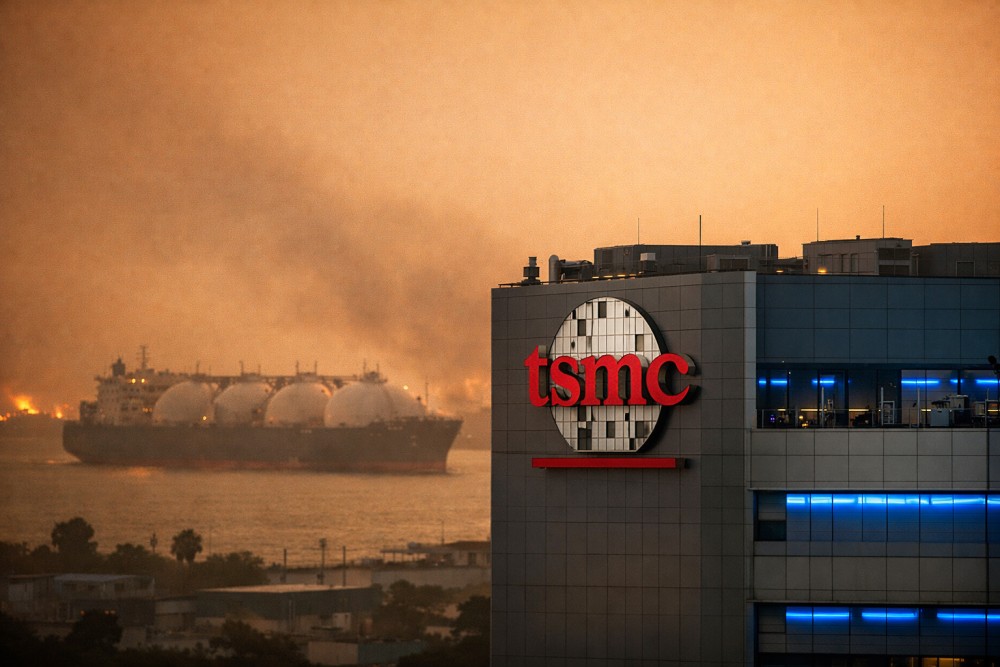
Gotrade News - Taiwan Semiconductor reported record first-quarter 2026 revenue of $35.6 billion, beating analyst consensus by a meaningful margin. The 35% year-over-year growth signals strong AI chip demand, but the Middle East conflict still threatens global chip supply chains.
TSMC's March 2026 revenue alone hit 415.2 billion new Taiwan dollars, a 45.2% year-over-year surge. This marked the eighth consecutive quarter of annual growth for the world's largest chipmaker, with gross margins projected at 64%.
Key Takeaways:
- TSMC beat Q1 2026 consensus with record $35.6 billion revenue, driven by AI chip demand from Apple and Nvidia
- The Strait of Hormuz blockade threatens Taiwan's energy supply, with only 11 days of LNG reserves remaining
- Helium prices have doubled since the war began, putting advanced chip manufacturing processes at risk
SemiAnalysis analyst Sravan Kundojjala identified leading-edge chip price increases as a major factor behind the earnings beat. Orders from major clients including Apple and Nvidia remained resilient despite the ongoing Middle East conflict.
TSMC's U.S.-listed shares rose more than 2% in pre-market trading after the earnings release. The company is tracking to exceed its stated 30% annual growth target, according to Yahoo Finance.
Behind the strong financials, the Strait of Hormuz has been effectively closed since March 4, 2026. The blockade threatens energy and critical material supply lines that underpin Taiwan's semiconductor manufacturing industry.
Taiwan imports 97% of its energy, with 37% of its power grid running on Middle Eastern liquefied natural gas. The country's LNG reserves can last only 11 days without foreign imports, according to Tom's Hardware.
Helium prices have doubled since the Iran war began, disrupting a critical material used in advanced chip manufacturing. Qatar's Ras Laffan Industrial City, which supplies nearly one-third of the world's helium, went offline after Iranian strikes in early March.
Both TSMC and South Korean chipmaker SK Hynix have stated that supply chain disruptions have not yet impacted their financial results. SK Hynix claims to have secured diverse supply chains and sufficient helium inventory for medium-term operations.
The April 7 ceasefire between the U.S., Iran, and Israel has not resolved the fundamental supply chain crisis. The Strait of Hormuz remains closed and the global economy is far from normal, according to The American Prospect.
TSMC plans to spend up to $56 billion on factories outside Taiwan, including in the United States. This production diversification has become increasingly critical given the geographic vulnerabilities exposed by the Middle East conflict.
Several other semiconductor stocks rallied alongside TSMC amid strong AI demand and geopolitical dynamics. SanDisk surged 50% month-to-date after joining the Nasdaq 100, while Astera Labs gained 11.9% and Credo Technology rose 12.35%.
Sources:
- TSMC Q1 2026 earnings: Record revenue on strong AI chip demand - Yahoo Finance
- How the Iran War Threatens the AI Economy - The American Prospect
- Global chip supply chain under threat as US-Iran conflict enters third week - Tom's Hardware