

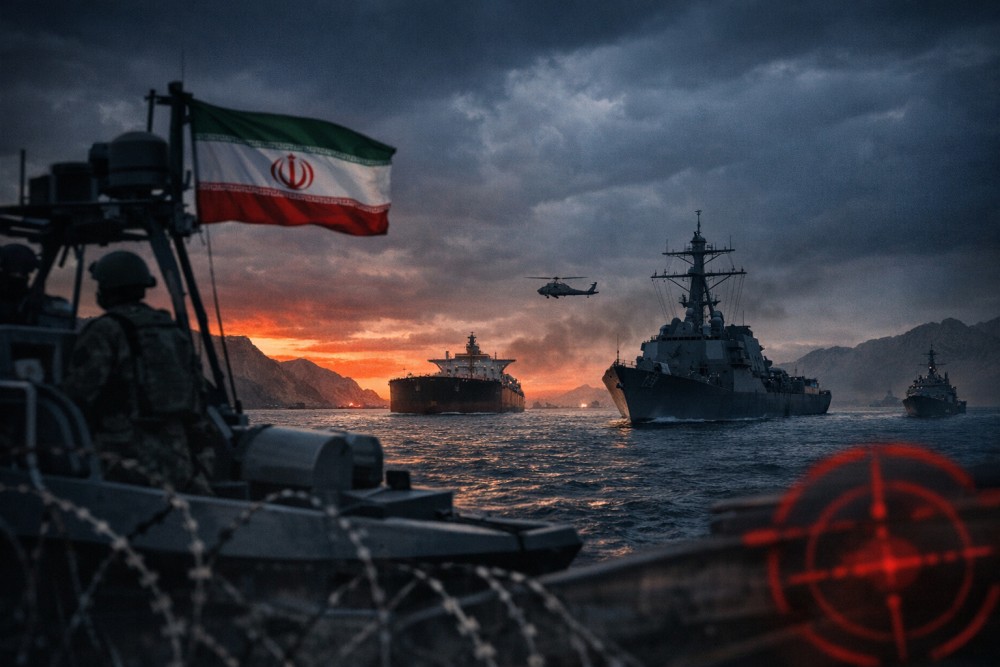
Gotrade News - The two-week ceasefire between the United States and Iran officially took effect on Wednesday (04/08), but conditions at the Strait of Hormuz have yet to normalize. The strategic waterway that handles 20% of global oil and LNG supply remained closed as of Thursday (04/10) morning.
Follow-up negotiations are scheduled in Islamabad, Pakistan on Friday (04/10), with Vice President JD Vance leading the American delegation. The team also includes special envoy Steve Witkoff and Jared Kushner to discuss a comprehensive conflict resolution.
Key Takeaways:
- Two-week US-Iran ceasefire took effect Wednesday (04/08), mediated by Pakistan, but the Strait of Hormuz remains closed
- Iran re-closed Hormuz after Israel attacked Lebanon, claiming the US-Israel violated ceasefire terms
- Face-to-face negotiations in Islamabad on Friday (04/10) are a critical moment for determining the conflict's direction
Fragile Ceasefire and the Lebanon Dispute
The Pakistan-mediated ceasefire requires the US and Israel to halt attacks on Iran for two weeks. In return, Tehran agreed to reopen the Strait of Hormuz for international maritime traffic.
However, Iran re-closed the Strait of Hormuz on Wednesday (04/08) after Israel launched strikes on Lebanese territory. Iranian Foreign Minister Abbas Araghchi insisted that the Lebanon conflict should be included in the peace agreement's scope.
Israeli Prime Minister Benjamin Netanyahu rejected this position, stating Lebanon is not part of the ceasefire. This contradiction represents a critical breaking point that threatens the entire peace process.
Islamabad Negotiations and Iran's Demands
Pakistan as mediator has invited US and Iranian delegations to Islamabad for face-to-face negotiations on Friday (04/10). Iran previously rejected a 45-day two-phase ceasefire proposal introduced by Pakistan on April 5.
Instead, Iran submitted a 10-point plan covering maritime security, nuclear constraints, sanctions relief, and structured negotiations. This proposal signals that Iran wants a broader conflict resolution, not merely a temporary pause.
US defense stocks like Lockheed Martin (LMT) and Raytheon Technologies (RTX) tend to strengthen during prolonged geopolitical tensions. Conversely, a successful conflict resolution typically triggers corrections in this sector.
Market Impact and Investor Considerations
The Hormuz closure has directly impacted global energy prices, pushing WTI crude near $98 per barrel. Net energy-importing countries across Asia face mounting pressure from rising import costs and inflationary risks.
Defense contractors like Northrop Grumman (NOC) are also drawing market attention due to increased global military spending. Understanding how geopolitical events affect portfolios through a macro trading framework is essential for navigating this volatility.
The outcome of Friday's Islamabad negotiations will be a key determinant of market direction for the coming week. A breakdown in talks could trigger further escalation and sharper spikes in oil prices.
Sources:
- US-Iran ceasefire deal: What are the terms, and what's next, Al Jazeera
- Vance to Lead Iran Talks as Tehran Says Ceasefire Violated, Bloomberg
- Iran ceasefire raises hopes for reopening key Strait of Hormuz, UN News
- A fragile US-Iran ceasefire sparks market relief but no clear path to lasting peace, CNBC