

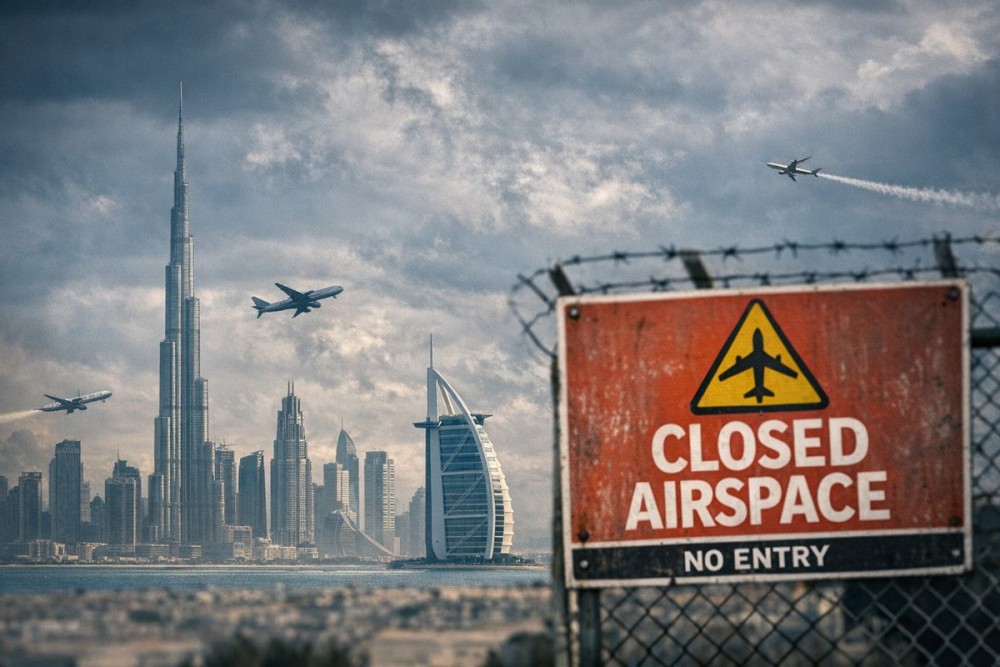
Gotrade News - The Middle Eastern conflict between the US and Iran has compelled the United Arab Emirates (UAE) to close its airspace. This move comes amidst escalating geopolitical tensions in the region, significantly affecting international logistics and diplomacy.
Key Takeaways:
- The closure of UAE airspace indicates an escalation in the US-Iran conflict.
- This geopolitical impact poses potential disruptions to the air transport sector.
- The UAE's action adds uncertainty to the global markets.
This conflict casts a shadow over global markets with various security implications. As a major transport hub, the UAE's decision to close its skies is leading many to rethink their flight routes. Similar situations have occurred during heightened tensions in other regions, influencing investment decisions and the stability of the global capital markets.
Meanwhile, developments in Australia with fuel delivery failures from China highlight, although indirectly related, how geopolitical tensions can impact non-military sectors at an international level.
The region's economic outlook and diplomatic moves remain in focus. The UAE's decision could signal neighboring countries to consider similar policies, especially with recent statements from Israel about a buffer zone in Lebanon affecting the surrounding situation.
For investors, these decisions are essential to analyze further, as uncertainties might impact global investment portfolios, particularly for those focused on airline and energy stocks.
Reference:
- Bloomberg, UAE Gas Field Set Ablaze as Iran Strikes Hit Energy Supplies. Accessed on March 17, 2026
- Bloomberg, UAE Reopens Airspace After Brief Shutdown Amid Iran Strikes. Accessed on March 17, 2026
- CNBC, uae airspace closure dubai airport drone strike middle east flights.html. Accessed on March 17, 2026
Featured Image: GPT Image 1.5