If you already own NVIDIA, you have the dominant AI accelerator. You also have concentration risk if NVDA has done its job in your portfolio over the past two years. The right move is rarely to sell NVDA outright.
The right move is to use the appreciated position as collateral for diversifying into the rest of the AI semiconductor stack. The chip industry is broader than the headline GPU. Custom silicon, networking ASICs, and fab capacity all have publicly listed pure-plays that benefit from the same capex cycle that lifts NVDA.
Three names stand out as the highest-quality complements: AMD, AVGO, and TSM. Each occupies a different layer of the AI stack, and each has a multi-year tailwind that does not depend on NVDA losing share.
Why Investors Should Look Past NVDA
NVIDIA (NVDA) shipped roughly 80 percent of AI accelerators sold to hyperscalers in 2025. That share is unlikely to hold forever. Hyperscalers (Amazon, Google, Microsoft, Meta) are all developing custom silicon to reduce single-supplier dependency.
AI infrastructure capex is forecast at over 300 billion dollars annually by 2027, splitting across GPU compute, custom ASICs, networking, memory, and fab services. The deeper structure of the chip industry is in our semiconductor stocks primer, and the broader AI landscape is in our AI stocks guide.
AMD: The MI300 Data-Center Challenger
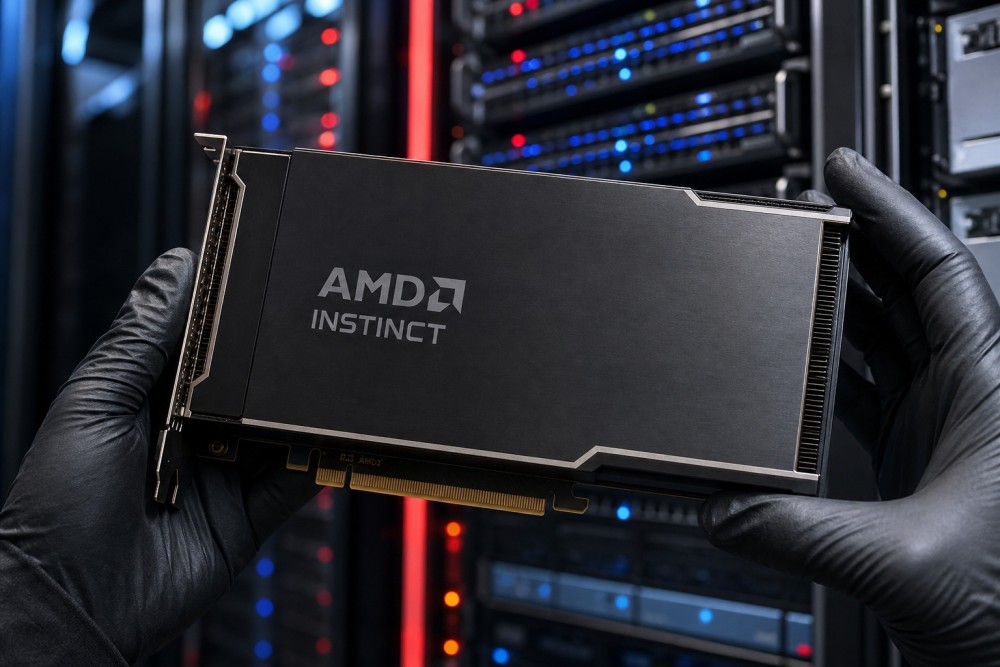
Advanced Micro Devices (AMD) is the only name with a credible second-source GPU for AI training and inference. The MI300X accelerator competes directly with NVDA's H100 and H200 in data-center deployments, and Microsoft, Meta, and Oracle have all confirmed multi-billion-dollar orders.
AMD does not need to take 50 percent share of the AI GPU market to be a winner. Even 15 to 20 percent share would roughly double the company's data-center revenue from current levels. The legacy CPU business (EPYC server, Ryzen client) is profitable and gaining share against Intel.
- The bear case is execution: AMD needs to scale ROCm software against CUDA.
- The bull case is that the AI capex cycle has room for two GPU vendors.
Broadcom (AVGO) has quietly become one of the most important infrastructure plays in AI without making consumer GPUs. The company designs custom AI accelerators for hyperscalers (the most prominent being Google's TPU, which Broadcom co-designs and manufactures the silicon for), networking ASICs that connect GPU clusters at scale, and a software stack from the VMware acquisition that anchors the recurring revenue base. Operating margins above 60 percent are unusual even for premium semiconductor names, and the AI revenue line is growing roughly 50 percent year over year.
- The bear case is concentration: roughly 20 percent of revenue comes from a single hyperscaler customer (widely reported to be Google).
- The bull case is that custom silicon revenue grows faster than merchant GPU revenue over the next 5 years as more hyperscalers move to in-house designs.
Taiwan Semiconductor (TSM): Fab Dominance With Geopolitical Risk
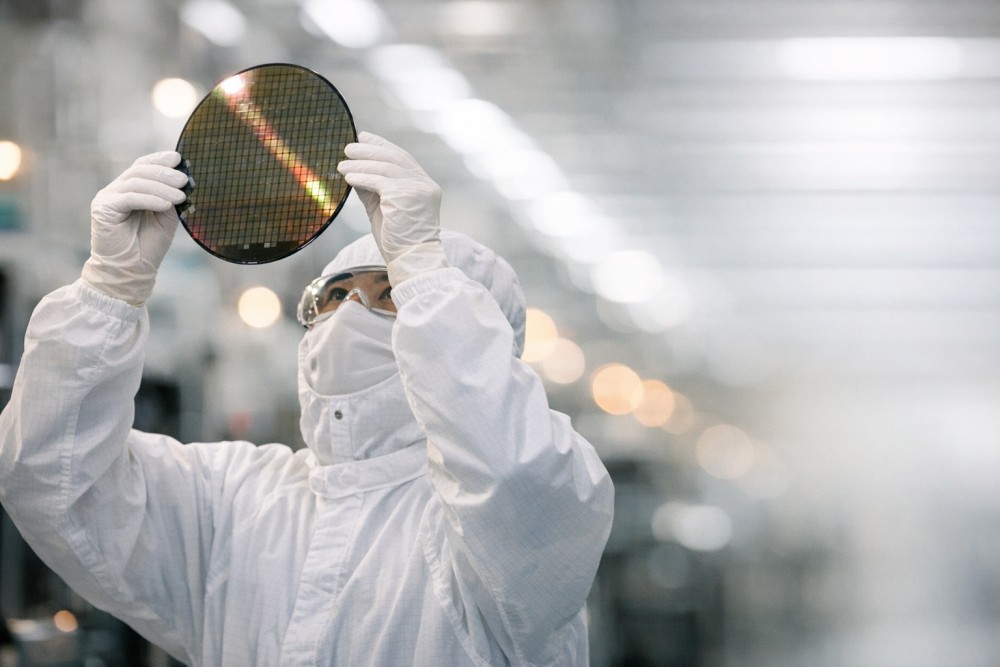
Taiwan Semiconductor (TSM) manufactures roughly 60 percent of the world's leading-edge logic chips, including essentially all of NVDA, AMD, and AVGO's most advanced silicon. TSM is the picks-and-shovels play for the entire AI semiconductor industry.
The company's process technology lead at the 3nm and 2nm nodes is multi-year, the capital intensity of building new fabs has consolidated the industry to one viable leading-edge supplier, and the customer relationships are essentially impossible to replicate. The latest TSMC quarterly results confirm AI-related revenue is now the largest single growth driver.
- The bear case is geopolitical risk: a Taiwan Strait scenario remains the dominant single risk factor for TSM.
- The bull case is that the diversified fab build in Arizona and Japan creates a defensible global footprint by 2027 and that no foundry alternative is closer than 5 years from being competitive.
3-Stock Basket Versus SOXX ETF
An equal-weighted basket of AMD, AVGO, and TSM provides concentrated AI semiconductor exposure with three different risk vectors (execution for AMD, customer concentration for AVGO, geopolitical for TSM).
The SOXX ETF gives broader exposure across 30+ semiconductor names but includes slower-growing names like Texas Instruments and Analog Devices that dilute AI-specific upside.
The right framework is to use the basket if you want focused AI infrastructure exposure, use SOXX if you want general semiconductor cyclical exposure with lower stock-specific risk.
Conclusion
NVDA does not have to lose for AMD, AVGO, and TSM to win. The AI semiconductor cycle is large enough that multiple winners can emerge, and the smart move for investors with a concentrated NVDA position is to use the gains to build exposure to the rest of the stack.
AMD covers the GPU second-source thesis. AVGO covers custom silicon and networking. TSM covers the fab layer that everything else depends on.
To start the diversification, allocate equal weights across the three names in your Gotrade portfolio.
FAQ
Should I sell NVDA to buy AMD, AVGO, and TSM?
Not necessarily. The thesis here is diversification, not substitution. A common framework is to trim NVDA from a concentrated position (over 20 percent of portfolio) and rotate the proceeds into the basket.
Is TSM the most defensive of the three?
By moat, yes. By geopolitical risk, no. TSM's fab dominance is the strongest competitive position in semiconductors, but Taiwan Strait exposure is the largest single risk in the industry.
What is the simplest way to own all three plus NVDA?
The SOXX ETF holds all four, weighted by market cap, and gives broad semiconductor sector exposure in a single ticker.
Are these dividend stocks?
No. AMD does not pay one. AVGO and TSM pay modest dividends but are owned for capital appreciation, not income.