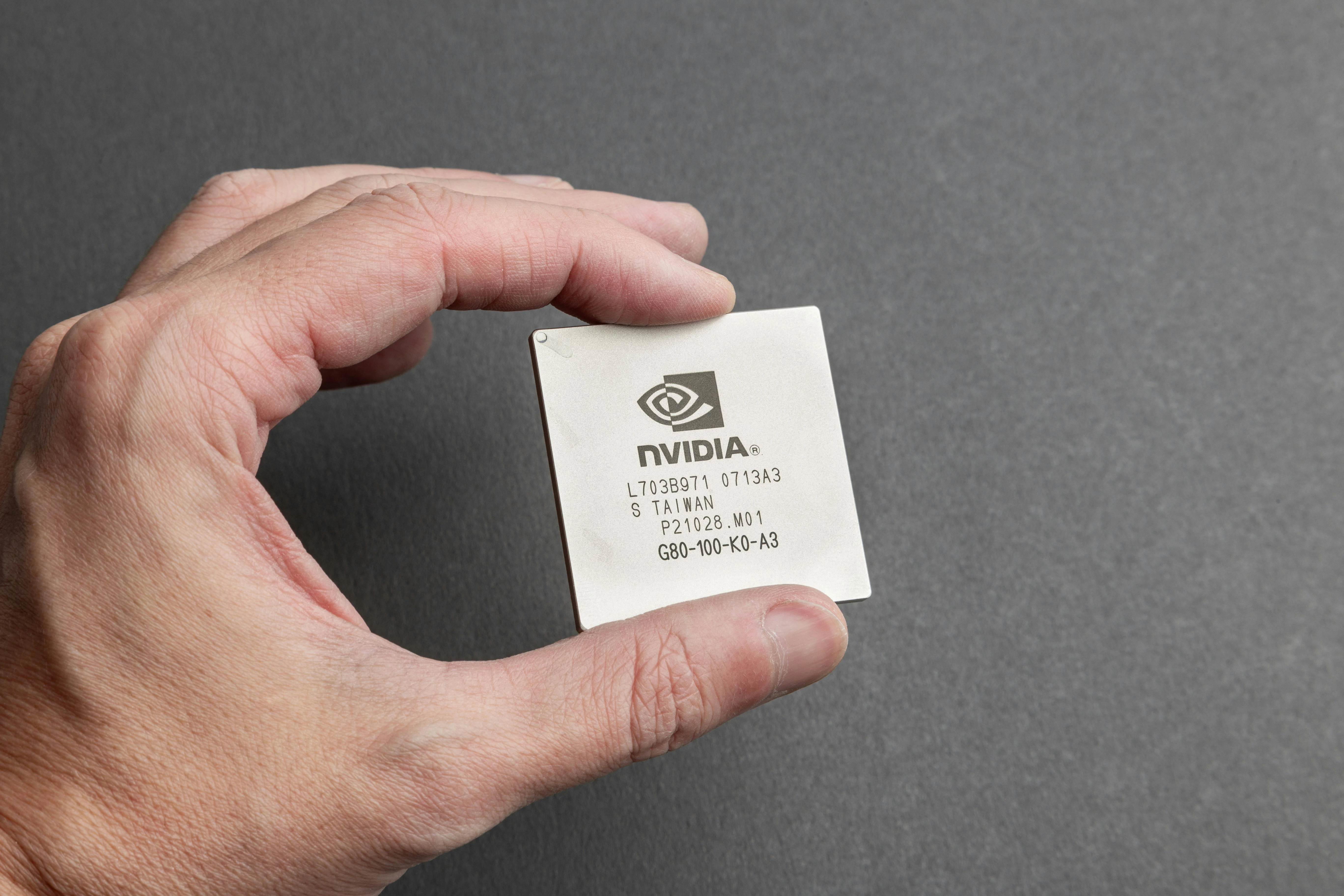
Semiconductors power nearly every technology product in modern life, from smartphones and data centers to electric vehicles and medical devices. The chip industry has become one of the most strategically important sectors in the global economy.
Understanding how the semiconductor supply chain works and what drives chip stock valuations helps investors evaluate opportunities in this high-growth, cyclical sector.
Semiconductor Industry Overview
The global semiconductor market generates hundreds of billions in annual revenue, growing at a compound rate well above the broader economy for decades.
AI has accelerated growth dramatically. Training and running AI models requires specialized processors consuming far more silicon than traditional applications. Cloud computing, autonomous driving, and industrial automation are additional structural demand drivers beyond consumer electronics.
The industry operates on long investment cycles. Building a new fab costs tens of billions and takes years. This creates periods where supply cannot keep pace with demand, followed by oversupply when capacity catches up. Understanding these market cycles is essential for semiconductor investing.
Types of Chip Companies
Companies occupy distinct positions in the semiconductor supply chain, each with different business models and risk profiles.
Integrated device manufacturers (IDMs)
These companies design and manufacture their own chips. Intel is the most prominent example. IDMs control the entire process but must invest heavily in fabrication facilities, creating high capital expenditure and fixed cost exposure.
Fabless designers
Fabless companies design chips but outsource manufacturing to foundries. NVIDIA (NVDA), AMD, and Qualcomm (QCOM) follow this model, focusing R&D on design innovation while avoiding the capital burden of building fabs. Margins tend to be higher due to the asset-light structure.
Foundries
Foundries manufacture chips designed by other companies. TSM dominates this segment, producing the most advanced chips for Apple, NVIDIA, and AMD. Foundries require enormous capital investment but benefit from economies of scale across many customers.
Equipment and materials
Companies like ASML, Applied Materials, and Lam Research build the machines used to manufacture chips. ASML's extreme ultraviolet (EUV) lithography systems are essential for producing the most advanced processors. Equipment companies benefit from every dollar of fab investment regardless of which designer wins.
Key Players in Semiconductors
NVIDIA leads in GPUs that have become standard hardware for AI training. Its data center revenue has grown dramatically as cloud providers invest in AI infrastructure.
TSM is the world's largest contract chip manufacturer, producing the most advanced chips at scale with a technological moat competitors struggle to replicate.
AMD competes with Intel in CPUs and NVIDIA in GPUs. Server processor market share gains and a growing AI presence have driven strong earnings growth.
Broadcom supplies networking, storage, and wireless chips across enterprise markets with diversified end-market stability.
ASML holds a monopoly on EUV lithography equipment essential to every leading-edge chip manufacturer.
Intel is investing to rebuild manufacturing capabilities, though execution risk remains against TSM's established lead.
To check whether specific semiconductor stocks are available, visit the Gotrade ticker page and search by company name or ticker.
If you want to build positions in chip stocks with fractional shares, the Gotrade app provides access to US-listed semiconductor companies and ETFs.
Factors Affecting Chip Stocks
Demand cycles
Chip demand fluctuates with technology adoption curves. The current AI cycle is driving unprecedented demand for high-performance processors.
Previous cycles were driven by smartphones, PCs, and cloud. Each creates winners based on who has the right products at the right time.
Supply chain dynamics
Manufacturing concentration in Taiwan (TSM) and South Korea (Samsung) creates geopolitical supply risk. Government initiatives like the US CHIPS Act aim to diversify production, but building domestic capacity takes years.
Interest rates and valuation
Semiconductor stocks, particularly high-growth names, are sensitive to rate changes. Higher rates compress valuations of companies whose worth depends heavily on future earnings. Rate expectations can drive significant price movements independent of fundamentals.
Technology transitions
Major architecture shifts create new leaders and displace incumbents. The CPU-to-GPU transition for AI workloads massively benefited NVIDIA while challenging Intel.
Companies leading transitions capture outsized returns; those falling behind face structural headwinds.
Risks and Opportunities
Opportunities
AI infrastructure spending represents a multi-year cycle rivaling previous buildouts like cloud and mobile. Companies at the center have significant growth runway.
Semiconductor content per device continues rising. Modern vehicles contain thousands of dollars worth of chips, up from hundreds a decade ago. Government subsidies and reshoring initiatives create additional opportunities.
Risks
Cyclicality is inherent. Shortage-driven pricing power is followed by oversupply and margin compression. Buying at peak multiples during booms can lead to significant drawdowns.
Geopolitical tensions, particularly around Taiwan, create tail risk for the supply chain. US-China export restrictions have already impacted revenue for companies selling into China.
Valuation risk is elevated. Many chip stocks trade at premium P/E ratios reflecting high growth expectations. Concentration risk also exists because a handful of companies dominate critical supply chain nodes.
Conclusion
Semiconductor stocks offer exposure to some of the most important technology trends of the coming decade. The industry's complexity creates opportunities for investors who understand the supply chain, cyclical dynamics, and competitive positioning of key players.
Successful semiconductor investing requires evaluating where each company sits in the value chain, how sustainable its competitive advantage is, and whether valuations reflect realistic growth expectations. Diversifying across designers, foundries, and equipment makers reduces concentration risk while maintaining sector exposure.
If you want to explore semiconductor stocks and ETFs available on the US market, the Gotrade app lets you invest with fractional shares from as little as $1.
FAQ
What are semiconductor stocks?
Semiconductor stocks are shares of companies that design, manufacture, or supply equipment for producing computer chips used in electronics, AI systems, vehicles, and industrial applications.
Are semiconductor stocks cyclical?
Yes. The chip industry experiences boom-and-bust cycles driven by supply and demand imbalances, technology transitions, and macroeconomic conditions.
How can beginners invest in semiconductor stocks?
Beginners can start with semiconductor ETFs for diversified exposure or research individual companies using fundamental metrics like P/E ratio, revenue growth, and earnings trends.
References
- Investopedia, Investing in the Semiconductor Industry, 2026.
- Semiconductor Industry Association, Industry Data, 2026.