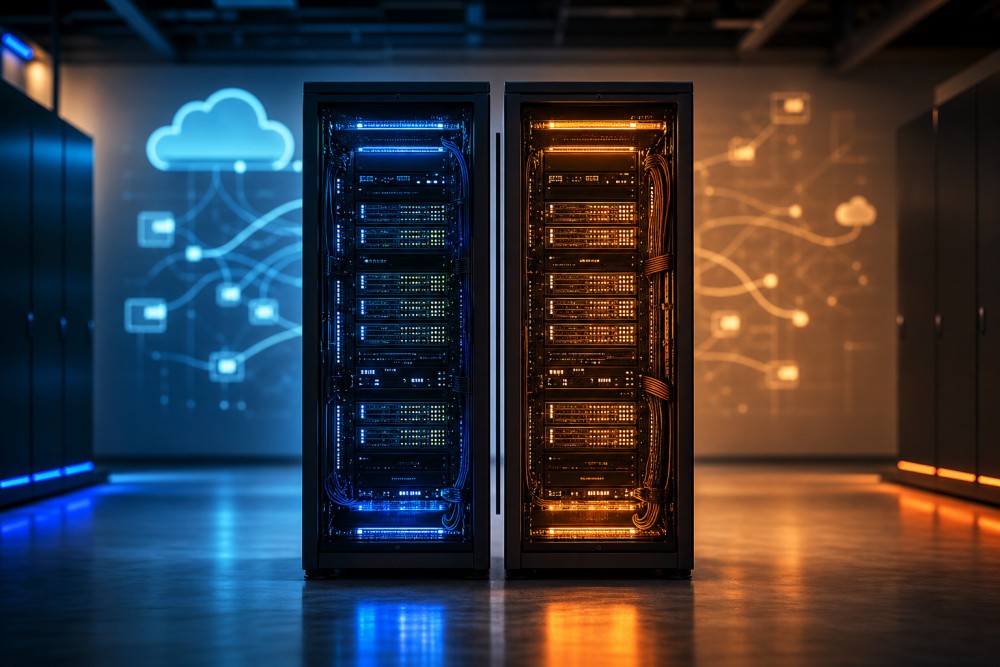
AI infrastructure stocks give exposure to the picks and shovels behind every large model, often a cleaner trade than picking the next model winner.
Hyperscalers Microsoft, Meta, Alphabet, and Amazon have guided combined capex above US$320 billion for 2026, flowing into a stack of suppliers most retail investors still underweight.
This playbook walks the five layers, picks one US-listed name each, and shows how to combine them.
The Picks and Shovels Logic Applied to AI
In the 1849 gold rush, shovel merchants often outperformed prospectors. The same dynamic plays out today in AI capex.
Model labs compete in a fast-moving arena where margins remain uncertain. Infrastructure suppliers get paid regardless of which lab wins, since every new cluster needs the same chips, racks, power, cooling, and networking gear.
According to Yahoo Finance, hyperscaler AI capex is on track to reach US$725 billion in 2026, with most incremental dollars flowing into data centers.
Layers: Chips, Server OEMs, Power, Cooling, Networking
The AI infrastructure stack splits into five distinct layers, each with a clear publicly listed leader.
- Chips: GPUs and custom accelerators that perform the computation.
- Server OEMs: integrators that assemble GPUs into rack-scale systems for data centers.
- Power: utilities supplying the gigawatts of electricity AI clusters demand.
- Cooling: thermal management vendors, increasingly focused on liquid cooling.
- Networking: high-speed switches and optics connecting tens of thousands of GPUs.
Each layer has different growth, margin, and cyclicality profiles. Understanding that mix separates an informed sleeve from a single-name bet.
Top Stock Per Layer: NVDA, SMCI, CEG, VRT, ANET
Below is one US-listed pick per layer. Each is a clear leader with direct AI revenue disclosure.
1. Chips: Nvidia (NVDA)
Nvidia (NVDA) remains the dominant AI GPU supplier with roughly 85% to 90% share of data center accelerators. The Blackwell platforms anchor 2026 cluster builds, and the CUDA software stack keeps switching costs high. The bear case is custom hyperscaler silicon chipping away at incremental share.
2. Server OEMs: Super Micro Computer (SMCI)
Super Micro Computer (SMCI) integrates GPUs into liquid-cooled rack-scale systems with strong time-to-market on new Nvidia platforms. Margins are lower than Nvidia, but it rides the same volume curve. Size it smaller given inventory cyclicality and past accounting scrutiny.
3. Power: Constellation Energy (CEG)
Constellation Energy (CEG) operates the largest US nuclear fleet and is now a primary supplier to AI data centers. According to CNBC, Constellation Energy signed a 20-year power purchase agreement with Microsoft to restart Three Mile Island Unit 1, locking in baseload nuclear supply hyperscalers cannot easily replicate. Power, not chips, is the gating constraint on 2026 capex.
4. Cooling: Vertiv (VRT)
Vertiv (VRT) supplies liquid cooling and power distribution gear inside data centers. The shift from air to liquid cooling, driven by GPU rack densities above 100 kilowatts, is a direct tailwind. VRT trades rich but has consistently beaten guidance, with backlog visibility into 2027.
5. Networking: Arista Networks (ANET)
Arista Networks (ANET) sells high-speed Ethernet switches purpose-built for AI clusters, with Meta and Microsoft as anchor customers. Networking is roughly 10% to 15% of cluster cost but mission critical, so customers pay up for ANET gear over slower alternatives.
How to Combine Them Into a Balanced Sleeve
A single-stock bet on Nvidia has worked, but it concentrates risk in one layer, one supply chain, and one valuation multiple. A balanced sleeve spreads that risk.
One approach is equal weight across the five names, each getting 20% of the AI infrastructure allocation with quarterly rebalancing. A value-weighted variant tilts toward the larger, more liquid names, for example 35% NVDA, 20% ANET, 15% CEG, 15% VRT, and 15% SMCI.
Position sizing should account for capex cyclicality. If hyperscaler capex growth cools from 45% to single digits, all five names will derate together. Dollar cost averaging over six to twelve months smooths entry timing for most retail investors.
Conclusion
AI infrastructure stocks are a structured way to own the 2026 buildout without picking the model winner. Five layers, five names, and a balanced sleeve approach reduce concentration risk while keeping full exposure to the theme.
The picks and shovels logic worked in 1849, and it is working again in AI capex today. The investor who owns the suppliers gets paid as long as the buildout continues, regardless of which lab leads.
You can build this sleeve on Gotrade with fractional shares, starting from US$1. That makes layered exposure to NVDA, SMCI, CEG, VRT, and ANET realistic even on a small starting account.
FAQ
What are AI infrastructure stocks?
AI infrastructure stocks are companies that supply the hardware, power, and connectivity used to train and run AI models. They include chip designers, server OEMs, utilities, cooling vendors, and networking suppliers.
Why use a picks and shovels approach for AI?
The picks and shovels approach targets suppliers rather than end users. It gets paid by any winning model lab and reduces exposure to a single product getting disrupted.
Is Nvidia still the best AI stock for 2026?
Nvidia is still the dominant chip supplier, but concentrating an AI sleeve in a single name carries derating and competition risk. A layered sleeve across five names spreads that risk.
How much should I allocate to AI infrastructure?
This depends on your portfolio and risk tolerance. Many investors size thematic sleeves at 5% to 15% of equities and rebalance quarterly to manage volatility.
Can I buy these stocks from outside the US?
Yes, platforms like Gotrade offer easy access to US stocks with fractional shares and zero commission, so you can build a layered AI infrastructure sleeve from US$1.