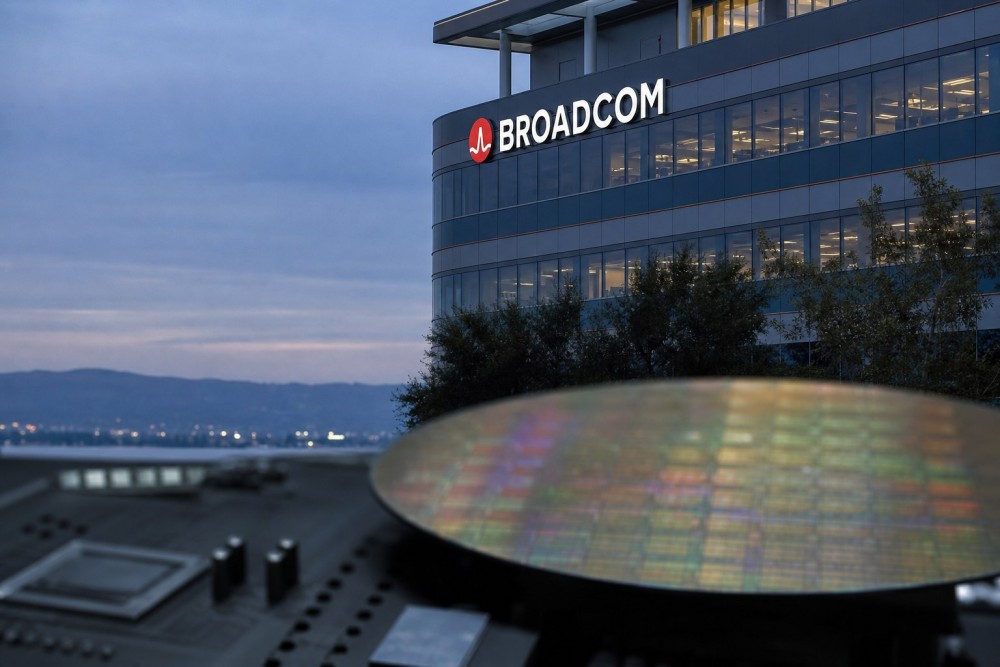
Broadcom (AVGO) Q2 FY26 Earnings Preview: AI Chip Demand Test for the SOX
Erwanto Khusuma
Gotrade Team
Reviewed by Gotrade Internal Analyst
Key Takeaways
Consensus calls for $22B revenue, $2.39 EPS, and AI mix above 30 percent.
Q3 AI guide above $5.5B is the real bullish catalyst for the SOX.
Implied move is roughly 8 percent; trim 20 percent pre-print, add on weakness.
Share this article
Broadcom (AVGO) reports fiscal Q2 results after the close on Wednesday, June 3, 2026. The print is the second most-watched AI semiconductor read of the quarter behind Nvidia (NVDA).
The setup is loaded. Wall Street wants AI revenue to grow another 25 percent sequentially. Custom silicon wins with hyperscalers like Alphabet (GOOGL), Meta (META), and ByteDance are now table stakes, not surprises.
This preview breaks down the consensus bar, the AI mix question, the VMware margin path, and three concrete trade setups you can use to size your position before and after the print.
Consensus: $22B Revenue, $2.39 EPS, AI Chip Mix Above 30%
The Street is modeling roughly $22.08 billion in revenue and $2.39 in adjusted EPS for the quarter ending May 4. According to Reuters, sell-side analysts have nudged AI semiconductor estimates higher into the print, with the buy-side bar now sitting closer to $5.0 billion versus the $4.1 billion delivered in Q1.
That implies AI mix climbs above 30 percent of total semiconductor revenue. Anything below $4.8 billion will be read as deceleration. Anything above $5.2 billion sets up another leg higher for the entire SOX index and pulls peers like AMD (AMD) along with it.
Why the Guide Matters More Than the Print
Broadcom management has guided AI revenue conservatively for four straight quarters and beat each time. The Q3 guide is the real catalyst. A guide above $5.5 billion AI for Q3 would imply a full-year FY26 AI run-rate near $22 billion, well ahead of the $18 to $20 billion range investors are penciling in.
Watch free cash flow conversion too. Q1 came in at $6.0 billion. A repeat or a beat keeps the buyback and dividend story fully intact for the back half.
Custom Silicon: Google TPU, Meta MTIA, ByteDance ASIC
The custom silicon book is what separates Broadcom from a pure merchant chip story like AMD (AMD). Three hyperscaler customers now anchor the franchise, and a fourth is coming.
Alphabet remains the largest contributor, with the TPU v6 ramp now in volume production and a v7 design win already locked in for 2027. Meta MTIA shipments are accelerating into the back half of the calendar year. The ByteDance custom ASIC win reported in May adds a fourth hyperscaler-class customer to the roster.
The Three Plus One Math
Each mature custom silicon customer is worth roughly $8 to $10 billion in annual revenue at run-rate. Three customers ramping plus one new design win gets you a $30 billion-plus AI silicon franchise by FY28. That is the bull case being priced into the stock today.
The risk is timing. If the ByteDance silicon program slips from 2027 into 2028, the model breaks. Listen carefully for any directional comment on the call.
Software Synergy: VMware Margin Trajectory
VMware integration is the second leg of the story. Operating margin in the software segment hit roughly 62 percent in Q1 as the company finished pruning low-margin perpetual licenses and migrated customers to subscription bundles.
Investors want two things from the Q2 software disclosure. First, gross margin holding above 90 percent. Second, a clear statement that integration costs are now fully in the rearview mirror. According to Bloomberg, several large enterprise customers are renewing at the top-tier VCF bundle, which carries the highest per-core economics in the portfolio.
What a Clean Software Quarter Unlocks
A clean software print frees the AI narrative to dominate the call. A messy one, particularly any margin step-down, would force management to spend Q&A time defending the deal again. The market is impatient on this point.
Trade Setups: Pre-Earnings, Post-Earnings, and Drift
Here is a simple framework for sizing into the print without overcommitting capital.
Pre-Earnings: Position Sizing
The options market is pricing an implied move of roughly plus or minus 8 percent. If you already own the stock, trimming 20 percent of the position into the print locks in some of the year-to-date run and preserves dry powder for any post-print reset. New positions should be half-size only.
Post-Earnings: The Three Scenarios
Scenario one, AI beat plus a strong guide. Expect a 6 to 10 percent gap higher. Chase only on a clean break of the prior all-time high with volume, otherwise wait for the first orderly pullback to the 20-day moving average.
Scenario two, in-line print and a cautious guide. Likely a 4 to 7 percent gap lower as fast money rotates back into Nvidia. This is the best risk-reward entry for long-term holders building a core position.
Scenario three, an AI miss. A 10 percent-plus gap down drags the entire SOX with it. Wait for a clear second-day reversal candle before stepping in.
The Drift Trade
The stock has drifted higher in 6 of the last 8 post-earnings weeks regardless of initial reaction. A small starter position held for two weeks after the print has historically captured this drift cleanly.
Broadcom Q2 is a referendum on the durability of the custom silicon thesis. The headline numbers matter, but the FY26 AI guide and a clean VMware margin print matter far more. Plan your scenario before the bell, not after. Trade US stocks from $1 with fractional shares to size your AVGO position ahead of earnings without overcommitting.
FAQ
When does Broadcom report Q2 FY26 earnings?
After the close on Wednesday, June 3, 2026, followed by a 5:00 p.m. ET conference call with management.
What is the AI revenue number to watch?
The buy-side bar is roughly $5.0 billion for the quarter, versus the $4.1 billion delivered in Q1. The Q3 guide matters even more for the stock reaction.
How does Broadcom compare to Nvidia for AI exposure?
Nvidia sells merchant GPUs to everyone. Broadcom designs custom silicon for a handful of hyperscalers, which produces stickier multi-year revenue but slower top-line growth.
What is the options-implied move for the print?
Roughly plus or minus 8 percent, in line with the average implied move across the last four Broadcom earnings reports.
Disclaimer
Gotrade is the trading name of Gotrade Securities Inc., which is registered with and supervised by the Labuan Financial Services Authority (LFSA). This content is for educational purposes only and does not constitute financial advice. Always do your own research (DYOR) before investing.