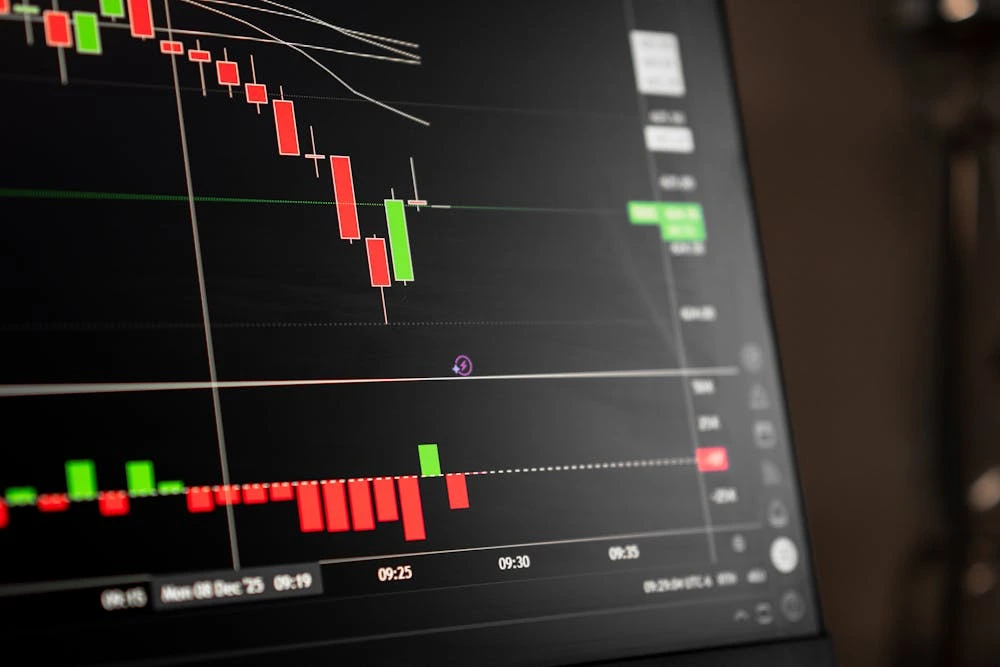
Buying a stock without a clear framework often leads to emotional decisions and unnecessary risk. Many investors enter positions based on hype, short-term momentum, or tips, only to realize later that they missed key warning signs.
A structured buy stock checklist helps you stay disciplined, evaluate both fundamentals and context, and avoid impulsive decisions. Before buying a stock, taking time to go through these steps can significantly improve your consistency and long-term results.
Stock Checklists
1. Check revenue and earnings trend
The first step is to understand how the business is performing over time.
Focus on:
- consistent revenue growth across multiple quarters
- stable or increasing earnings per share (EPS)
- improving margins
A company with steady growth is generally more reliable than one with inconsistent or volatile performance.
If revenue is growing but earnings are declining, it may indicate rising costs or operational inefficiencies.
2. Evaluate valuation vs peers
A great company is not always a great investment if you overpay. Compare valuation metrics such as:
- price-to-earnings (P/E)
- price-to-sales (P/S)
- EV/EBITDA
Then compare these ratios with competitors in the same sector. If a stock trades significantly above peers, ask:
- is growth higher?
- are margins stronger?
- is the business model superior?
If not, the stock may be overvalued.
3. Analyze sector strength
Stocks rarely move in isolation. They are influenced by the strength of their sector.
Check whether the industry is:
- in a growth phase or slowdown
- supported by macro trends
- attracting institutional interest
For example:
- tech and AI sectors may outperform during innovation cycles
- defensive sectors may perform better during uncertainty
Buying strong stocks in weak sectors often leads to underperformance.
4. Review recent news and catalysts
Markets react quickly to new information.
Before buying, review:
- recent earnings reports
- upcoming catalysts such as earnings or product launches
- regulatory or geopolitical developments
Catalysts can drive short-term price movements. Understanding what events are ahead helps you avoid entering just before high volatility.
5. Define entry and risk plan
Never enter a trade without a plan.
Before buying, decide:
- your entry price
- your stop-loss level
- your target or exit strategy
This helps you control risk and avoid emotional reactions.
For example:
- if price drops below a key support level, you exit
- if price reaches your target, you take profit
Having a predefined plan is one of the most important parts of before buying a stock preparation.
6. Check free cash flow strength
Free cash flow shows how much real cash the business generates.
Look for:
- consistent positive free cash flow
- strong conversion from earnings to cash
- manageable capital expenditures
Companies with strong free cash flow have more flexibility to:
- invest in growth
- pay dividends
- reduce debt
Weak cash flow, even with strong earnings, can be a red flag.
7. Assess balance sheet health
A company’s balance sheet reflects its financial stability.
Key factors to review:
- debt-to-equity ratio
- cash reserves
- current ratio
Companies with high debt and low liquidity may struggle during economic downturns. Strong balance sheets provide resilience and reduce downside risk.
8. Understand the business model
If you cannot clearly explain how a company makes money, it may be too complex to invest in confidently.
Ask yourself:
- what drives revenue?
- who are the customers?
- what makes this company different from competitors?
Look for:
- competitive advantages such as brand strength or technology
- recurring revenue models
- scalability
Understanding the business helps you stay confident during market volatility.
9. Check price trend and technical structure
Even strong fundamentals can lead to poor results if timing is wrong.
Review price action:
- is the stock in an uptrend or downtrend?
- does it form higher highs and higher lows?
- where are key support and resistance levels?
Buying in alignment with the trend improves probability.
For example:
- buying near support in an uptrend offers better risk-to-reward
- buying after extended moves increases risk
Technical context helps refine entry timing.
10. Evaluate market sentiment
Sentiment reflects how investors feel about the stock or market.
Check whether sentiment is:
- overly bullish, indicating crowded trades
- overly bearish, potentially creating opportunities
Tools to assess sentiment include:
- analyst ratings
- options data such as put-call ratio
- news tone and social sentiment
Extreme sentiment often appears near turning points. Understanding sentiment helps you avoid entering at emotional extremes.
Why This Checklist Matters
Many losses in the market come from skipping basic steps.
Investors often:
- chase momentum without understanding fundamentals
- ignore valuation and overpay
- enter trades without risk management
A checklist forces discipline.
It ensures that every decision is based on:
- data
- structure
- clear reasoning
Over time, this process helps build consistency and reduces costly mistakes.
Conclusion
Using a structured buy stock checklist is one of the most effective ways to improve investment decisions. By evaluating fundamentals, valuation, sector strength, and risk planning, investors can avoid emotional trades and focus on quality opportunities.
Before buying a stock, always take the time to review both the company and the broader market environment. Small improvements in decision-making can lead to significantly better long-term outcomes.
FAQ
What is the most important factor before buying a stock?
There is no single factor, but combining fundamentals, valuation, and risk management provides a balanced approach.
Should I always follow a checklist before investing?
Yes. A checklist helps ensure consistency and reduces emotional decision-making.
Is timing important when buying a stock?
Yes. Even strong companies can deliver poor results if bought at the wrong time.
References
- Investopedia, Stock Analysis Guide, 2026.
- Corporate Finance Institute, Fundamental Analysis Basics, 2026.