Big Tech earnings season is here, and capex guidance is the line item that will move stocks more than EPS this week. When hyperscalers report, investors should treat the capital expenditure outlook as the headline number, not a footnote. Reading capex guidance correctly tells you whether AI demand is still accelerating or cooling.
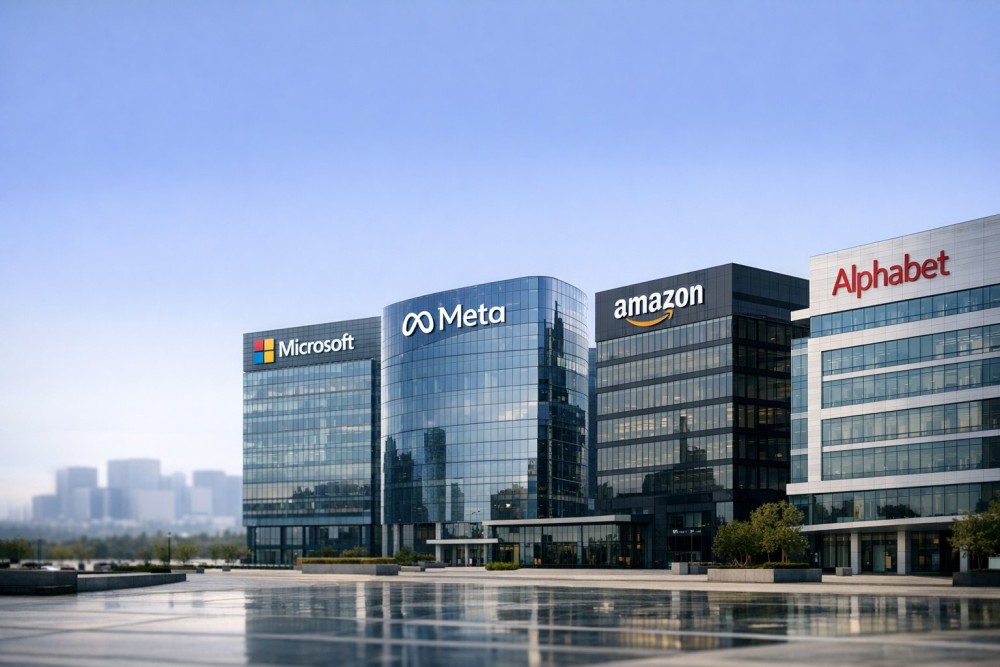
This guide walks through how to interpret capex commentary as Microsoft, Meta, Amazon, and Alphabet print results, and how to separate noisy headlines from durable signals.
Why Capex Beats EPS for Hyperscalers in 2026
For the four AI hyperscalers, capex is the cleanest read on conviction. A raised number signals confidence in future cloud and AI revenue. A trimmed number signals doubt.
EPS is backward-looking and easily managed through buybacks. Capex guidance is forward-looking and hard to fake, since the spending lands on the balance sheet.
The 2026 capex arms race in numbers
According to Investopedia, the four largest US hyperscalers are set to spend over $325 billion combined on AI infrastructure in 2026, up from roughly $230 billion in 2025.
That spending flows through to NVIDIA, networking suppliers, and power utilities. You can track the demand-side impact on NVDA as hyperscaler orders ratchet higher.
Why analysts overweight the capex line
Sell-side models now anchor on capex-to-revenue ratios. A hyperscaler running at 25 percent capex intensity is signaling AI conviction. Below 18 percent suggests caution.
The ratio also feeds free cash flow forecasts, which drive valuation. Misread the capex print, and your DCF is wrong.
Bullish vs Bearish Signals From Guidance Changes
Not all capex moves are created equal. The direction matters, but so does the language framing it.
What a raised capex guide really means
A raise paired with phrases like "demand significantly outpacing supply" or "capacity constrained" is the strongest bullish signal. It means cloud bookings are running ahead of buildout.
Watch MSFT and GOOGL for this exact framing on Azure and Google Cloud commentary.
What a cut or held-flat guide really means
A cut framed as "optimizing efficiency" or "front-loaded spend" can be neutral. A cut paired with "softening demand" or "elongating ROI timeline" is bearish.
The market punishes ambiguity. If management cannot defend the number with order book data, expect a sell-off regardless of the EPS beat.
The press release gives you the number. The earnings call gives you the conviction. Both are required reading.
Three questions to ask the transcript
First, did management quantify the AI revenue contribution? A specific dollar figure is far stronger than "meaningful."
Second, did the CFO commit to operating margin expansion alongside the capex ramp? If not, you are funding growth with margin compression.
Third, did anyone push back on capex sustainability during Q&A? Analyst skepticism in the call is a leading indicator of the next-day reaction.
Red flags in the language
Watch for hedging words like "we continue to evaluate" or "subject to demand visibility." These soften commitment without technically lowering guidance.
According to Wall Street Prep, the gap between raised guidance and hedged commentary correlated with negative one-week stock performance in 70 percent of 2025 prints.
This week, filter your Gotrade Watchlist for MSFT, META, AMZN, and GOOGL. Note their current capex guide, then compare line by line as each company reports. Your read on AI capex direction starts with disciplined tracking.
Recent prints show the market is already pricing capex commentary harder than EPS. Three examples set the template for this week.
Microsoft Q1 FY26 reaction
Microsoft raised FY26 capex by roughly 8 percent and stock gained 5 percent the next session. The raise was paired with "Azure AI demand exceeding capacity" language, which sealed the bullish read.
Investors holding MSFT through the print were rewarded for trusting the AI capex thesis.
Meta raised 2026 capex by $15 billion and stock fell 9 percent intraday. The market read the raise as margin pressure rather than AI strength, partly because management did not quantify Reels or Threads monetization gains.
The lesson on META: a capex raise without a revenue offset can be punished even if the absolute number screams conviction.
Amazon and the AWS framing
Amazon held capex roughly flat but reframed it as "AWS-weighted reallocation." Stock rallied because investors interpreted this as quality over quantity.
For AMZN, the takeaway is that mix matters. Capex shifting from retail to AWS infrastructure is a margin tailwind even at flat headline spend.
Conclusion
Capex guidance is the single most important number out of Big Tech earnings this week. Treat it as the headline, read the language around it, and cross-check with the call transcript before reacting to the price move.
The investors who win this earnings season will be the ones who understood the spend trajectory in advance and held conviction through the volatility.
Track US hyperscalers and trade them in real time on Gotrade. Build your Big Tech watchlist, monitor capex prints as they land, and act on the signals that matter most for AI infrastructure exposure.
FAQ
Why does capex matter more than EPS for hyperscalers?
Capex is forward-looking and reveals AI demand conviction, while EPS can be managed through buybacks and one-time items.
What capex intensity ratio signals AI strength?
A capex-to-revenue ratio above 25 percent typically signals strong AI conviction, while below 18 percent suggests caution.
How should I read a capex cut?
Look at the framing language: "efficiency optimization" can be neutral, but "softening demand" is a clear bearish signal.
Which Big Tech names report this week?
Microsoft, Meta, Amazon, and Alphabet all report this earnings week, making it the densest capex window of the year.