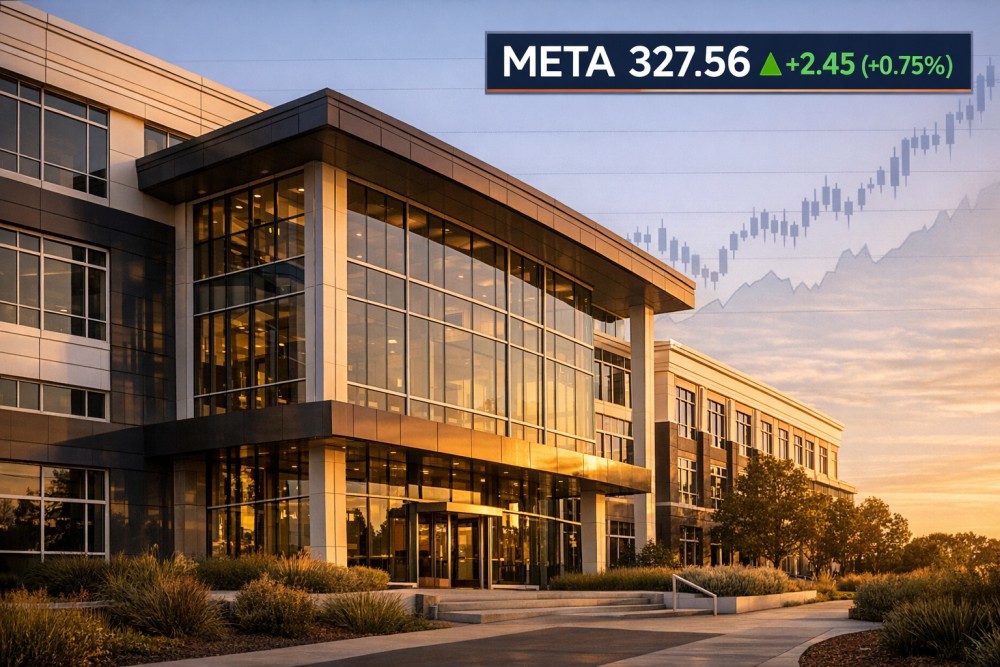
META Q1 2026 earnings drop after the close on Tuesday, April 29. If you already hold Meta Platforms (META), the headline EPS print is not the most important number on the call.
The real story this quarter is monetization mix. Reels, Threads, and WhatsApp Business are the three surfaces that decide whether the ad-revenue thesis still works at this valuation.
According to Investing.com, consensus expects roughly $55.36 billion in Q1 revenue and 31% year-over-year growth. That bar is high, and the segment commentary is what will move the stock after-hours.
You do not need to memorize every line of the income statement. Focus on these three signals during the call.
1. Reels ad load and RPM trajectory
Reels is the engine that closed the TikTok exposure gap on Instagram. Watch for two specific data points: ad load on Reels and revenue per mille (RPM) trend versus the main feed.
Management has said for several quarters that Reels monetization is approaching feed-level RPMs. If the call confirms parity, that removes the biggest overhang on incremental engagement growth.
If RPM lags, the bear case gets oxygen. Watch how analysts frame their first questions, since the question order usually telegraphs what the buy side cares about most.
The cross-read for your portfolio is GOOGL. If Meta confirms strong short-form video CPMs, YouTube Shorts pricing power gets a boost too.
2. Threads MAU and first-look ad surface
Threads is the cleanest read on whether Meta can launch a new platform in the post-TikTok era. According to Social Media Today, Meta rolled out Threads ads to all global markets in late January 2026. The platform sat at roughly 400 million monthly active users at the time of the announcement.
Q1 is the first full quarter that global advertisers could buy Threads inventory. Look for any disclosure on Threads contribution, even directional language like "modest contribution this quarter."
Even small dollar figures matter. A measurable Threads revenue line de-risks the next two years of growth narrative for holders comparing META to Snap (SNAP) and Pinterest (PINS).
3. WhatsApp Business and click-to-WhatsApp ads
WhatsApp Business is the most underappreciated revenue lever Meta has. Click-to-WhatsApp ads already run at a multibillion-dollar annual rate, primarily driven by India, Brazil, and Indonesia.
The signal to watch is geographic mix. If management calls out Asia-Pacific or Latin America as drivers of click-to-message ad revenue, that confirms WhatsApp is becoming a meaningful third pillar.
If WhatsApp barely gets mentioned, holders should ask why. The platform has 3 billion users, and the monetization gap relative to Instagram remains the single biggest opportunity in the portfolio.
Click-to-WhatsApp is also where small-business advertiser demand lands first. A strong call-out here would suggest the long-tail advertiser base is still healthy, despite macro noise.
If management gives any concrete dollar figure for WhatsApp Business revenue, that single data point can move the stock more than the headline EPS print.
Holding META into Tuesday's print? Review your META exposure and adjacent ad-tech watchlist before the call. Make sure you have a clean view of your weighting in Alphabet (GOOGL), SNAP, PINS, and The Trade Desk (TTD). That setup lets you react to whichever signal surprises.
What You Can Do Before the Print Drops
The first thing to check is your META weighting. If a single holding has crept above your target allocation, earnings night is exactly the wrong time to find out.
Next, look at your watchlist for read-throughs. SNAP and PINS often move on META commentary about ad pricing, while GOOGL and TTD react to anything Meta says about advertiser demand or attribution.
Finally, set your expectations. The post-print move is rarely about the headline beat or miss. It is about whether the segment data confirms the growth narrative analysts are paying for.
Capex guidance is the second-order risk. If management raises the full-year capex range above current guidance, free cash flow estimates get cut and the stock can give back a beat.
Decide your reaction plan before the print, not after. Pre-commit to whether a soft Threads number or a capex hike actually changes your thesis, since after-hours volatility makes calm thinking hard.
Conclusion
META Tuesday after-hours is not a binary event for long-term holders. It is a chance to test whether the Reels, Threads, and WhatsApp Business thesis is on track or starting to slip.
If all three monetization surfaces show progress, the stock has room to run even at a high valuation. If two of three lag, expect multiple compression and a wider trading range into Q2.
Note that META rarely moves alone after a print. SNAP, PINS, and TTD typically trade in sympathy, so a clean watchlist gives you the read-through in real time.
Open Gotrade to review your META position and adjacent ad-tech exposure before the print.
FAQ
What time does META report Q1 2026 earnings?
Meta reports after the close on Tuesday, April 29, 2026, with the conference call following the press release.
Why are Reels, Threads, and WhatsApp the three numbers to watch?
Each represents a distinct monetization surface that will determine whether Meta's ad revenue can sustain 30% growth into 2027.
Should I trim my META position before earnings?
That depends on your portfolio weighting and risk tolerance, so review your allocation in Gotrade before the print rather than reacting after-hours.