
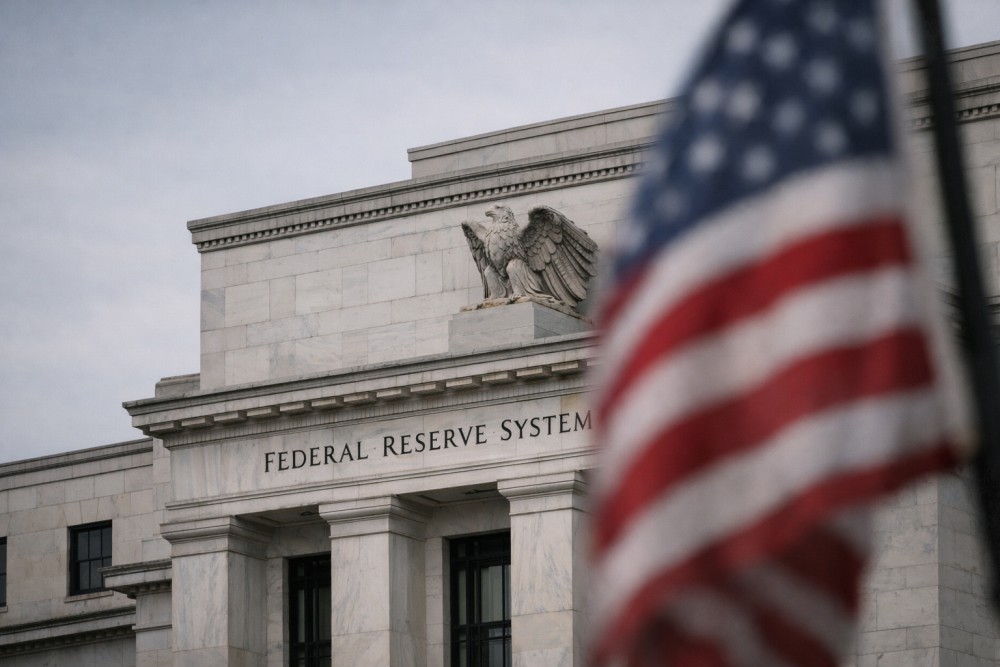
The powell warsh fed chair handover is the most consequential US monetary event of 2026. Powell's term ends on 15 May 2026.
Kevin Warsh has cleared the Senate Banking Committee and is on track to take the gavel. The new Fed tone will reset rate expectations and sector leadership for US stocks.
This article covers the timeline, Warsh's policy DNA, and a transition playbook.
Timeline of Powell's Departure and Warsh's Confirmation Path
Jerome Powell's eight-year run as Fed Chair ends on 15 May 2026. He has confirmed he will stay on the Board of Governors past that date, so the seat at the board does not go empty.
The Senate Banking Committee voted 13 to 11 on 29 April 2026 to advance Warsh. A full floor vote is expected before Powell exits.
Dates to Mark on the Calendar
Mark 15 May 2026 as the formal handover. Markets typically move ahead as testimony and dot plot guidance leak into prices.
The full Senate vote is the next pivot. Volatility tends to rise around confirmation and the first FOMC press conference under a new chair.
What This Means for Your Portfolio
A transition is a window of uncertainty, not a panic signal. Long-term investors usually hold core positions and resize at the edges.
Track Warsh's first testimony, the first dot plot, and any change in balance sheet language. These three signals frame the new regime.
Warsh's Policy Track Record and Likely Hawkish Tilt
Kevin Warsh, born 1970, is a Stanford and Harvard Law graduate. He served as Fed Governor 2006 to 2011 and was a key voice in the 2008 financial crisis.
According to his public profile, Warsh is now a Hoover Institution fellow with prior Morgan Stanley investment banking experience.
Hawkish Past, Pro-Cut Present
During his board tenure, Warsh leaned hawkish. He pushed back on extended quantitative easing and warned on inflation earlier than most peers.
His recent commentary has shifted. Warsh argues AI productivity gains are disinflationary, supporting rate cuts even with tariff pressure on goods.
What This Implies for US Stocks
A pro-cut stance from a credibly hawkish chair is constructive for risk assets. Markets read it as easing without losing inflation discipline.
Deutsche Bank still flags that Warsh is not structurally dovish. If core inflation reaccelerates, the hawkish reflex can return quickly. Build a Fed-transition watchlist on Gotrade app now.
Sectors Most Sensitive to Fed Chair Transitions
Not every sector reacts the same way to a new Fed Chair. Rate-sensitive groups move first, while quality defensives often hold their ground.
Consumer Staples and Healthcare
Names like KO and PG absorb policy noise well. Daily-use demand keeps cash flow stable across rate cycles.
Healthcare such as JNJ shares that profile. Earnings barely flex when rates move, so multiples are less exposed to discount-rate shocks.
Banks, Utilities, and Small Caps
Banks like JPM track the yield curve. A dovish Warsh tilt compresses net interest margin, while a hawkish surprise supports lending profitability.
Utilities like NEE inverse rates, and small caps via IWM often lead when cuts are priced in. Pair these with a quality core like BRK.B.
Bond, Dollar, and Stock Setups for the Warsh Era
As reported by Bloomberg, Barclays research shows the S&P 500 averaged drawdowns of 5, 12, and 16 percent over 1, 3, and 6 months after a new Fed Chair takes over since 1930.
The Powell handover saw a 4.1 percent first-day drop. Yellen's debut printed 0.9 percent and Bernanke's first day fell 2.2 percent.
Why Defensives Earn a Bigger Weight
The macro backdrop into the transition is fragile. Tariff uncertainty plus leadership change argues for a tilt toward quality cash flow.
A core of staples and healthcare paired with a satellite of blue chip stocks can carry the portfolio through the noise.
Add on Weakness, Not on Hype
Use a dollar cost averaging approach. It cuts timing risk and forces buys when prices are weak.
Avoid chasing rallies on single Warsh soundbites. Wait for the first FOMC press conference and dot plot before sizing up risk.
Risk Management Playbook During Confirmation Uncertainty
Position sizing is the key lever. Trim oversized winners and rebuild dry powder before the confirmation vote.
Keep a cash buffer of 10 to 20 percent. That lets you buy the first real drawdown without selling core holdings.
Conclusion
The Powell to Warsh handover is a meaningful pivot but not a reason to abandon US stocks. Investors with a sector-balanced watchlist and disciplined sizing are well placed.
Early transition months can be choppy before markets settle into the new regime. The edge goes to investors who stay consistent, not those who try to time the first FOMC.
Start building your US stock portfolio on Gotrade. From US$1 you can hold fractional blue chips and small-cap ETFs in one account, ready for the Warsh era.
FAQ
When does Powell step down as Fed Chair?
Powell's term as Fed Chair ends on 15 May 2026, though he plans to remain on the Board of Governors for an undefined period.
Who is Kevin Warsh and what is his policy stance?
Warsh is a former Fed Governor from 2006 to 2011 with a hawkish reputation, though he has recently voiced support for rate cuts on the back of AI-driven disinflation.
Which US stock sectors are most sensitive to a Fed Chair transition?
Banks, utilities, and small caps are the most rate-sensitive, while consumer staples and healthcare tend to act as defensives during the handover.
How should investors position for the Warsh era?
Build a sector-balanced watchlist, dollar cost average into weakness, hold 10 to 20 percent cash, and avoid trading single Warsh headlines before the first FOMC.